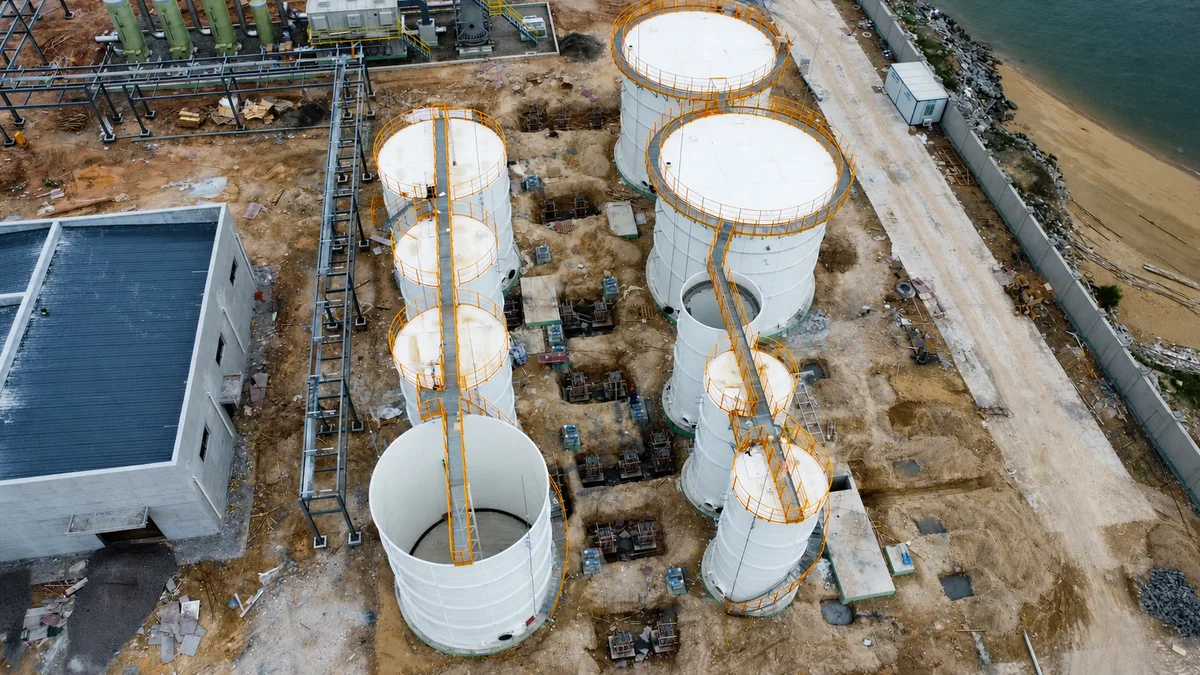
Aquaculture wastewater tank guide for chemistry, salinity, solids, flow variation, equalization, materials, treatment interfaces, and RFQ data.
Aquaculture wastewater storage and equalization must be matched to actual water quality, solids loading, hydraulic variation, treatment duty, and site operations.
Aquaculture Wastewater Is Not One Standard Tank Duty
Aquaculture wastewater storage tanks can serve recirculating aquaculture systems, hatcheries, fish-processing facilities, shrimp farms, pond discharge systems, or a treatment plant that receives several streams. Water chemistry, salinity, suspended solids, feed residues, biomass, disinfectants, cleaning chemicals, temperature, and flow pattern may differ greatly between sites. The tank duty should therefore be defined from measured or designed conditions, rather than selected from the word aquaculture alone.
The intended function also changes the design. A tank used for flow equalization, sedimentation support, temporary storage, sludge buffering, process-water recovery, emergency containment, or transfer to downstream treatment needs a stated hydraulic and operating basis. Inlet energy, working levels, mixing or quiescent zones, pumping, drains, access, cleaning, ventilation, and instrumentation must be coordinated with the selected treatment process.
For plant-wide context, start with the wastewater treatment tank guide. This page concentrates on the additional water-quality, solids, corrosion, and operational information that typically makes aquaculture wastewater storage distinct from ordinary water storage.
Aquaculture Wastewater Tank Design Inputs
Review area
Information needed for a credible tank proposal
Water source
Species and production system, contributing streams, freshwater or saline service, process stage, cleaning discharges, stormwater entry, and separate high-strength streams.
Water quality
Representative and design pH, temperature, conductivity or salinity where relevant, solids, feed residues, nutrients, cleaning agents, disinfectants, and expected odor conditions.
Hydraulics
Average, peak and minimum flow, batch releases, working volume, level range, equalization basis, inlet and outlet philosophy, overflow, bypass, and pump duty.
Tank operation
Mixing, circulation, settling, screening, solids or sludge removal, sampling, washdown, drains, roof or cover, level instruments, access, and maintenance.
Project interface
Treatment process, materials review, civil containment, utilities, electrical and controls, installation, inspection, documentation, and commissioning responsibilities.
Use Representative Water Data and the Design Envelope
Aquaculture facilities may generate water streams with very different loading and chemistry. Solids from feed and biomass, cleaning water, saline make-up water, disinfectants, changing temperature, and seasonal rainwater can each change the actual service condition. The RFQ should identify normal and worst-case values, not only an average laboratory result. It should also distinguish which streams enter together and which remain separate until the process engineer authorizes blending or treatment.
Material and coating selection follows the documented environment. The shell, floor, roof, bolts, gaskets, nozzles, pumps, instruments, drains, and access components may not all see the same condition. Salinity or chloride exposure, cleaning agents, deposits, wet-dry cycling, and vapor-space conditions can be as relevant as the bulk liquid. Use the industrial tank corrosion protection guide to organize a compatibility review before a material system is released for construction.
Match Volume and Hydraulics to the Treatment Role
Equalization volume depends on the time pattern of discharges and the tolerance of downstream equipment, not on a daily flow total alone. The owner or process designer should issue an hourly or batch flow profile, normal and emergency levels, desired buffer period, downstream treatment capacity, pump availability, overflow philosophy, and future expansion case. This distinguishes gross geometric volume from usable operating volume between controlled levels.
Tank internals and nozzles must support the chosen process role. An equalization tank may require controlled mixing or circulation, while a settling or separation step may need low-turbulence inlet conditions and a different solids-removal route. The proposal should state the intended function of every tank and identify who supplies mixers, pumps, screens, controls, sludge equipment, odor-control devices, and treatment skids.
Provide a time-based flow profile and identify every contributing stream.
State whether the tank is for equalization, settling, sludge buffering, temporary storage, or another defined duty.
Separate the tank shell supply from process equipment unless the inclusion is expressly stated.
Plan Solids, Cleaning, Access and Drainage
Feed residues, biological solids, sediment, biofilm, and cleaning activity can affect operability. The design should identify expected solids behavior, cleaning route, drainage points, washdown requirements, sampling locations, manways, roof access, ladders, platforms, fall protection, and the means of removing accumulated material. Poorly placed inlets, inaccessible low points, or an undefined sludge route can create a maintenance burden even when the tank volume is adequate.
The civil and site plan also matters. Containment, stormwater separation, foundation drainage, equipment access, crane positions, pipe routing, electrical access, and safe maintenance areas should be issued with the RFQ. For compatible tank construction options, compare the project duty with fusion bonded epoxy tanks after the chemistry and process basis are confirmed.
Define Quality Records and the Supply Boundary
A usable proposal identifies the design basis, material or coating system, access equipment, inspection plan, leak or test basis, repair procedure, documentation, and exclusions. It should state whether the supply includes roof or cover, seals, nozzles, supports, instrumentation mounts, ladders, platforms, process equipment, foundations, containment, installation, testing, and commissioning. Clear boundaries prevent a wastewater-storage package from being mistaken for a complete treatment plant.
Before award, the project team should compare each bid against the same water-quality and hydraulic inputs. Differences in working volume, material assumptions, drainage, access, process interfaces, inspection, and documents should be visible. This supports a technically comparable RFQ without overstating what a tank package alone can deliver.
Data to Include in the RFQ
An aquaculture wastewater RFQ should connect the actual water-quality and hydraulic envelope with the treatment role, material system, access, site constraints, and supply boundary.
Production system and streams, freshwater or saline condition, representative and design water analysis, pH, temperature, salinity, solids, cleaning agents, disinfectants, and expected odors.
Average, peak and minimum flow profile, batch releases, working volume, normal and emergency levels, equalization basis, treatment capacity, bypass, and overflow philosophy.
Tank function, inlet and outlet arrangement, mixing or circulation objective, solids handling, drains, sampling, pumps, screens, roof or cover, and level instruments.
Material or coating basis, gaskets, corrosion review, access equipment, containment, foundation and site drainage, installation route, and local loads.
Required inspection plan, material or coating records, installation scope, commissioning boundary, operation data, spares, and handover documents.