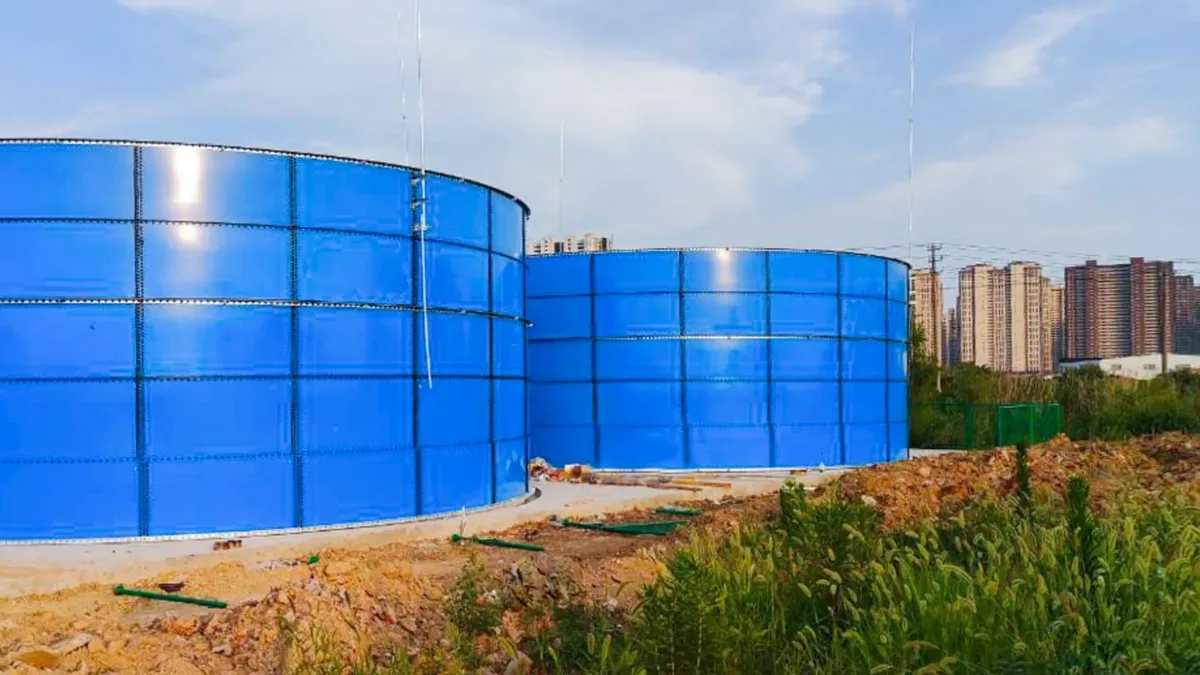
Wastewater treatment tank guide for equalization, industrial effluent, food wastewater, chemical wastewater, sludge, corrosion protection, covers, and RFQ data.
Wastewater treatment tanks must be specified around effluent chemistry, solids, odor, corrosion, access, and downstream process requirements.
Wastewater tanks need process context
Wastewater treatment storage tanks are used for equalization, process buffer, reaction, neutralization, sludge holding, leachate storage, food processing effluent, chemical wastewater, agricultural wastewater, and anaerobic pretreatment. The tank specification must be linked to process duty, not only volume.
The most important RFQ data includes wastewater source, pH, temperature, solids, COD/BOD if available, oil and grease, chemical exposure, odor requirements, tank role, mixing, roof or cover needs, inspection access, and corrosion protection expectations.
Wastewater treatment tank qualification table
Wastewater Duty
Specification Focus
Equalization tank
Flow variation, retention time, mixing, pH swing, solids, odor, foam, and downstream treatment stability.
Industrial effluent
Chemical composition, temperature, corrosion risk, cleaning chemicals, containment, and material compatibility.
Food wastewater
High organic load, fats/oils/grease, cleaning chemicals, odor, anaerobic interface, and access for maintenance.
High corrosion risk, variable chemistry, containment, odor, coating selection, and inspection frequency.
Tank product choices for wastewater duty
Glass-fused-to-steel tanks and fusion bonded epoxy tanks are common candidates for wastewater because factory-applied coatings can provide consistent corrosion protection and modular field assembly. The buyer should provide chemistry and operating conditions so the coating can be checked against the real duty.
Welded steel, stainless steel, galvanized steel, and concrete-adjacent systems may also appear in wastewater projects, but each has limits. Stainless steel can be useful for selected corrosive or cleanability-driven duties; galvanized steel is generally more limited; welded steel requires careful coating and inspection planning.
Wastewater chemistry can change with production schedule, cleaning cycles, rainfall, seasonal load, and upstream pretreatment. A snapshot pH value is useful but not enough. Buyers should provide pH range, temperature, chlorides, sulfides, cleaning chemicals, oils, solids, and whether the tank will be aerated or mixed.
Coating selection should include internal coating, external environment, edge protection, nozzle coating, gasket compatibility, repair method, inspection records, and maintenance plan. The corrosion protection guide should be used when wastewater chemistry is uncertain or aggressive.
Covers, odor, and process interface
Wastewater tanks may need open-top access, fixed covers, aluminum dome roofs, membrane covers, or odor-control connections depending on duty. The roof decision should consider odor, gas, foam, maintenance access, rainwater control, and safety. Do not select a roof only from appearance or price.
If wastewater connects to anaerobic digestion or gas collection, the tank must coordinate with gas holder, membrane roof, safety accessories, condensate, and process control. For that duty, start from the biogas page instead of treating the project as simple wastewater storage.
RFQ data for wastewater treatment projects
A complete RFQ should include wastewater origin, tank function, flow rate, required volume, chemistry, temperature, solids, odor, mixing, aeration, roof or cover type, nozzle schedule, access, site loads, coating expectations, installation responsibility, and document package.
Required volume should be derived from the process duty rather than copied from an average daily flow. Equalization may need usable volume for hourly or batch variation, allowance for minimum operating level, freeboard for foam or upset conditions, and capacity that remains available when solids accumulate. The process designer should define the required retention or equalization objective; the tank supplier can then review geometry, inlet distribution, outlet levels, and accessory interfaces against that basis.
Mixing and aeration loads must be included before shell and roof details are finalized. Side-entry mixers, top-entry mixers, diffused air, recirculation nozzles, baffles, bridges, and maintenance lifting points can introduce local loads and access needs. The RFQ should identify whether solids must remain suspended, whether stratification is acceptable, and how the tank will be drained or cleaned if equipment is removed from service.
Inspection access and lifecycle planning
Wastewater tanks need an inspection and isolation strategy. Buyers should define safe access, ventilation, drain and washdown points, isolation from upstream flow, temporary storage during maintenance, and how coating repairs will be inspected. Roof openings, platforms, sampling points, level instruments, and odor-control connections should support the operating plan instead of being added after fabrication.
The purchase specification should distinguish design life from coating maintenance interval. Service life depends on chemistry, temperature, abrasion, atmospheric exposure, installation quality, inspection frequency, and timely repair. A supplier can provide material and coating records, but the owner remains responsible for operating within the stated envelope and implementing the site inspection program.
Standards and Reference Notes
For United States projects, the U.S. EPA NPDES overview explains the federal point-source discharge permitting framework. NPDES is not a global standard; projects elsewhere must follow their own national and local environmental approvals. In every jurisdiction, chemistry and process duty should be confirmed before material, coating, and roof selection.
Next RFQ Steps
Send wastewater origin, flow, volume, pH range, temperature, solids, chemicals, odor and cover needs, mixing/aeration, nozzles, site loads, coating requirement, and scope boundary.