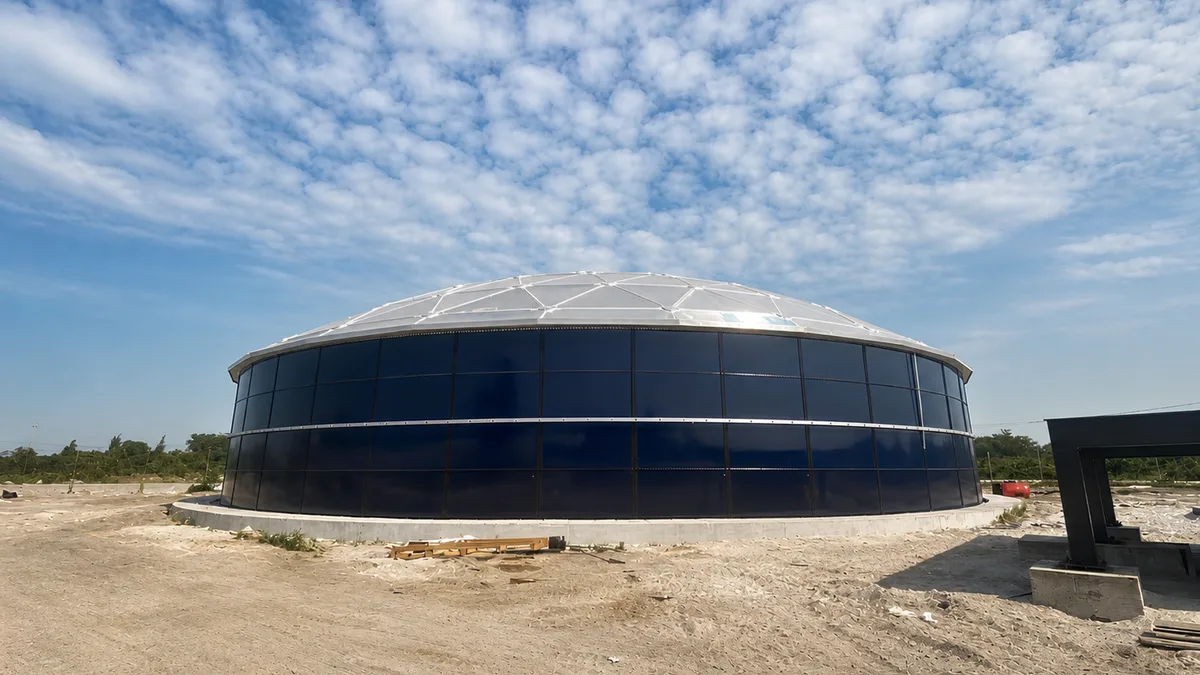
Corrosion protection guide for industrial storage tanks covering coating choice, media chemistry, inspection records, edge protection, and maintenance.
Corrosion protection starts with the actual service condition: media chemistry, temperature, cleaning practice, vapor zone, and inspection plan.
Corrosion Protection for Industrial Tanks
Corrosion protection is not a single coating name. It is a complete decision that includes stored media chemistry, steel grade, coating or lining system, surface preparation, edge protection, holiday testing where specified, gasket/sealant compatibility, roof atmosphere, and long-term maintenance access.
Different tank types manage corrosion differently. GFS tanks use a factory-fired glass coating. Fusion bonded epoxy tanks use factory-applied epoxy coating on steel panels. Stainless steel tanks rely on material selection and passivation/finish requirements. Aluminum dome roofs may reduce roof corrosion exposure for suitable applications. Buyers should compare systems through application risk, not only supplier wording.
Surface preparation records, thickness checks, holiday testing where specified, repair procedure, and coating certificate.
Operations
Cleaning frequency, inspection interval, abrasion risk, sludge removal method, and expected design life.
How to Use Corrosion Data in RFQ Review
If the stored media is wastewater, leachate, biogas slurry, chemical process liquid, or petroleum-related storage, the RFQ should include chemistry data. “Wastewater tank” or “chemical tank” is too broad for a reliable coating recommendation.
Corrosion Protection for Industrial Tanks should be reviewed as part of a complete storage system. Before final pricing, the buyer should confirm whether the supplier scope includes engineering drawings, material or coating records, roof and accessory supply, packing protection, installation documents, and commissioning support.
For international RFQs, the same tank volume can lead to different quotations if site loads, corrosion data, inspection requirements, approval standards, or installation responsibility are missing. A stronger inquiry clearly separates confirmed data from assumptions so the supplier can respond with a comparable technical proposal.
Next RFQ Steps
Send media data, pH, temperature, cleaning chemicals, operating level, vapor exposure, coating standard, inspection records required, and expected maintenance schedule.
Build the corrosion basis from the full exposure envelope
Material selection should use normal and upset liquid chemistry, concentration, pH, chlorides, temperature, dissolved gases, hydrocarbons, solids, cleaning chemicals, residence time, fill cycles, and gas-space conditions. One nominal sample can miss startup, seasonal, cleaning, or process-change conditions that govern service risk.
Internal and external exposure require separate review. Coastal air, industrial fallout, UV, condensation, insulation, freeze-thaw cycles, buried interfaces, containment moisture, and dissimilar metals can affect shell, roof, fasteners, nozzles, platforms, instruments, and piping even when the stored liquid is relatively mild.
Treat joints, edges, penetrations, and repairs as part of the system
Corrosion protection is not only a large coated surface. Panel edges, bolt holes, welds, nozzles, seals, fasteners, roof connections, supports, drains, and transport damage can create local exposure. The selected system should define factory controls, handling protection, field inspection, repair materials, and acceptance criteria for these details.
Repairability affects lifecycle cost. Buyers should ask how damage is assessed, where repairs may be performed, what preparation and cure conditions apply, how continuity or workmanship is verified, and which records are retained. Remote projects may also require spare materials and trained local support.
Connect inspection frequency to consequence and accessibility
Inspection planning should consider stored medium, containment, environmental consequence, coating or material system, access, service temperature, operating cycles, previous repairs, and the practicality of taking the tank out of service. A generic calendar interval is not a substitute for a risk-based owner program.
Changes in medium, concentration, temperature, cleaning method, mixer loads, roof equipment, or process connections should trigger review against the original design basis. Corrosion records, repair history, photographs, and operating data help the owner decide whether the existing protection remains suitable.
Convert fluid chemistry into a complete exposure envelope
Material selection cannot be made from pH alone. The review should consider normal and upset chemistry, temperature, dissolved salts, chlorides, solids, cleaning chemicals, concentration changes, flow velocity, stagnant zones, gas-space condensation, external atmosphere, ultraviolet exposure, and the expected maintenance method. A tank can experience different conditions at the floor, liquid line, vapor space, roof penetrations, drains, nozzles, and attachment points.
The buyer should provide representative analysis where it exists and state what is uncertain. For wastewater, leachate, process liquor, brine, or cleaning streams, a range and expected upset condition are often more useful than a single average sample. The supplier should then state the service assumptions behind the proposed coating, lining, enamel, metallic material, fasteners, seals, and repair method instead of offering an unqualified corrosion-resistance claim.
The coating comparison guide helps organize a material discussion, but it does not replace a compatibility decision for a specific liquid and operating envelope.
Specify how vulnerable details will be inspected and repaired
Long-term performance frequently depends on details rather than broad shell area: cut edges, joints, bolts, gaskets, penetrations, roof interfaces, ladder supports, dissimilar materials, transport damage, and field repairs. The RFQ should identify which details need special protection, what inspection record is required, and who accepts a deviation or repair before the equipment is put into service.
Inspection should match the selected system and the project specification. Surface preparation, dry-film thickness, continuity checks, cure records, enamel inspection, visual examination, weld examination, or repair verification may be relevant in different circumstances. The site should not infer an inspection method from a brochure; the approved requirement, acceptance criterion, instrument control, and record format should be agreed with the responsible engineering and quality teams.
For high-risk liquid storage, connect the corrosion review to the wastewater treatment application page or the relevant application route, then state containment, drainage, inspection access, and maintenance responsibility as part of the actual project scope.