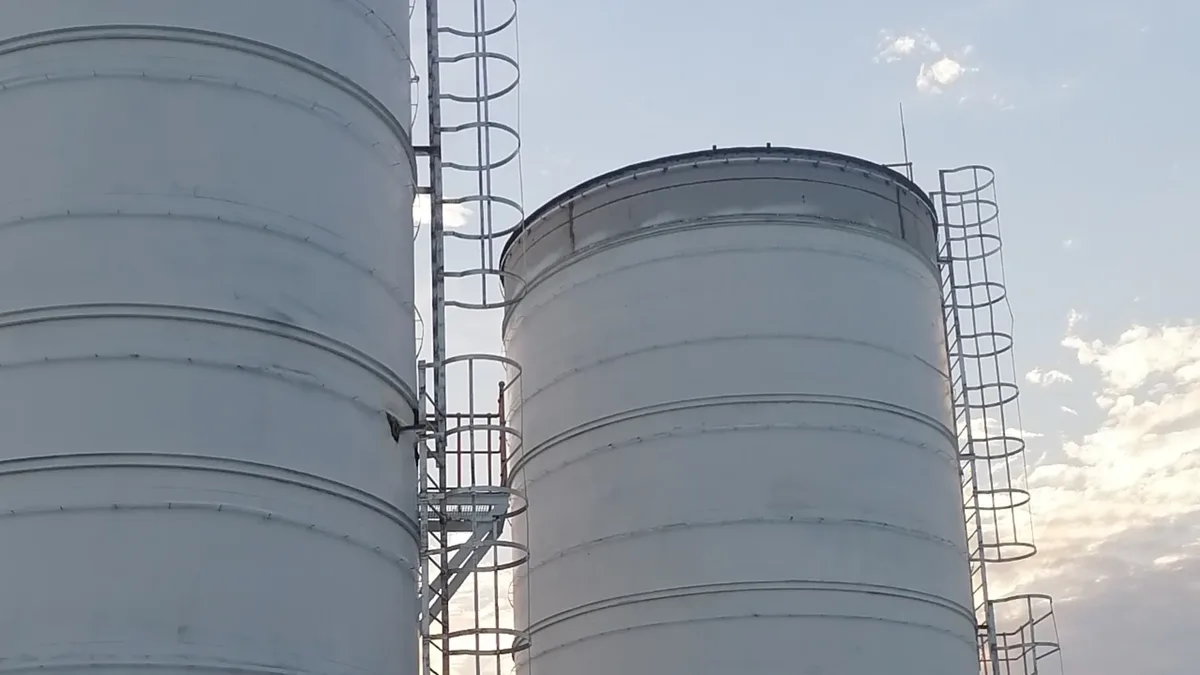
Oil storage tank guide for fuel, aviation fuel, bitumen and lubricants, covering welded tanks, roofs, safety interfaces, operating data, and RFQs.
Petrochemical and oil storage projects require careful separation of product type, vapor control, roof system, fire-safety interface, and tank standard.
Keep petrochemical storage topics separated by duty
Petrochemical and oil storage is a high-risk SEO and engineering cluster because many buyer searches overlap: fuel storage tanks, aviation fuel tanks, bitumen tanks, asphalt tanks, lubricant oil tanks, API-style welded tanks, carbon steel tanks, stainless tanks, and floating roof systems. The application page should not duplicate every product page. It should qualify duty and route the buyer to the right product family.
The first question is the stored liquid. Jet fuel, diesel, gasoline, crude oil, lubricant oil, bitumen, asphalt, solvent, and chemical feedstock can require different material, roof, venting, fire protection, heating, coating, and inspection approaches. A quotation that only asks for volume and diameter is not enough for this category.
Fuel, aviation fuel, crude oil, bitumen, asphalt, lubricant oil, solvent, or chemical feedstock must be identified before roof and material selection.
Tank standard
Confirm whether the buyer requires API-style welded tank review, local code, owner specification, or project-specific engineering basis.
Roof system
Fixed roof, floating roof, aluminum dome, or special cover selection depends on vapor pressure, emissions goals, fire interface, and inspection access.
Safety interface
Fire protection, grounding, overfill protection, venting, emergency relief, containment, and hazardous-area requirements should be defined by the project team.
Operating conditions
Temperature, heating coil, insulation, viscosity, fill/empty cycle, corrosion allowance, bottom design, and maintenance access affect the tank package.
Welded steel tanks and product storage duty
Welded carbon steel tanks are frequently reviewed for fuel, oil, bitumen, asphalt, and other petroleum-related storage duties. The design basis should identify stored product, operating temperature, specific gravity, corrosion allowance, roof type, bottom arrangement, nozzles, manways, access, inspection scope, and document requirements.
Stainless steel may be selected for selected corrosive fluids, lubricant oils, or process liquids where contamination control, corrosion resistance, or product compatibility justifies the material. The buyer should confirm grade, surface finish expectations, welding records, cleaning method, and whether the tank must interface with a process system.
Floating roof and vapor-control decisions
Floating roofs are specialist systems and should be tied to vapor-control, emissions, fire-safety, drainage, and inspection requirements. A floating roof should not be specified simply because the tank stores oil. The RFQ should define product volatility, operating level range, seal type, roof drain, gauge well, anti-rotation device, and maintenance plan.
For fixed roof systems, venting, emergency relief, corrosion protection, roof load, and access remain important. Storage tank roof selection should be made together with the tank standard and stored product data, not after the tank shell has already been priced.
Bitumen, asphalt, and heated storage
Bitumen and asphalt storage may require heating, insulation, temperature monitoring, special nozzles, bottom design, and maintenance access that differ from ordinary water or fuel storage. The viscosity and operating temperature should be provided early so the manufacturer can review shell, roof, nozzle, and accessory requirements.
For aviation fuel and refined products, product cleanliness, water draw-off, internal surfaces, nozzles, inspection records, and documentation can become central buyer concerns. Review the relevant product data and owner requirements before finalizing the tank package.
RFQ data and risk control
A petrochemical or oil storage RFQ should include product name, density, vapor pressure if relevant, operating temperature, required capacity, tank standard, roof type, nozzles, fire-safety interface, containment, coating or lining, heating/insulation, site loads, inspection scope, and document package.
Because this cluster overlaps with several product pages, avoid creating a new URL for every product phrase. Use project-specific pages only when there is a true case reference, such as petrochemical storage projects, and keep general buyer qualification on this application page.
Operating envelope, safeguards, and package boundaries
The normal fill level is only one part of the operating envelope. Buyers should also define minimum operating level, maximum liquid level, filling and withdrawal rates, credible blocked-in or thermal cases, startup and shutdown conditions, expected water bottoms, and any recirculation or transfer sequence. These inputs affect venting, overfill instrumentation, roof operation, nozzle sizing, internal components, and the interfaces handed to the process and safety teams.
A tank quotation should state package boundaries clearly. Shell, bottom, roof, nozzles, manways, stairs, platforms, coating, inspection records, and selected instruments may fall within the tank supplier scope, while bunding, firewater, foam, transfer pumps, process piping, electrical classification, grounding design, emissions permitting, and operating procedures may remain with the EPC contractor or owner. Recording these boundaries prevents a technically complete tank from being mistaken for a complete terminal safety system.
Standards and Reference Notes
The American Petroleum Institute digital standards catalog lists API 650 for welded tanks for oil storage and related petroleum documents. API publications are industry references, not automatic global legal requirements; the contract must identify the adopted edition, local law, owner specification, fire-safety basis, and environmental obligations.
Next RFQ Steps
Send stored product, density, temperature, vapor and fire-safety data, tank standard, roof type, nozzles, containment, coating or lining, inspection scope, and document requirements.