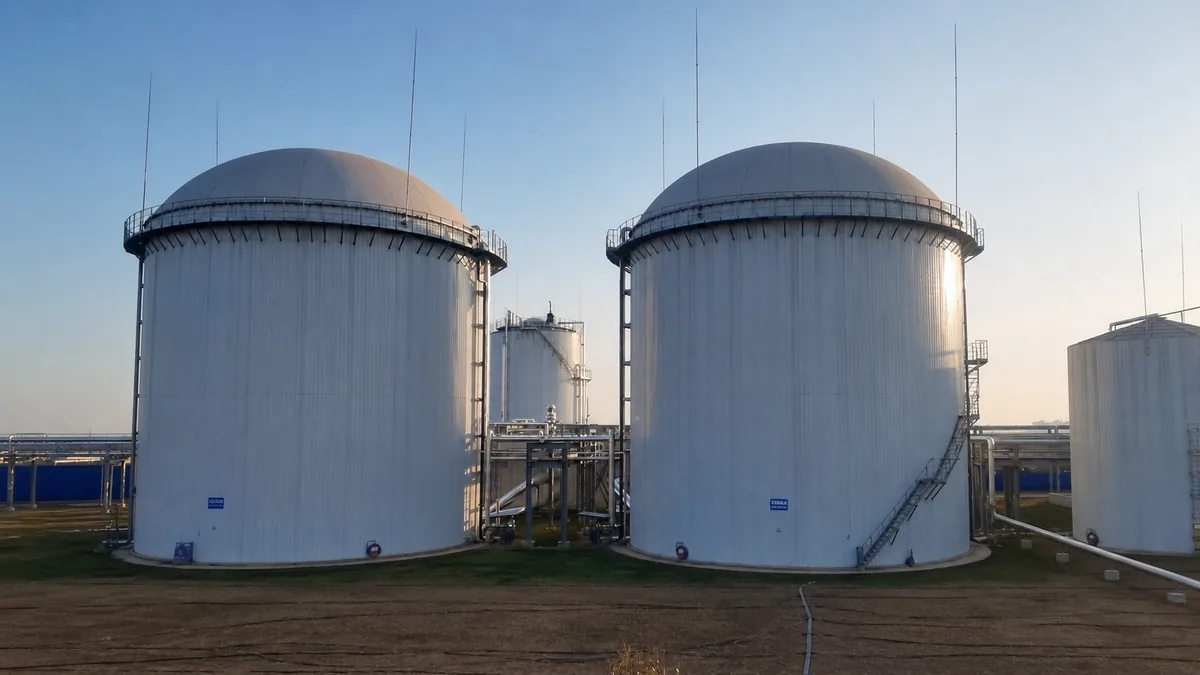
Biogas digester tank guide covering feedstock, process duty, gas holders, covers, safety interfaces, scope boundaries, and RFQ data.
Anaerobic digestion tank design must coordinate liquid storage, gas collection, cover selection, safety accessories, and process interface.
Biogas storage is a system specification
Biogas and anaerobic digestion projects combine liquid storage, biological process control, gas collection, roof or membrane design, safety accessories, and plant integration. A tank-only quotation is usually incomplete unless the buyer also defines feedstock, operating temperature, hydraulic retention time, mixing, gas volume, pressure range, condensate management, and maintenance access.
Common feedstocks include agricultural waste, animal manure, food waste, slaughterhouse wastewater, pulp mill wastewater, kitchen waste, and high-strength industrial organic wastewater. Each stream changes corrosion risk, solids handling, odor, gas production, and cleaning expectations. The tank material and cover system should be selected after the process duty is clear.
Tank diameter, roof load, gas tightness, nozzle layout, inspection access, and membrane attachment details must be coordinated early.
Delivery scope
Separate tank supply, membrane roof, accessories, installation guidance, EPC interface, and commissioning responsibility in the RFQ.
Tank material and coating for digestion duty
Glass-fused-to-steel tanks are often reviewed for anaerobic digestion because modular panels can support large field-assembled digesters and the factory-applied coating provides a consistent internal surface. The suitability still depends on temperature, chemistry, abrasion, cleaning method, and gas/liquid interface conditions.
Epoxy coated steel tanks can also be considered for digestion or wastewater buffer service when coating compatibility, inspection method, and repair procedure are clear. For aggressive or unusual feedstocks, the buyer should provide pH, temperature, solids, sulfide risk, chloride level if available, and cleaning chemicals before final coating selection.
Stainless steel or welded steel systems may be used in selected process areas, but the choice should be tied to operating duty, fabrication requirement, lifecycle cost, and local installation capability. There is no single universal tank type for all biogas projects.
Double membrane gas holder and cover planning
A double membrane gas holder is not only a roof cover. It must match gas production, storage volume, pressure control, safety devices, weather loads, access, and maintenance plan. The RFQ should identify gas holder volume, design pressure, membrane material requirements, blower or control cabinet scope, overpressure and vacuum protection, and condensate management.
For tanks with fixed covers, the buyer should define whether the cover is primarily for odor control, weather protection, gas collection, or process sealing. Aluminum dome roofs, steel roofs, and membrane roofs solve different problems. Review the broader roof selection guide if the duty is not yet fixed.
Feedstock-specific project notes
Agricultural waste and manure projects commonly require solids handling, mixing, heating, sludge removal, and rural installation planning. Food waste and kitchen waste projects may require more attention to variable feedstock, odor, pretreatment, and gas safety. Slaughterhouse and pulp mill projects can involve high organic load and wastewater characteristics that affect tank coating and cover selection.
When a project combines several waste streams, the buyer should provide the design basis for each stream and the expected blend. A tank manufacturer can support mechanical and storage design, but process design responsibility should be clearly assigned between owner, EPC, and technology provider.
Coordinate safety, controls, and commissioning boundaries
Biogas contains combustible components and can also contain hydrogen sulfide, moisture, carbon dioxide, and trace contaminants. The project safety team should define hazardous-area classification, ventilation, gas detection, pressure and vacuum protection, emergency isolation, lightning and grounding, flame control, safe vent discharge, and access restrictions. The applicable requirements come from the destination jurisdiction and project risk assessment; a membrane or tank quotation alone cannot establish a complete gas-safety design.
Commissioning scope should identify leak testing, instrument checks, pressure-control verification, blower and valve checks, condensate drainage, mixer rotation, heating and insulation checks, initial filling, biological start-up, operator training, and performance responsibility. Process start-up is normally led by the technology provider or EPC, while the tank and gas-holder suppliers provide equipment-specific records and support. Writing this responsibility split into the RFQ avoids assuming that mechanical installation includes biological commissioning.
RFQ data for biogas and anaerobic digestion
A complete RFQ should include feedstock type, daily flow, TS/VS or solids information if available, operating temperature, required capacity, diameter and height constraints, mixing equipment, heating or insulation needs, roof type, gas holder volume, pressure range, nozzle list, safety accessories, site loads, and installation scope.
Buyers should also define whether they need only tank supply or a broader package including gas holder, roof, accessories, installation supervision, and document handover. Clear scope boundaries reduce later cost disputes and make the quotation easier to compare.
Standards and Reference Notes
The U.S. EPA AgSTAR program provides technical and project-development resources for manure-based anaerobic digestion in the United States. It is guidance from a U.S. program, not a global design code. Every project must follow the destination jurisdiction's gas safety, wastewater, odor, electrical, fire, and occupational requirements, with tank and gas-holder engineering coordinated by the responsible process designer and site operator.
Next RFQ Steps
Send feedstock, daily flow, solids, temperature, tank capacity, mixing and heating needs, roof type, gas holder volume, pressure range, accessories, site loads, and supply scope.