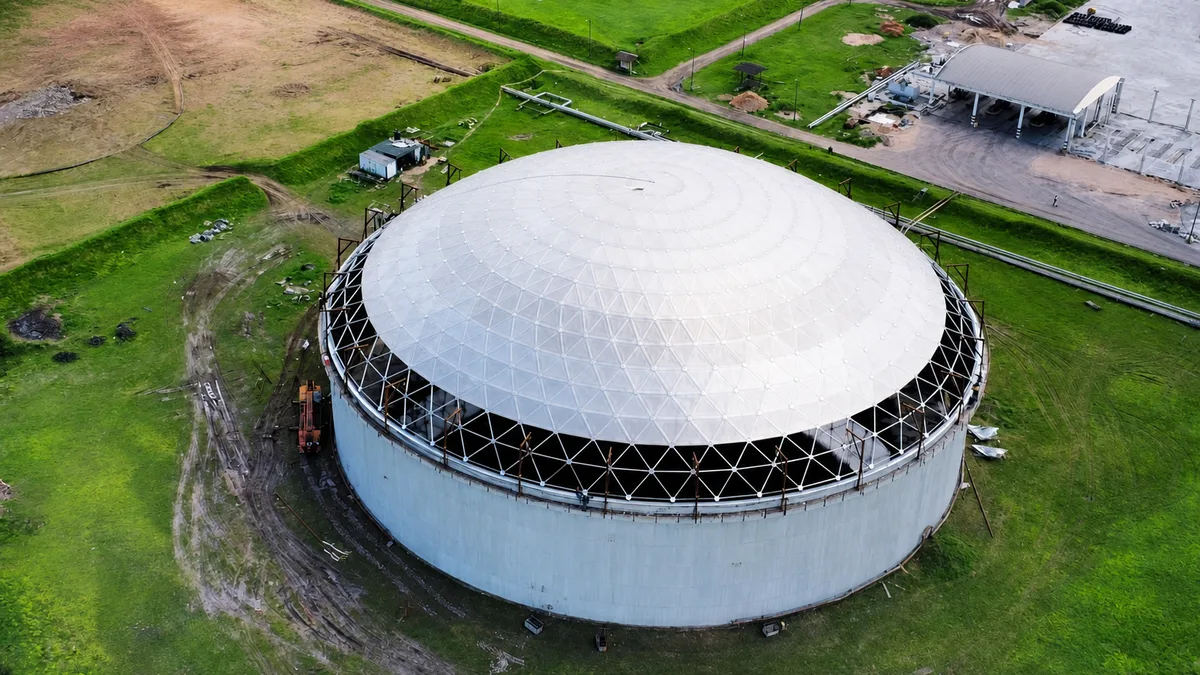
Storage tank roof selection guide comparing aluminum dome roofs, steel fixed roofs, floating roofs, membrane roofs, and tank cover systems.
Roof selection depends on stored media, tank diameter, vapor or odor control, structural loads, corrosion exposure, and access requirements.
Storage Tank Roof Selection Guide
Tank roof selection affects contamination control, vapor management, odor control, corrosion risk, rain entry, structural loads, maintenance access, and project cost. The best roof is selected by application duty, not by appearance.
Common options include aluminum dome roofs, steel fixed roofs, floating roofs, single or double membrane roofs, and application-specific covers. For buyers comparing aluminum dome roofs, this page explains the engineering questions to confirm before quotation.
Roof Option Comparison
Roof Type
Typical Review Logic
Aluminum dome roof
Lightweight corrosion-resistant cover for water, wastewater, petroleum-related, and retrofit projects where self-supporting design is useful.
Steel fixed roof
Traditional option for welded tanks where the standard, corrosion allowance, coating, and structural design are specified.
Floating roof
Reviewed for selected oil/fuel storage applications where vapor loss control and tank standard requirements apply.
Double membrane roof
Commonly reviewed for biogas tanks where gas storage, process pressure, and safety accessories are part of the package.
What Buyers Should Send With a Roof RFQ
For new tanks, roof choice should be discussed together with shell design and top-ring details. For retrofits, the supplier needs tank diameter, shell condition, top angle details, survey data, stored media, wind/snow loads, and allowable connection method.
Roof pages should link back to products and applications. Potable water may prioritize sealed protection and screened venting, wastewater may prioritize odor/venting strategy, and oil storage may require a different standard review. Use drinking water storage and petrochemical storage as context.
Procurement Scope and Handover Notes
Storage Tank Roof Selection Guide should be reviewed as part of a complete storage system. Before final pricing, the buyer should confirm whether the supplier scope includes engineering drawings, material or coating records, roof and accessory supply, packing protection, installation documents, and commissioning support.
For international RFQs, the same tank volume can lead to different quotations if site loads, corrosion data, inspection requirements, approval standards, or installation responsibility are missing. A stronger inquiry clearly separates confirmed data from assumptions so the supplier can respond with a comparable technical proposal.
Next RFQ Steps
Send tank diameter, new or retrofit status, stored media, roof type preference, site loads, accessories, drawings, and local approval requirements.
Define the roof function before selecting its form
A tank roof may exclude rain and debris, protect potable water, control odor, reduce vapor space, support gas collection, limit emissions, carry access loads, or cover a dry bulk material. Fixed steel roofs, aluminum domes, floating roofs, and membrane systems address different duties and should not be treated as interchangeable shapes.
The RFQ should state stored medium, tank diameter, pressure or vacuum basis, vapor or gas behavior, corrosion environment, required live loads, access, vents, hatches, instruments, existing-tank condition for retrofits, and the intended roof function. Those inputs determine the relevant engineering route.
Coordinate venting, penetrations, and operating equipment
Filling, withdrawal, thermal breathing, blocked vents, vapor generation, nitrogen blanketing, cleaning, and connected process equipment can create pressure or vacuum conditions. Vent and relief sizing belongs to the responsible process and safety design unless explicitly included in the roof supplier scope.
Hatches, platforms, level instruments, mixers, overflow, piping, handrails, vents, drains, rolling ladders, seals, and vapor-control equipment create structural and sealing interfaces. Their locations and loads should be released before fabrication, especially for retrofit roofs where the existing rim and roundness must be verified.
Plan drainage, inspection, and roof-specific maintenance
Rainwater drainage and ponding risk depend on roof type. Aluminum domes, fixed roofs, external floating roofs, internal floating roofs, and membranes require different inspection access, seals, drains, supports, tensioning, or buoyancy checks. The owner should receive maintenance information appropriate to the selected system.
A roof quotation should identify design loads, supplied components, shell interface, seal or gasket scope, installation responsibility, inspection, testing, access provisions, and handover records. Product selection is complete only when the roof can be safely installed, operated, inspected, and maintained with the tank and site systems.