Home›Projects›Food Processing Wastewater Treatment Tank Project
Food Wastewater Tank Project
Project case guide for food processing wastewater tanks, including equalization, organic load, coating review, roof or odor control, and RFQ data.
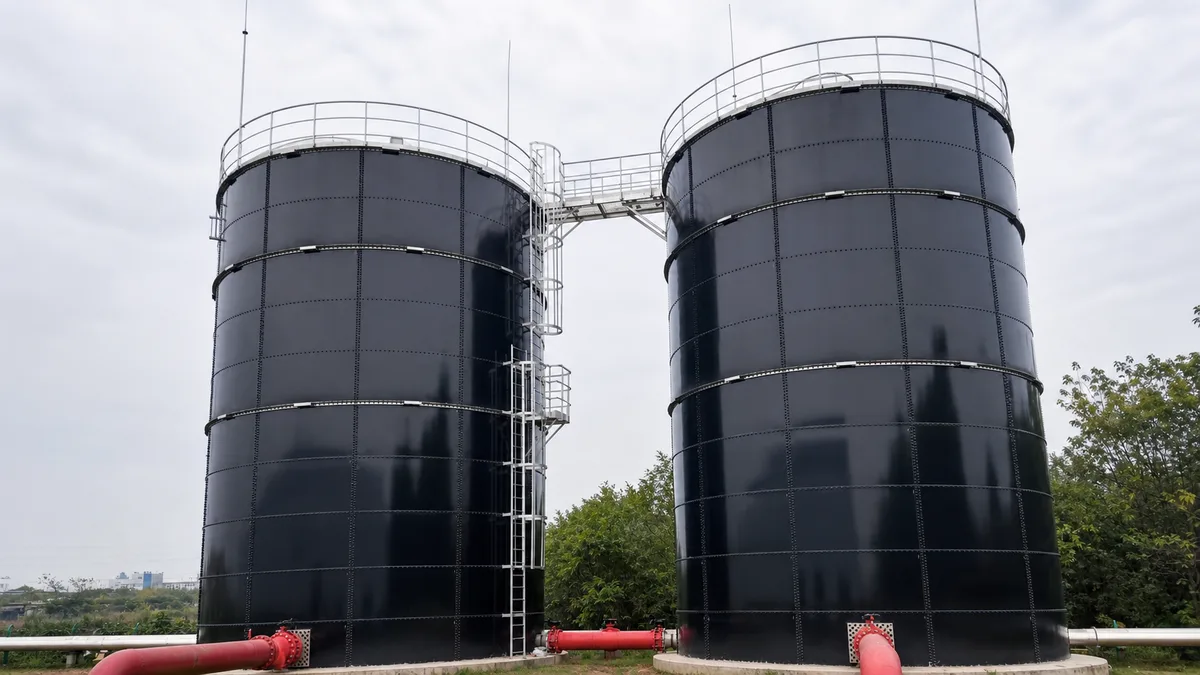
Food processing wastewater treatment tank project with coated steel storage tanks and treatment plant interface.
Food processing wastewater projects are driven by organic load and cleaning cycles
Project case guide for food processing wastewater tanks, including equalization, organic load, coating review, roof or odor control, and RFQ data. Use the case to identify comparable operating conditions and RFQ inputs; final design remains project-specific.
The first technical review should confirm COD equalization, BOD loading, fat oil grease, clean-in-place chemicals, screened solids, daily production peaks. Record preliminary assumptions separately from confirmed project data so suppliers quote the same scope.
Food Processing Wastewater Treatment Tank Project Review Matrix
Review area
Specific data to confirm
Operating duty
COD equalization, BOD loading, fat oil grease, clean-in-place chemicals, screened solids, daily production peaks.
Risk controls
odor control cover, aeration basin interface, anaerobic pretreatment option, pH correction tank, sludge withdrawal point, washdown temperature.
Interface details
food plant shutdown window, sanitation chemical spike, operator access platform, coating immersion duty, wastewater sampling point, process expansion reserve.
Document package
COD equalization, BOD loading, fat oil grease, clean-in-place chemicals, screened solids, daily production peaks, odor control cover, aeration basin interface, anaerobic pretreatment option, pH correction tank, sludge withdrawal point, washdown temperature, food plant shutdown window, sanitation chemical spike, operator access platform, coating immersion duty, wastewater sampling point, process expansion reserve.
Quotation boundary
Confirm included scope, excluded scope, local responsibility, inspection points, and acceptance criteria for this exact duty.
What This Project Reference Demonstrates
A comparable project review should begin with COD equalization, BOD loading, fat oil grease, clean-in-place chemicals, screened solids, daily production peaks. These values establish the design and procurement basis for this specific topic.
If one quotation ignores odor control cover, aeration basin interface, anaerobic pretreatment option, pH correction tank, it should not be compared directly with a proposal that includes those checks. The difference may be scope, not price.
Site Interfaces, Inspection, and Handover
Interface review should include food plant shutdown window, sanitation chemical spike, operator access platform, coating immersion duty, wastewater sampling point, process expansion reserve. These details affect drawings, accessory supply, packing, installation sequence, and responsibility split between supplier, EPC contractor, and site team.
Inspection should be tied to this duty. Instead of asking for a generic certificate set, request records that prove the supplier controlled the relevant material, coating, weld, membrane, roof, accessory, or assembly step.
Data Needed for a Comparable Project RFQ
The RFQ package should include the documents and values behind COD equalization, BOD loading, fat oil grease, clean-in-place chemicals, screened solids, daily production peaks, odor control cover, aeration basin interface, anaerobic pretreatment option, pH correction tank, sludge withdrawal point, washdown temperature, food plant shutdown window, sanitation chemical spike, operator access platform, coating immersion duty, wastewater sampling point, process expansion reserve. Missing data should be marked as preliminary so technical review can separate firm design assumptions from budget-stage assumptions.
Keep approved drawings, scope clarifications, inspection records, packing requirements, and installation responsibilities in one project file so technical and commercial reviews use the same assumptions.
Project Comparison Notes
Base supplier comparison on confirmed data for COD equalization, BOD loading, fat oil grease, clean-in-place chemicals, screened solids, daily production peaks, odor control cover, aeration basin interface, with uncertainties identified as preliminary assumptions.
Apply the contracted standard, owner specification, and buyer-country approval requirements. International references can support discussion but do not replace local engineering approval.
Next RFQ Step
Send capacity, stored medium, chemistry, temperature, roof requirement, nozzle list, site loads, foundation status, documentation requirement, and installation boundary for technical review.
This reference is limited to the tank package within a food-processing wastewater train. The key design question is how storage and equalization absorb production peaks before downstream treatment. The RFQ should distinguish process drains, cleaning-in-place discharges, product losses, screened solids, fats/oils/grease, temperature, pH range, and the operating level variation expected during production and shutdown periods.
Tank coating, mixing, roof or odor-control scope, access, drainability, and sludge-removal provisions should be selected from measured wastewater data. Other brewery, dairy, sugar, or meat-processing examples remain on the food and beverage project category; they should not be treated as interchangeable with this case.
This project category is centered on liquid equalization and treatment storage
Unlike the membrane-holder cases, a wastewater treatment tank primarily manages liquid flow, chemistry, solids, and process residence time. Its design basis should identify receiving, equalization, reactor feed, aeration, clarification, sludge, treated-water, or emergency-storage duty and the usable volume required for that specific process role.
Mixed food-processing streams may change by product, shift, cleaning cycle, and season. Flow, COD and BOD, pH, temperature, fats, suspended solids, salinity, nutrients, and cleaning chemicals should be provided as ranges so material, coating, mixing, roof, drain, and inspection decisions reflect credible operation.
Coordinate mixing, drainage, and treatment interfaces
Equalization tanks may require mixing or recirculation to control settling and concentration swings. Reactor or sludge tanks may need different nozzles, drains, access, odor control, and maintenance arrangements. Equipment weights, torque, thrust, vibration, pipe reactions, and removal paths should be supplied before structural drawings are released.
The quotation should distinguish tank supply from process equipment, pumps, aeration, chemical dosing, civil containment, piping, electrical controls, installation, and commissioning. This liquid-treatment reference should not be evaluated as proof of gas-holder scope unless gas collection and pressure-control equipment were explicitly part of the project.