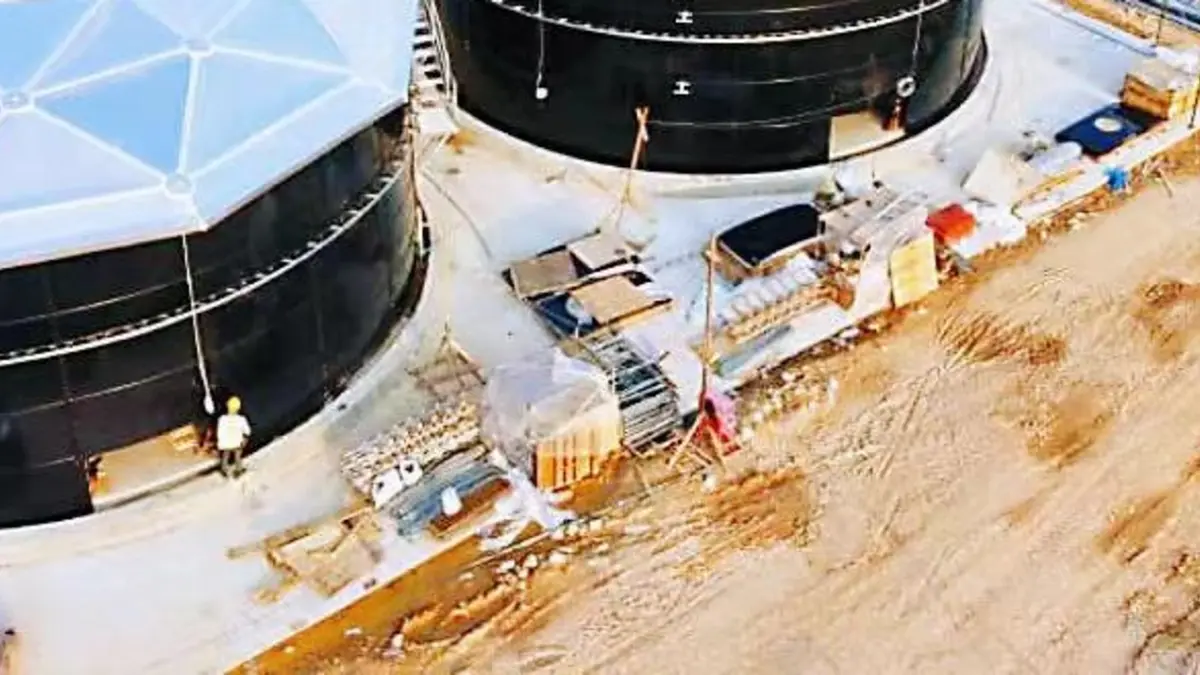
Drinking water storage tank guide covering water quality, approvals, roofs, contamination control, corrosion, access, and RFQ data.
Drinking water storage projects need material compatibility, covered design, vent protection, access planning, and water-contact documentation.
Potable water tank procurement needs approval-ready data
Drinking water storage tanks serve municipal systems, industrial plants, community water networks, resorts, islands, emergency reserves, and treatment plant buffers. The buyer must define whether the tank stores raw water, treated drinking water, desalinated water, process water with potable expectations, or emergency potable reserve. Each duty has different document and material requirements.
The tank type can include glass-fused-to-steel, fusion bonded epoxy, stainless steel, welded steel, galvanized steel, or concrete-adjacent alternatives. Product selection should start with water quality, local approval path, tank volume, roof and venting plan, access for inspection, and maintenance expectations.
Glass-fused-to-steel tanks are commonly reviewed for potable and municipal water storage where factory-applied coating, modular logistics, and field assembly are important. The buyer should request coating records, installation guidance, accessory details, and water-contact documentation relevant to the destination market.
Fusion bonded epoxy tanks can support drinking water or treated water projects when coating suitability and document requirements are clear. Stainless steel tanks may be selected where corrosion resistance, cleanability, and owner preference justify the material cost. Galvanized steel may be practical for selected utility or raw-water duties, but potable approvals and water chemistry must be confirmed before use.
For desalination or high-chloride water, the specification should move beyond generic drinking water language. Review seawater desalination storage because chloride exposure, material grade, roof corrosion, and maintenance access become more important.
Roof and contamination control
Covered design is often central to potable water storage. The roof and vent system should protect water from debris, birds, insects, sunlight, rainwater ingress, and unauthorized access while allowing safe inspection and ventilation. Aluminum dome roofs may be reviewed for large water tanks where corrosion resistance and clear-span cover performance are valuable.
Overflow, drain, vent, manway, and access details should be defined before final price. A tank with correct shell material but weak access or vent protection can fail the buyer review. The RFQ should include any local requirement for screened vents, lockable access, sampling point, and overflow discharge routing.
Water chemistry and corrosion review
Potable water is not always low-risk water. Chlorides, disinfectants, low pH, high temperature, and coastal environments can affect coating selection, stainless grade, fasteners, roof components, and maintenance schedule. Buyers should provide water chemistry whenever available, even if only preliminary data exists.
Corrosion protection should be coordinated with the corrosion protection guide. The tank quotation should identify internal coating, external protection, edge sealing, nozzle coating, gasket materials, and whether repair materials are included.
Protect water quality during operation
Tank geometry and system operation influence water age. The utility or process designer should review usable volume, normal turnover, inlet and outlet location, short-circuiting risk, seasonal demand, minimum operating level, and whether mixing or recirculation is needed. A larger tank is not automatically better if low turnover allows disinfectant residual to decay or sediment to accumulate.
Commissioning should define cleaning, disinfection, flushing, sampling, acceptance criteria, and responsibility for protecting the tank after handover. The operating plan should cover screened vents, overflow condition, hatch security, level instruments, sediment removal, internal inspection, coating repairs, and the response to prolonged stagnation or contamination. These water-quality controls belong to the owner and utility program even when the tank supplier provides suitable materials and access features.
RFQ data for municipal and industrial buyers
A drinking water tank RFQ should include net usable volume, tank dimensions, stored water type, treatment chemicals, water-contact approvals, site loads, roof type, nozzles, overflow, drain, access package, foundation scope, installation responsibility, and document list.
Project references help buyers think about real-world data. The Kenya drinking water storage tank project shows why geography, approval context, and access planning should be included in the RFQ instead of left until installation.
Standards and Reference Notes
The World Health Organization publishes the Guidelines for drinking-water quality as a risk-based reference that supports national drinking-water regulation and water-safety management. It is not a tank certification or a substitute for destination-country approvals. Buyers should confirm national, municipal, owner, and utility requirements before final material, coating, and documentation decisions.
Next RFQ Steps
Send water duty, chemistry, volume, local approval requirements, roof and vent details, nozzle schedule, site loads, access package, installation scope, and document list.