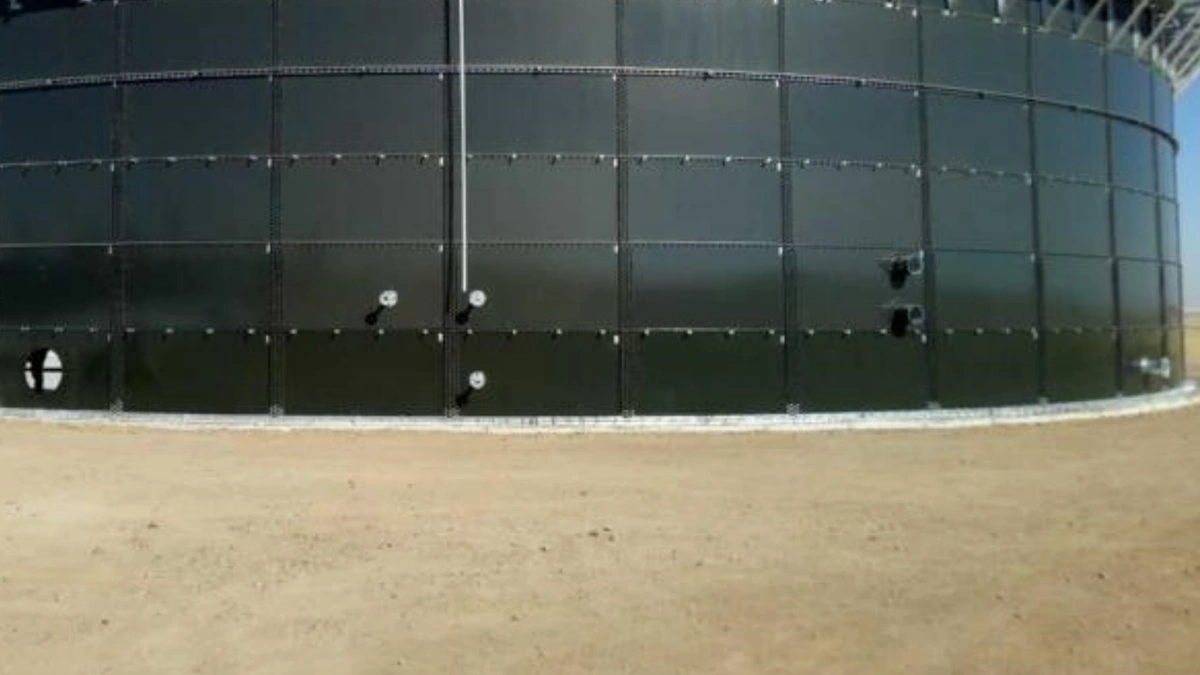
Project references for potable, municipal, process, emergency, and industrial water storage, organized by water duty and engineering requirements.
Water storage references should be compared by water duty, usable capacity, hygiene or process requirements, corrosion exposure, roof, hydraulics, and project approval route.
Water storage projects are not interchangeable
Potable-water reserve, municipal balancing, process water, irrigation, desalinated water, emergency storage, and fire-water duty may all use steel tanks, but they do not share one design basis. Water quality, usable volume, refill strategy, hygiene, hydraulic connections, corrosion exposure, roof and vent arrangements, inspection, and approval route must be compared.
Potable water introduces hygiene, water-contact material, vent-screening, access, cleaning, and approval questions. Process water may instead be governed by chemistry, temperature, plant availability, and equipment connections. Fire-water storage depends on a responsible fire-protection design and usable reserve rather than general utility capacity.
References should therefore be grouped by duty first. A tank used for irrigation may demonstrate transport or erection capability, but it does not by itself demonstrate a potable-water approval package or fire-system hydraulic interface.
Calculate usable water, not only shell volume
The project team should distinguish geometric capacity from usable operating volume after freeboard, minimum outlet or suction level, dead storage, sediment allowance, operating tolerance, and required reserve. Refill reliability and peak demand determine whether a tank is a buffer, emergency reserve, or primary storage asset.
Inlet, outlet, overflow, drain, recirculation, sampling, level instruments, and pump connections need a coordinated nozzle schedule. Pipe loads and supports should be assigned to the responsible parties before drawings are released, especially where large suction or transfer lines connect to the shell.
Connect water quality to roof and corrosion decisions
Water chemistry, disinfectants, temperature, and cleaning method influence the internal material or coating review. Externally, coastal air, high humidity, industrial fallout, UV, condensation, and freeze risk can affect shell, roof, fasteners, platforms, instruments, and connected pipework.
The roof helps control contamination, weather ingress, sunlight, and access. Potable-water projects may require screened vents, protected overflows, sealed hatches, and owner-specific hygiene provisions. These details should be visible in the RFQ instead of being left to site interpretation.
Compare approval, delivery, and handover scope
A material certificate or product approval does not automatically constitute destination-country project approval. The buyer should state the governing owner documents, authority requirements, standard and edition where applicable, and the evidence expected at submittal and handover.
References also need logistical context. Remote, island, urban, or operating-plant sites can change packing, unloading, lifting, erection, supervision, testing, and spare-part needs. The quotation should name responsibility for civil works, installation, disinfection, hydraulic commissioning, and final acceptance.
Next Step
State water duty, usable capacity, water chemistry and approvals, refill and hydraulic data, roof and accessory scope, site loads, civil and installation boundary, testing, and handover records.