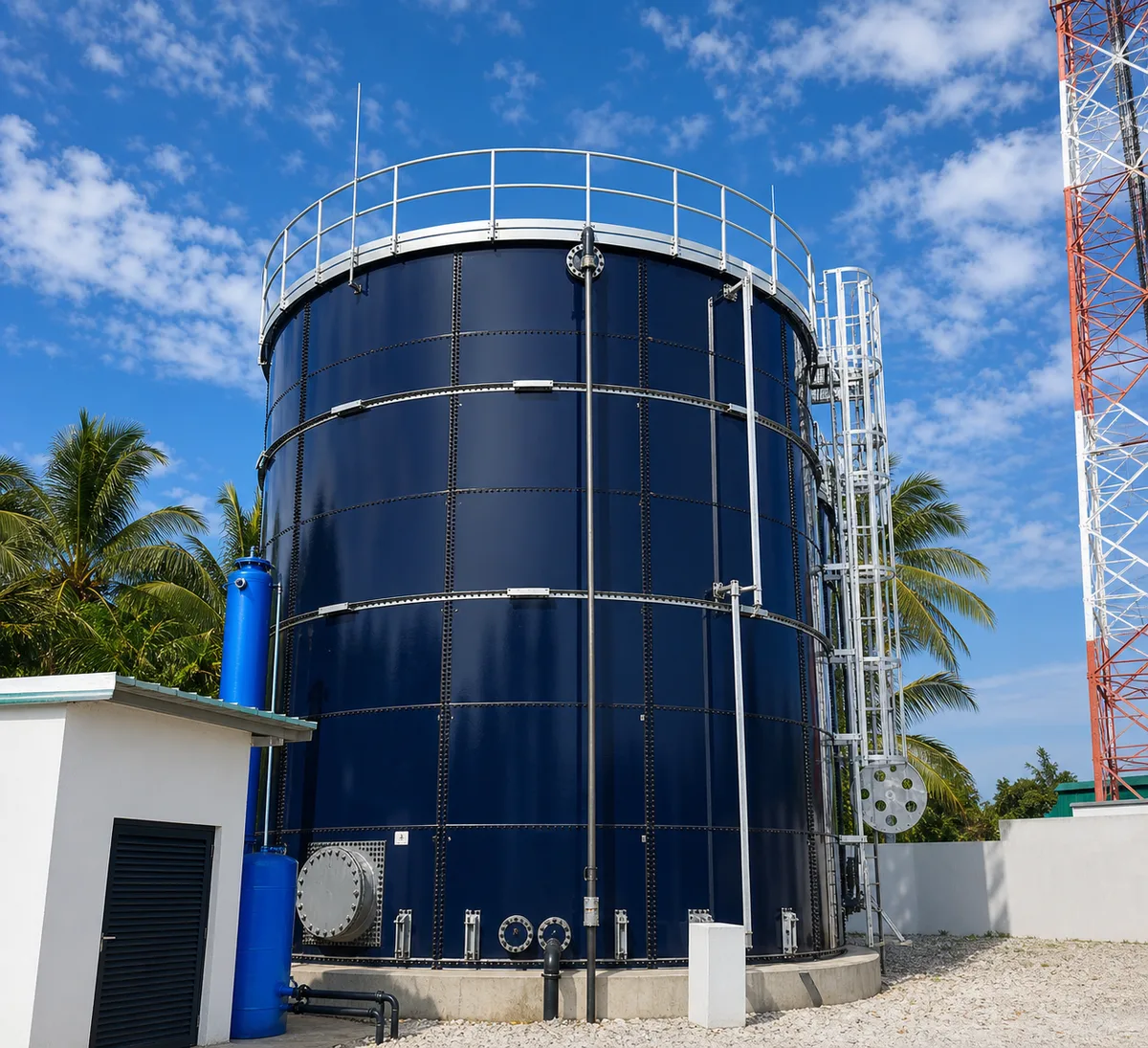
Home›Projects›Kenya Drinking Water Storage Tank Project
Kenya Drinking Water Tank Project
Project case guide for drinking water storage tanks in Kenya-style infrastructure projects, including capacity, roof, hygiene, access, and RFQ data.
Drinking water storage tank project for municipal water infrastructure and potable water supply.
Drinking water projects require hygiene, roof, and access review
Project case guide for drinking water storage tanks in Kenya-style infrastructure projects, including capacity, roof, hygiene, access, and RFQ data. Use the case to identify comparable operating conditions and RFQ inputs; final design remains project-specific.
The first technical review should confirm potable water reserve, rural distribution network, treated water inlet, disinfection compatibility, closed roof hygiene, overflow screening. Record preliminary assumptions separately from confirmed project data so suppliers quote the same scope.
Kenya Drinking Water Storage Tank Project Review Matrix
Review area
Specific data to confirm
Operating duty
potable water reserve, rural distribution network, treated water inlet, disinfection compatibility, closed roof hygiene, overflow screening.
Risk controls
access ladder security, level transmitter, municipal pumping station, foundation readiness, site unloading access, tropical sunlight exposure.
Interface details
community water demand, water contact documentation, sediment drain, inspection manway, chlorinated water service, maintenance isolation valve.
Document package
potable water reserve, rural distribution network, treated water inlet, disinfection compatibility, closed roof hygiene, overflow screening, access ladder security, level transmitter, municipal pumping station, foundation readiness, site unloading access, tropical sunlight exposure, community water demand, water contact documentation, sediment drain, inspection manway, chlorinated water service, maintenance isolation valve.
Quotation boundary
Confirm included scope, excluded scope, local responsibility, inspection points, and acceptance criteria for this exact duty.
What This Project Reference Demonstrates
A comparable project review should begin with potable water reserve, rural distribution network, treated water inlet, disinfection compatibility, closed roof hygiene, overflow screening. These values establish the design and procurement basis for this specific topic.
If one quotation ignores access ladder security, level transmitter, municipal pumping station, foundation readiness, it should not be compared directly with a proposal that includes those checks. The difference may be scope, not price.
Site Interfaces, Inspection, and Handover
Interface review should include community water demand, water contact documentation, sediment drain, inspection manway, chlorinated water service, maintenance isolation valve. These details affect drawings, accessory supply, packing, installation sequence, and responsibility split between supplier, EPC contractor, and site team.
Inspection should be tied to this duty. Instead of asking for a generic certificate set, request records that prove the supplier controlled the relevant material, coating, weld, membrane, roof, accessory, or assembly step.
Data Needed for a Comparable Project RFQ
The RFQ package should include the documents and values behind potable water reserve, rural distribution network, treated water inlet, disinfection compatibility, closed roof hygiene, overflow screening, access ladder security, level transmitter, municipal pumping station, foundation readiness, site unloading access, tropical sunlight exposure, community water demand, water contact documentation, sediment drain, inspection manway, chlorinated water service, maintenance isolation valve. Missing data should be marked as preliminary so technical review can separate firm design assumptions from budget-stage assumptions.
Keep approved drawings, scope clarifications, inspection records, packing requirements, and installation responsibilities in one project file so technical and commercial reviews use the same assumptions.
Project Comparison Notes
Base supplier comparison on confirmed data for potable water reserve, rural distribution network, treated water inlet, disinfection compatibility, closed roof hygiene, overflow screening, access ladder security, level transmitter, with uncertainties identified as preliminary assumptions.
Apply the contracted standard, owner specification, and buyer-country approval requirements. International references can support discussion but do not replace local engineering approval.
Next RFQ Step
Send capacity, stored medium, chemistry, temperature, roof requirement, nozzle list, site loads, foundation status, documentation requirement, and installation boundary for technical review.
Drinking-water storage begins with hygiene and supply reliability
A potable-water project should define source water, treatment stage, disinfectant, required contact-material evidence, usable reserve, refill reliability, daily demand pattern, minimum operating level, and the owner’s cleaning and inspection method. These inputs distinguish drinking-water storage from process, irrigation, or general utility tanks.
For Kenya or comparable regional projects, logistics and site support may also influence the package. Delivery route, unloading, lifting, local installation capability, protected storage, spare sealants or fasteners, repair materials, and document language should be confirmed for the actual location rather than inferred from the country name alone.
Protect stored water through roof and connection details
Roof, vents, screens, hatches, overflow, drain, inlet, outlet, sampling, level instruments, ladders, and platforms form part of the hygiene and maintenance system. Their arrangement should prevent avoidable contamination while allowing ventilation, inspection, disinfection, and safe access required by the owner and destination approval route.
Gross shell volume should not be confused with usable water. Freeboard, dead storage, minimum outlet level, sediment allowance, operating range, and any emergency reserve affect capacity. Foundation, drainage, overflow discharge, and pipe supports should be coordinated before installation so water service can be commissioned without unplanned field changes.