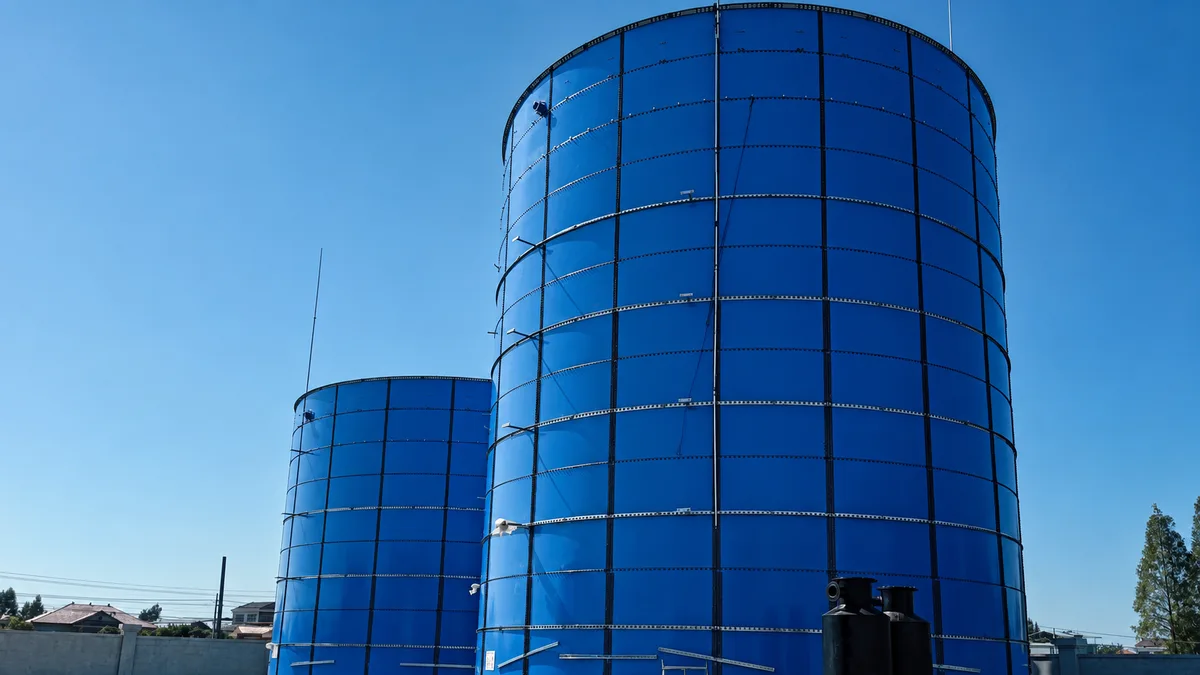
Industrial tank installation guide covering foundation readiness, assembly controls, roof and nozzle interfaces, testing, handover records, and scope allocation.
Installation quality begins with confirmed foundation, controlled handling, correct assembly sequence, documented inspection, and clear responsibility boundaries.
Installation is an engineered stage of the tank project
Tank installation should not begin with an assumption that the foundation, lifting plan, weather conditions, materials, tools, and site access are acceptable. A sound erection plan coordinates the supplier package with the civil works, installation contractor, process piping, roof system, electrical work, and owner inspection requirements.
Use this guide alongside the RFQ data checklist and the quality control page to establish the evidence required before, during, and after site assembly.
Installation hold points
Stage
Minimum review before proceeding
Foundation release
Dimensions, level tolerance, anchor layout, drainage, settlement criteria, access, concrete curing status, and civil acceptance records.
Delivery and handling
Packing list, part identification, unloading area, lifting equipment, protection from damage, storage conditions, and missing-item process.
Tank assembly
Approved drawings, assembly sequence, fastener and sealant controls, panel alignment, access safety, weather limits, and inspection checkpoints.
Roof and connections
Roof interface, vents, hatches, nozzles, pipe reactions, platforms, instruments, and coordination with other contractors.
Testing and handover
Test basis, leak or hydrostatic requirements, corrective actions, inspection records, drawings, manuals, spare parts, and acceptance signatures.
Release the foundation only after a documented check
The installation team needs more than a completed concrete slab. It needs confirmed dimensions, elevation, level tolerances, anchor positions, drainage, access routes, and any settlement or liner interface requirements stated by the engineered tank package. The civil contractor and tank installer should agree the release condition before parts are unpacked.
If a foundation does not match the approved arrangement, the right response is to stop and resolve the deviation. Altering panels, anchors, or shell geometry informally in the field can create problems that are difficult to inspect later. All changes should be reviewed by the responsible engineering party and recorded before construction proceeds.
Control handling, assembly, and weather exposure
Bolted systems, factory-coated panels, seals, fasteners, roof components, and accessories need protected storage and identifiable packing. The installation plan should define unloading, lifting, staging, component verification, tool calibration where needed, and the process for separating damaged or uncertain parts from accepted materials.
Assembly must follow the approved sequence. Alignment, fastener tightening, sealant or gasket placement, joint cleanliness, panel handling, and safe work at height should have clear checkpoints. Rain, wind, temperature, contamination, and poor access can affect field work; the acceptable conditions and corrective process should be agreed in advance rather than decided under schedule pressure.
Coordinate roof, nozzles, piping, and access before closing the structure
Roof and cover systems need an agreed interface with the tank shell, vents, hatches, platforms, instruments, overflow, and maintenance access. Piping designers should provide nozzle loads and support arrangements rather than allowing external pipe weight or thermal movement to be carried by an unreviewed shell connection.
All penetrations should be checked against the latest drawings before field modifications. Mixers, ladders, platforms, handrails, electrical instruments, heating connections, and process nozzles may require local reinforcement, sealing, or access provisions. Late site changes should be captured through a controlled drawing and inspection process.
Test and hand over a documented system
The test basis should be agreed before the tank is filled. It should state the medium, fill sequence, hold period, level checks, leak-inspection method, safety controls, discharge route, and acceptance criteria. A hydrostatic or leak test is a project activity with civil, process, and safety consequences, not merely a supplier demonstration.
Handover should include approved drawings, material and inspection records, any repair documentation, test record, nozzle schedule, accessory list, operating limits, maintenance guidance, and spare parts or repair materials where specified. These records give the owner a usable baseline for future inspection, modifications, and warranty discussions.
RFQ and Next Steps
State the foundation status, site access, lifting limits, installation party, weather and work restrictions, roof and piping interfaces, test basis, inspection witnesses, and required handover documents before pricing installation support.
Site installation should begin only after the responsible parties have checked the released drawings, foundation dimensions, level and tolerance requirements, anchors, access route, unloading area, lifting plan, drainage, weather limits, component inventory, and safe-work controls. The exact acceptance criteria depend on the tank system and project documents, so a generic statement that a foundation is ready is not sufficient for a controlled handover.
During receipt, identify damaged, incomplete, or unapproved parts before they are incorporated into the structure. Coated panels, seals, fasteners, roof components, instruments, and repair materials should be stored and handled according to the agreed method. The installation record should distinguish pre-existing transport damage from site damage and show the approved repair or replacement decision.
Use the quality control guide to align site checks with the order inspection plan and confirm which records must be retained for final handover.
Protect the sequence from unowned interfaces
A tank installation often intersects with civil works, cranes, scaffolding, piping, electrical systems, instruments, roof equipment, drainage, containment, fire protection, and process commissioning. Each interface needs a named owner and a drawing reference. Late changes to nozzles, supports, access steelwork, or roof penetrations can affect structural, corrosion, sealing, and testing decisions, so they should be reviewed before field work proceeds.
Testing and handover should be planned before closure. The project should state the test basis, water source and disposal route where relevant, inspection hold points, permitted repair process, punch-list responsibility, drawings, packing and accessory records, installation documentation, operation information, and acceptance authority. A completed structure is not necessarily an accepted system until these activities are closed against the agreed scope.
Keep a controlled record of the drawing revision and field instruction used at each hold point. When a site condition requires a change, record the affected component, reason, responsible reviewer, approved disposition, and follow-up inspection. This protects the handover record from being assembled from conflicting sketches, photographs, or superseded instructions.
For project planning, link the installation discussion with the production process page so factory release, packing, site receipt, assembly, inspection, and documents are treated as one delivery path.