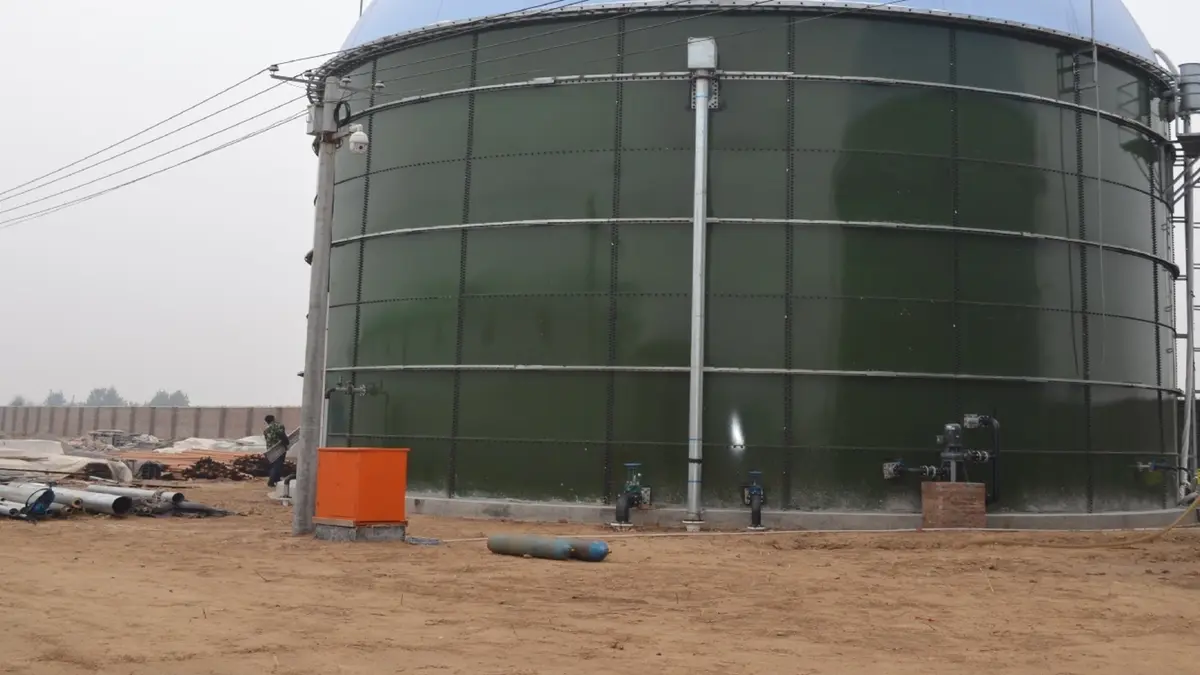
Food and beverage processing tank guide for process water, wastewater, dairy, juice, slaughterhouse, hygiene review, coating selection, and RFQ data.
Food and beverage tank selection must separate hygienic process storage from wastewater, equalization, and biogas-support duties.
Separate hygienic storage from wastewater duty
Food and beverage processing plants use storage tanks in several different ways: process water, ingredient or utility storage, cleaning water, wastewater equalization, anaerobic pretreatment, sludge holding, and emergency buffer volume. These duties should not be merged into one generic tank specification because hygiene expectations, corrosion risk, odor control, and inspection needs differ sharply.
For an industrial tank manufacturer, the first qualification step is to define whether the tank touches product, utility water, wastewater, or gas-producing organic load. A stainless steel tank may be appropriate for selected hygienic or high-cleanability duties, while epoxy coated steel, glass-fused-to-steel, or bolted steel tanks may be used for wastewater, equalization, and utility-water applications where factory coating and field assembly are important.
Organic load variation, cleaning chemical exposure, temperature swing, foam control, and downstream treatment interface.
Slaughterhouse wastewater
High organic load, suspended solids, odor, corrosion risk, gas cover or pretreatment interface, and maintenance access.
Biogas support
Anaerobic digestion tank interface, double membrane gas holder, condensate, safety accessories, and inspection responsibility.
Tank material and coating selection
Stainless steel is often reviewed where cleanability, corrosion resistance, and hygiene confidence are central to the duty. However, stainless steel grades, fabrication quality, surface finish, drainability, and access design still need project review. It should not be treated as a universal answer for every food plant tank, especially where the duty is wastewater equalization rather than product-contact storage.
Epoxy coated tanks and glass-fused-to-steel tanks are practical options for wastewater, recycled water, and buffer storage when the project needs field assembly and controlled panel coating. Buyers should provide wastewater chemistry, cleaning chemicals, temperature, expected solids, and mixing details because coating selection is only meaningful when the stored medium is known.
For food and beverage wastewater, a steel tank supplier should ask whether the tank will receive CIP discharge, acid/alkali cleaning streams, hot water, oil and grease, or biological load. These details influence coating, gasket material, roof or cover selection, venting, and whether odor or gas management is required.
Hygiene, access, and cleaning review
A tank connected to a food plant should be easy to inspect and maintain. Important details include manway placement, bottom drain arrangement, internal obstructions, vent screening, overflow routing, roof access, and whether cleaning requires confined-space entry. Even wastewater tanks benefit from thoughtful access because sediment, foam, and biological deposits can increase maintenance risk.
If the tank stores potable or process water, buyers should identify local water-contact requirements and any owner-specific document list. If the tank stores wastewater, buyers should shift attention to corrosion, odor, equalization volume, mixing, and downstream treatment stability. This separation prevents overpaying for unnecessary features while avoiding under-specification where hygiene truly matters.
Industry use cases that need different specifications
Dairy plants commonly need review for warm wastewater, cleaning chemical variation, and high organic load. Juice and beverage facilities may create acidic streams, sugar-rich wastewater, or seasonal volume changes. Meat and slaughterhouse plants can involve higher solids, fats, odor risk, and anaerobic pretreatment planning.
When food processing wastewater connects to anaerobic digestion, the tank design must coordinate with gas holder, roof, safety, condensate, and maintenance requirements. Buyers should review the digestion interface through biogas and anaerobic digestion instead of treating the storage tank as an isolated vessel.
RFQ information that reduces redesign
The RFQ should identify stored liquid, duty type, temperature range, pH range, cleaning chemicals, solids level, oil and grease exposure, odor control needs, cover type, nozzle schedule, overflow and drain arrangement, mixing requirements, and whether the tank is inside or outside the processing area.
For international procurement, document expectations should be listed early: material certificate, coating report, drawing package, packing list, installation manual, inspection photos, and spare parts. These items affect project risk as much as the tank shell price.
Segregation of hygienic water and wastewater systems
A food plant may use potable water, process water, recovered water, cooling water, wash water, and wastewater within the same site. These streams should be identified separately on the tank schedule and piping interface. The RFQ should state whether any stream can contact product or product-contact surfaces, how cross-connection is prevented, and which party is responsible for hygienic validation. A wastewater tank must not inherit product-contact claims simply because it is located inside a food factory.
For utility and process-water tanks, buyers should define water quality at the inlet, required quality at the outlet, turnover time, disinfectant exposure, vent screening, drainability, cleaning method, and sampling points. For wastewater tanks, the focus changes to equalization, solids suspension, foam, odor, corrosion, cleanout, and downstream treatment stability. Keeping these design bases separate prevents an unsuitable coating, vent, or accessory package from being applied across unlike duties.
Standards and Reference Notes
The FAO/WHO General Principles of Food Hygiene provides an international food-hygiene reference. It does not certify a tank or replace applicable national food law, water-quality requirements, owner standards, or project-specific hygienic assessment.
Next RFQ Steps
Send plant process, stored liquid, chemistry, temperature, cleaning chemicals, solids and organic load, tank volume, roof or cover type, nozzles, access needs, and document requirements.