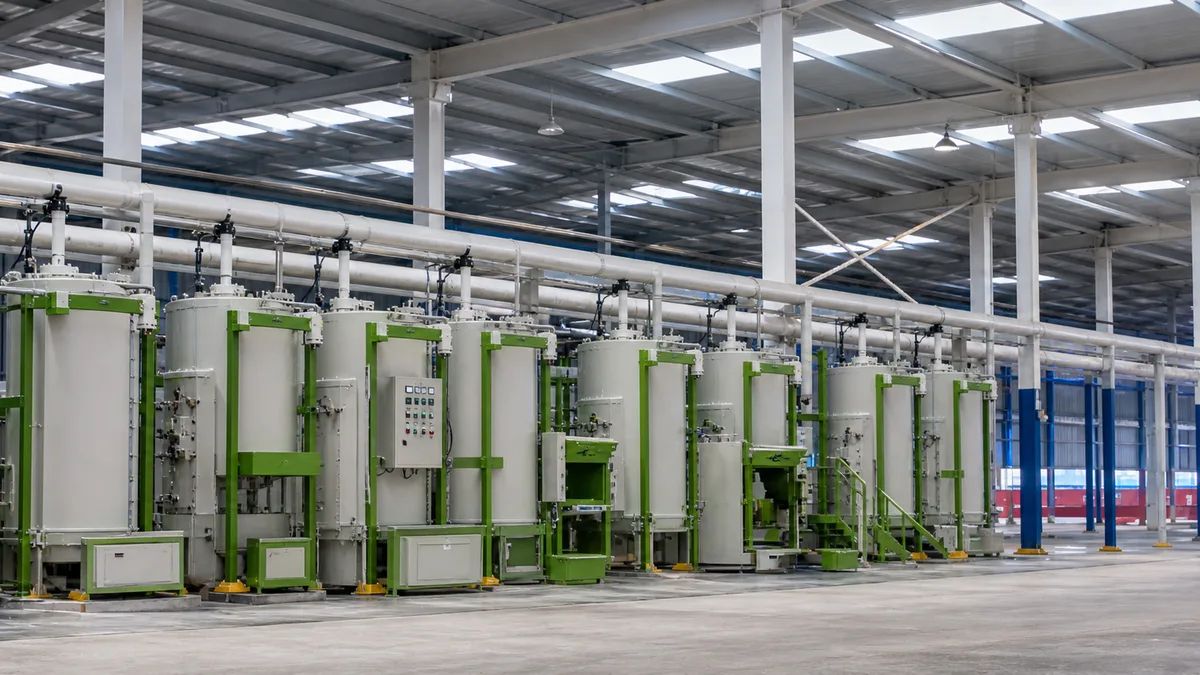
Industrial tank coating comparison covering service chemistry, construction route, inspection, repairability, lifecycle decisions, and RFQ data.
Coating selection must be tested against the real liquid, atmosphere, construction method, inspection plan, and repair approach.
There is no universal tank coating for every water or chemical duty
Glass-fused-to-steel, fusion bonded epoxy, galvanized systems, stainless steel, and coated welded steel solve different combinations of corrosion exposure, construction method, site logistics, hygiene, and inspection needs. The correct comparison begins with a service envelope, not a claim that one material is always superior.
pH, chlorides, solvents, hydrocarbons, solids, dissolved gases, cleaning chemicals, and contaminants define the real exposure.
Operating envelope
Temperature, pressure or vacuum, fill and drain cycles, agitation, abrasion, UV, condensation, and external atmosphere affect service risk.
Construction route
Shop coating, fired enamel, galvanizing, field welding, bolted assembly, transport protection, and available repair controls differ materially.
Inspection basis
Required records may include surface preparation, film thickness, continuity testing, cure data, enamel inspection, weld examination, or material certificates.
Lifecycle approach
Access for inspection, repair material, planned outage, cleaning method, spare parts, and expected process changes influence total cost and maintainability.
Compare systems by exposure, not by name
A coating family is only a starting point. The buyer should identify the exact stored medium, concentration range, impurities, operating temperature, cleaning chemicals, solids, and possible upset conditions. Internal and external exposure can be different: a potable-water tank in a coastal atmosphere, for example, has separate wetted-surface and external-atmosphere concerns.
The construction route also matters. Factory-applied systems can offer repeatable shop controls, while field welding or assembly changes the inspection and repair plan. A material or coating decision that ignores joint details, fasteners, nozzles, penetrations, edges, and field touch-up is incomplete even when the broad tank shell looks appropriate.
Treat chemical compatibility as a documented boundary
Compatibility should be stated as a range with assumptions, not as a universal marketing guarantee. The inquiry should include normal and upset chemistry, temperature, solids, cleaning regime, and gas-space conditions. Where the data is incomplete, a supplier can offer a budget-stage approach with explicit assumptions, but should not imply final compatibility without the required evidence.
The same principle applies to stainless steel and galvanized steel. Grade, fabrication quality, chlorides, crevices, temperature, dissimilar metals, and local atmosphere can matter. These systems may be valuable in suitable service, but a generic label does not replace the project-specific review.
Make inspection and repair part of the selection
The RFQ should say how coating quality will be verified. Depending on the selected system and specification, this may involve surface-preparation records, dry-film thickness, continuity or holiday testing, cure records, visual inspection, enamel checks, weld examination, or material traceability. The party responsible for acceptance criteria should be named before manufacturing begins.
Repairability is not merely a factory matter. Buyers should ask where repairs can be made, how damage is assessed, what materials are supplied, how a repair is inspected, and whether field conditions affect the method. A practical lifecycle plan includes access, safe isolation, cleaning, repair materials, and a record of any deviations from the original service envelope.
Keep tank selection connected to the process and site
A coating is one component of a storage system. Roof type, venting, overflow, drains, nozzles, mixers, insulation, external supports, foundations, containment, and site climate can create local risks that a simple coating comparison cannot settle. Their loads and penetrations should be included in the tank engineering review.
For procurement, compare technically equivalent bids: same liquid data, operating range, corrosion basis, inspection scope, repair procedure, accessories, installation boundary, documents, and exclusions. This produces a defensible decision and reduces the chance that a low initial price depends on missing corrosion, testing, or handover work.
RFQ and Next Steps
Submit the medium data sheet, operating and upset range, external environment, construction preference, inspection and repair requirements, accessories, maintenance plan, and project standards. Ask suppliers to state assumptions and exclusions in the same format.