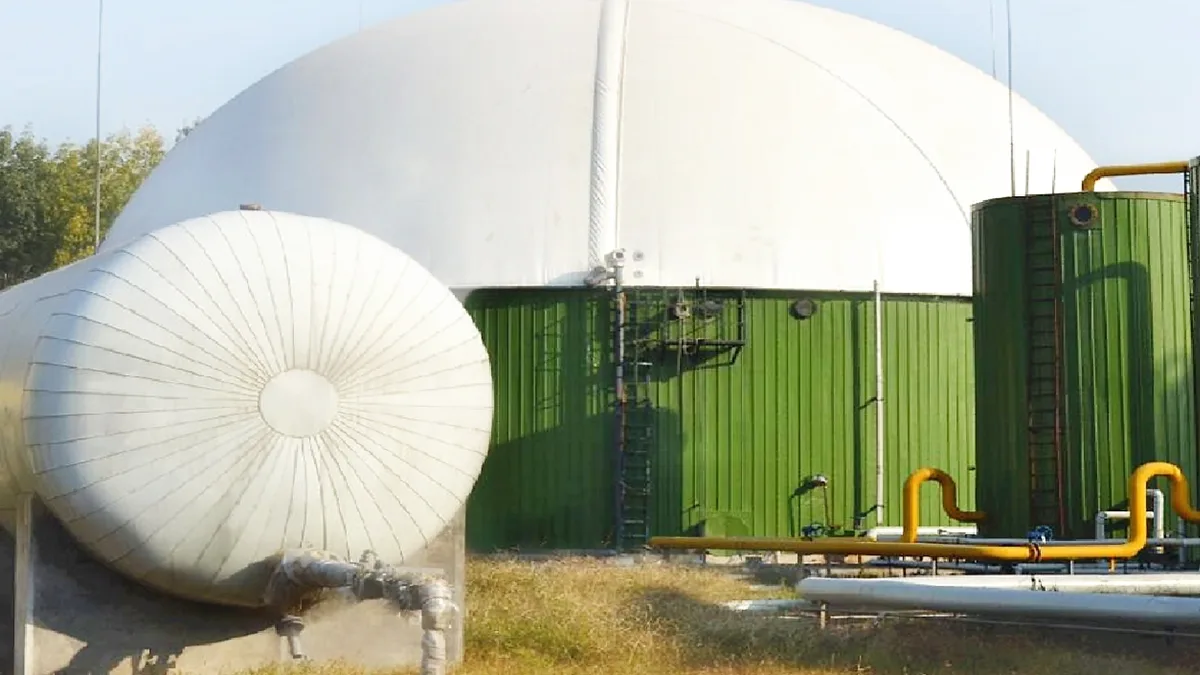
Review food processing biogas storage tanks, anaerobic digestion requirements, gas holders, membrane roofs, H2S control, and RFQ engineering data.
Food processing biogas projects should coordinate liquid storage, digestion duty, gas holder design, and safety accessories.
Biogas storage starts with feedstock and operating stability
Food factories can generate wastewater, sludge, fats, proteins, starches, and process residues that are suitable for anaerobic digestion when the process is engineered correctly. The tank system must be reviewed together with feedstock variability, organic loading, hydraulic retention time, operating temperature, mixing, gas collection, and maintenance access.
A practical solution may combine biogas storage tanks, anaerobic digester tanks, and a double membrane gas holder. The storage tank manufacturer should not treat these as isolated products. The interfaces between tank shell, roof or membrane, nozzles, gas piping, pressure relief, condensate handling, and safety devices are just as important as the tank capacity.
For global B2B projects, the RFQ should also identify local permitting requirements, electrical classification expectations, gas utilization equipment, and who is responsible for process design. This page helps buyers organize those questions before supplier comparison.
Food Processing Biogas RFQ Data
Review Item
Data Needed for Engineering
Feedstock and wastewater profile
Daily flow, COD, total solids, fats/oils/grease, pH, temperature, cleaning chemicals, and expected seasonal variation.
Digestion and gas storage basis
Target retention time, operating temperature, gas production estimate, gas utilization method, and expected pressure range.
H2S, condensate, and safety requirements
Gas composition, desulfurization plan, condensate drainage, flame arresters where required, relief devices, and instrumentation.
Civil and installation interface
Foundation scope, anchor design, access roads, crane limitations, commissioning schedule, and local inspection requirements.
Process responsibility boundary
Confirm whether the tank supplier, process designer, EPC contractor, or owner is responsible for digestion performance, gas yield, and commissioning.
Materials in vapor space
Review coating, membrane, fastener, seal, and nozzle materials against moisture, H2S, temperature, cleaning chemicals, and condensate exposure.
Tank type and roof selection
Bolted steel tanks with suitable coatings are often used where containerized delivery and fast site assembly matter. For digestion service, the coating review should consider internal liquid chemistry, vapor-space exposure, operating temperature, and cleaning cycles. The tank roof or gas holder selection then depends on process pressure, gas volume buffer, local wind load, and maintenance strategy.
Double membrane roofs can provide gas storage above the tank or in a connected holder. Buyers should review the membrane material, pressure control, blower arrangement, emergency relief, and access requirements with the same discipline used for the tank shell. Related roof details are covered on the double membrane roofs product page.
What separates a good quotation from a catalog quotation
A useful quotation should include a design basis, tank configuration, coating or lining standard, membrane or roof basis, accessory list, packing plan, installation guidance, and documents for owner review. Without those items, two quotations with the same volume can represent very different risk levels.
Food processing plants should also ask how the supplier handles nozzle coordination, inspection records, panel protection during transport, and spare parts. These details are especially important when the project is exported to a site where specialized tank technicians may not be available immediately.
Engineering risks specific to food processing waste
Food processing waste can be more variable than municipal sludge. A single plant may change recipes, cleaning chemicals, production seasons, or wastewater strength. High fats, oils, grease, or suspended solids can affect mixing, scum formation, cleaning frequency, and nozzle arrangement. These are process issues first, but they directly affect tank access, roof openings, sampling points, and long-term maintenance.
Gas-side risk should also be handled carefully. Biogas normally contains methane and carbon dioxide and may include hydrogen sulfide and moisture. Tank buyers should not ask a storage tank supplier to guess process safety requirements. Instead, submit expected gas composition, pressure range, gas holder volume, safety valve requirements, and the connection point to gas treatment or utilization equipment.
Documents that should be included before award
A well-prepared supplier package should include a tank general arrangement drawing, nozzle schedule, coating or lining basis, membrane or roof basis, material list, anchor and foundation interface data, packing plan, installation manual, and inspection plan. If these are missing, the buyer may be comparing incomplete quotations.
For export projects, the documentation package should also define language requirements, third-party inspection options, spare parts, warranty boundary, remote support method, and whether installation supervision is included. These items often affect total project cost more than a small difference in tank shell price.
Standards and Reference Notes
For process background, the U.S. EPA AgSTAR program explains anaerobic digestion and biogas project fundamentals. Use EPA AgSTAR resources as a non-commercial reference when discussing process inputs and gas production assumptions.
Food-processing biogas projects should separate process guarantees from tank-supply guarantees. The tank manufacturer can define storage geometry, coating, roof, gas holder interface, and documents; feedstock conversion, gas yield, and biological performance should be handled by the process designer or EPC contractor.
RFQ Preparation
Prepare feedstock data, gas production assumptions, pressure range, site loads, accessory requirements, and installation responsibilities before requesting a food processing biogas storage proposal.