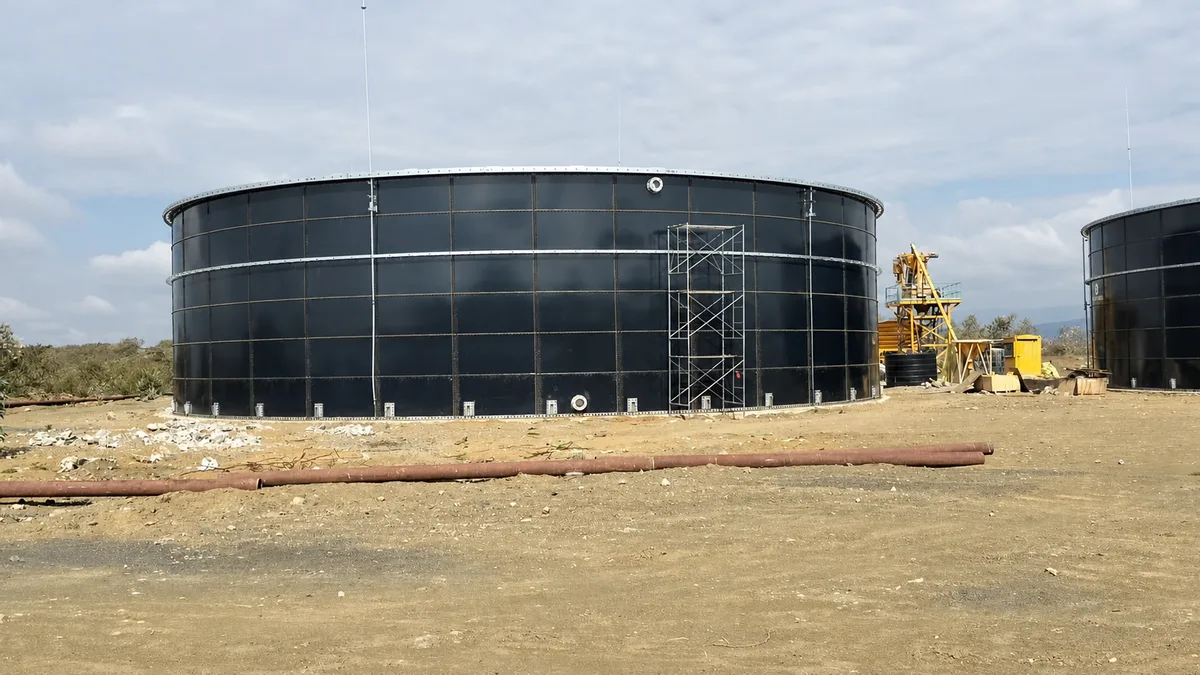
Industrial wastewater equalization tank guide for flow variation, chemistry, mixing, solids, access, treatment interfaces, and RFQ data.
Equalization storage must be sized and configured from time-based wastewater variation, the selected treatment role, solids management, mixing, access, and defined interfaces.
Equalization Is an Operating Control, Not Just Storage
Industrial wastewater equalization tanks dampen variation before downstream treatment. Their job may be to buffer intermittent flow, stabilize organic or chemical load, moderate pH or temperature swings, provide time for controlled dosing, protect biological treatment, or hold wastewater while another process is isolated. The right volume and configuration depend on the time pattern of actual contributing streams and the tolerance of downstream equipment, not on a daily average flow alone.
A credible enquiry separates normal, peak, minimum, batch, cleaning, upset, and emergency conditions. It identifies the expected chemistry, temperature, solids, oil or grease where relevant, cleaning chemicals, gas or odor conditions, mixing requirement, pump arrangement, level range, overflow route, drains, roof or cover, access, and the project party responsible for treatment process design. The tank package can then be designed around a defined duty rather than an undifferentiated wastewater label.
For treatment-train context, start with the wastewater treatment application page. This page focuses on the equalization function and the information needed to turn it into an engineering RFQ.
Equalization Tank Design Inputs
Review area
Information needed for a comparable proposal
Influent pattern
Contributing processes, average and peak flow, batch timing, production shifts, cleaning cycles, stormwater or infiltration, planned shutdowns, upset streams, and emergency diversion.
Wastewater envelope
Normal and upset pH, temperature, dissolved salts, solids, oil and grease, cleaning agents, abrasive material, odor or gas risk, deposits, and expected sampling method.
Hydraulic duty
Required buffer period, gross and usable volume, operating levels, inlet energy, outlet and pump duty, bypass, overflow, drain route, downstream treatment capacity, and future expansion.
Operation and maintenance
Mixing or circulation, solids control, sampling, dosing interfaces, roof or cover, ventilation, access, cleaning, isolation, inspection, scaffolding, drains, and safe-work requirements.
Project interface
Material and protection review, foundation, containment, civil drainage, power and controls, process equipment, installation, inspection, testing, documents, and commissioning responsibility.
Use a Time-Based Flow and Load Profile
Equalization should be assessed from a time-based record or approved design profile. Production shifts, batch discharges, vessel washdowns, cleaning-in-place cycles, raw-material changes, product losses, cooling water, stormwater, and maintenance drains can create peaks hidden by a daily total. The owner or process designer should define how long variation must be buffered, the acceptable downstream flow and load, normal and emergency levels, the diversion logic, and the consequences if the equalization tank is unavailable.
Flow alone is not enough. The tank may receive swings in pH, temperature, dissolved solids, suspended solids, oil, organic load, cleaning chemicals, or concentrated side streams. The RFQ should distinguish streams that are intentionally combined from streams that must remain segregated. This allows the process team to define mixing, dosing, or treatment sequencing without asking the tank supplier to infer a complete treatment design from incomplete chemistry.
Provide hourly, batch, or other time-based flow data rather than only an average daily value.
Identify normal and upset chemistry separately, including cleaning and maintenance discharges.
Define the downstream treatment constraint that the equalization volume is intended to protect.
Match Mixing, Solids Handling, and Cover Strategy to the Duty
An equalization tank may require mixing or circulation to keep solids suspended, prevent deposits, distribute chemicals, limit localized extremes, or manage odor. The required outcome must be stated: a tank intended to equalize flow may need a different hydraulic arrangement from a tank intended to provide settling or sludge buffering. Inlet design, mixer mounting, recirculation nozzles, pumps, drains, access, and internal components should follow the approved process function.
Roof and cover decisions should account for odor, ventilation, condensation, maintenance access, weather, safety, and process interfaces. A cover is not automatically a gas-handling or pressure system. The proposal should state what the tank supplier provides and what belongs to odor control, ventilation, instrumentation, electrical, process, or civil contractors. This prevents a wastewater tank shell from being mistaken for a complete treatment or emissions-control package.
For corrosion and compatibility review, use the corrosion protection guide to document liquid, vapor-space, external, and repair assumptions for the selected configuration.
Design Access and Change Control Into the Project
Operators need a practical route to sample, inspect, isolate, clean, drain, repair, and return the equalization tank to service. The enquiry should identify manways, roof access, platforms, fall protection, lighting, level instruments, washdown, low-point drainage, lifting restrictions, temporary works, and the route for removed solids or cleaning residues. These details affect tank geometry and site layout as much as the nominal capacity.
A change in wastewater chemistry, production schedule, temperature, accessory load, or connection layout may invalidate early material, coating, mixing, or volume assumptions. The project should establish who reviews those changes, what record is required, and how the final configuration is checked before handover. Use the RFQ data checklist to make confirmed inputs, assumptions, supply boundaries, and document requirements visible to every bidder.
Define Acceptance as a Coordinated Delivery
A tank handover package should connect final drawings, equipment identification, material or coating records where contracted, inspection results, approved repair records, installation instructions, accessory schedule, and operating limits to the completed configuration. It does not prove the performance of an entire treatment plant, but it gives the owner a documented baseline for the supplied storage package.
Before award, compare bids against the same hydraulic, chemistry, access, and interface basis. Differences in usable volume, roof or cover, mixing scope, material assumptions, drains, containment, installation, testing, and documentation should be explicit. A lower nominal tank price may exclude items that are essential to operating an equalization function safely and maintainably.
Data to Include in the RFQ
An industrial wastewater equalization RFQ should state the time-based influent envelope and treatment role, then connect that duty to mixing, materials, access, containment, interfaces, inspection, and handover.
Normal and upset wastewater analysis: pH, temperature, dissolved salts, solids, oil or grease where relevant, cleaning chemicals, gas or odor risk, deposits, and sampling basis.
Gross and usable volume, operating levels, inlet and outlet arrangement, pumps, mixing or circulation objective, bypass, overflow, drains, level instruments, sampling, dosing, and treatment-process interfaces.
Tank material or protection basis, roof or cover, vents, nozzles, manways, access, platforms, foundations, containment, civil drainage, site loads, electrical and controls boundary, and installation constraints.
Inspection and test plan, repair procedure, final drawings, records, manuals, spare parts, commissioning boundary, acceptance criteria, and responsibility for process performance.