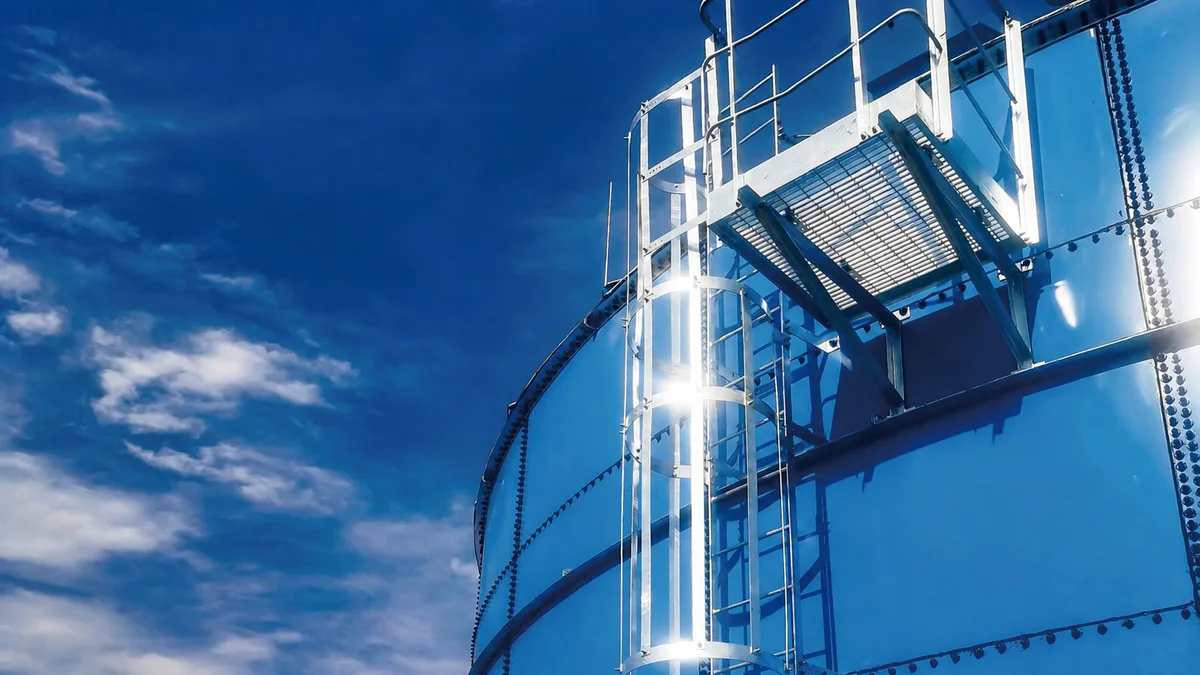
Application guide for livestock drinking water storage covering demand profile, source water, hygiene, roof and access details, distribution interfaces, cleaning, and RFQ data.
Livestock drinking water storage needs to connect source-water quality, demand profile, hygiene, access, distribution, cleaning, and operator responsibility.
Water Availability and Water Quality Must Be Planned Together
Livestock drinking water storage can support dairy, cattle, poultry, swine, feedlot, and mixed-farm operations where demand changes with animal count, weather, production cycle, washdown activity, water source reliability, and distribution layout. The storage tank is not a stand-alone guarantee of animal water quality or farm performance. The owner should define the source water, treatment stage, required usable reserve, peak demand pattern, normal and minimum operating levels, turnover, distribution pumps and pipework, cleaning and disinfection procedure, access controls, and the local requirements that apply to the site.
For wider agricultural storage context, see the agricultural water storage tanks page. This application page focuses on the operational questions that make a livestock drinking-water storage enquiry comparable. The final water-quality and animal-health requirements must be set by the owner and relevant local professionals, not inferred from a general tank type.
Livestock Water Storage Application Inputs
Review area
Information required for a suitable storage solution
Water demand
Animal category and count, seasonal or production-cycle variation, peak and daily demand, emergency reserve objective, washdown or process demand, distribution pressure, and expansion plan.
Water condition
Source, treatment stage, representative analysis, disinfectant or additives, temperature, sediment, cleaning chemicals, blending, sampling, and expected changes.
Tank operation
Usable capacity, turnover, normal and low levels, roof, vents, overflow, drains, level instruments, recirculation where specified, access, cleaning, and preservation.
Site and delivery
Foundation, weather, wind or seismic inputs where required, access, distribution-pipe boundary, pumps, electrical controls, installation, inspection, documents, and acceptance.
Calculate Storage From the Actual Farm Demand Pattern
A daily average does not establish the required storage volume by itself. Demand can rise with heat, animal growth, lactation, feeding schedule, stocking changes, washdown, treatment downtime, pump maintenance, and interruptions to the source. The owner should define the required reserve and the time basis behind it, then state the expected peak, normal, and minimum demand, distribution rate, emergency response plan, and any future expansion that must be accommodated.
The RFQ should distinguish drinking-water storage from irrigation, washdown, process, fire, or other water duties. If one tank supports multiple uses, the project needs to define allocation, priority, controls, backflow prevention where required, and the operating rule during a shortage. A nominal volume is not a complete water-supply strategy.
Define Water Quality at the Tank Inlet
The storage tank should be reviewed against the actual water arriving at the inlet. Source water may come from a municipal connection, borehole, surface source, rainwater system, treatment plant, or blended supply. The project should state treatment stage, representative quality data, disinfectant, temperature, sediment, cleaning chemicals, and expected variation. These factors affect materials, roof and vent details, drains, access hatches, instruments, gaskets, cleaning method, and the owner acceptance process.
Water quality can change after storage through stagnation, temperature, sediment, contamination routes, cleaning, or poor maintenance. The system needs a defined route for sampling, turnover, flushing, drain-down, disinfection, cleaning, and return to service. The supplier may document supplied equipment; the farm operator and responsible project team must establish the full hygiene and water-quality procedure.
Protect the Stored Water and Keep It Maintainable
Roof, vents, screens, hatches, overflow, access platforms, ladders, drains, and seal details all influence contamination control and maintainability. The enquiry should identify weather, dust, insects, roof drainage, access security, safe entry, inspection frequency, cleaning access, fall protection, and how recovered water or cleaning liquid will be handled. These items are part of the operating system, not optional additions after the tank has been selected.
For tank construction options, compare the documented duty with the galvanized steel tanks page and other project-selected materials. Selection should follow the stored-water condition, exposure, operator procedure, site, and owner requirements rather than a generic statement about suitability for all farms.
Coordinate Distribution, Pumps, and Controls
The RFQ should define battery limits between the tank, supply line, pumps, pressure system, filtration, treatment equipment, distribution network, electrical supply, controls, and telemetry. Identify fill and withdrawal rates, operating levels, pump protection, instruments, alarms, overflow, drains, isolation, sampling, and the procedure for a power or source-water interruption. Without this information, a tank proposal cannot be compared as part of a functioning farm water system.
Site drawings should show foundation interface, access road, lifting area, distribution routes, drainage, nearby operations, weather exposure, and space for inspection and maintenance. A storage tank that cannot be cleaned, inspected, sampled, or connected safely may meet its nominal capacity but fail the day-to-day operational need.
Issue an RFQ That Makes Responsibilities Visible
Before award, compare usable capacity, material or protection assumptions, roof and access equipment, vents, drains, instruments, distribution interfaces, foundation, installation, inspection, cleaning, documents, and exclusions. The selected proposal should state the water condition and operating assumptions it relies on, as well as the work remaining with the owner, farm contractor, electrical team, or distribution-system supplier.
Use the industrial tank RFQ data checklist to coordinate process, site, mechanical, quality, and document inputs. A structured enquiry helps buyers obtain a water-storage package that supports the actual operating plan without making unsupported water-quality or farm-performance claims.
Data to Include in the RFQ
A livestock drinking water storage RFQ should start with documented demand and inlet-water conditions, then define hygiene, roof, access, distribution, site, inspection, and handover responsibilities.
Animal category and count, seasonal and production-cycle variation, peak and daily demand, source reliability, required reserve, washdown or process use, future expansion, and operating priorities.
Water source and treatment stage, representative analysis, disinfectant or additives, sediment, temperature, cleaning chemicals, sampling, turnover, recirculation where specified, and local acceptance requirements.
Usable capacity, roof, vents, screens, hatches, overflow, drains, instruments, access, cleaning, disinfection, inspection, preservation, pump and distribution interfaces, and controls boundary.
Foundation and site data, weather and loads where required, access, lifting, drainage, installation, inspection and tests, quality records, manuals, maintenance responsibilities, and final acceptance.