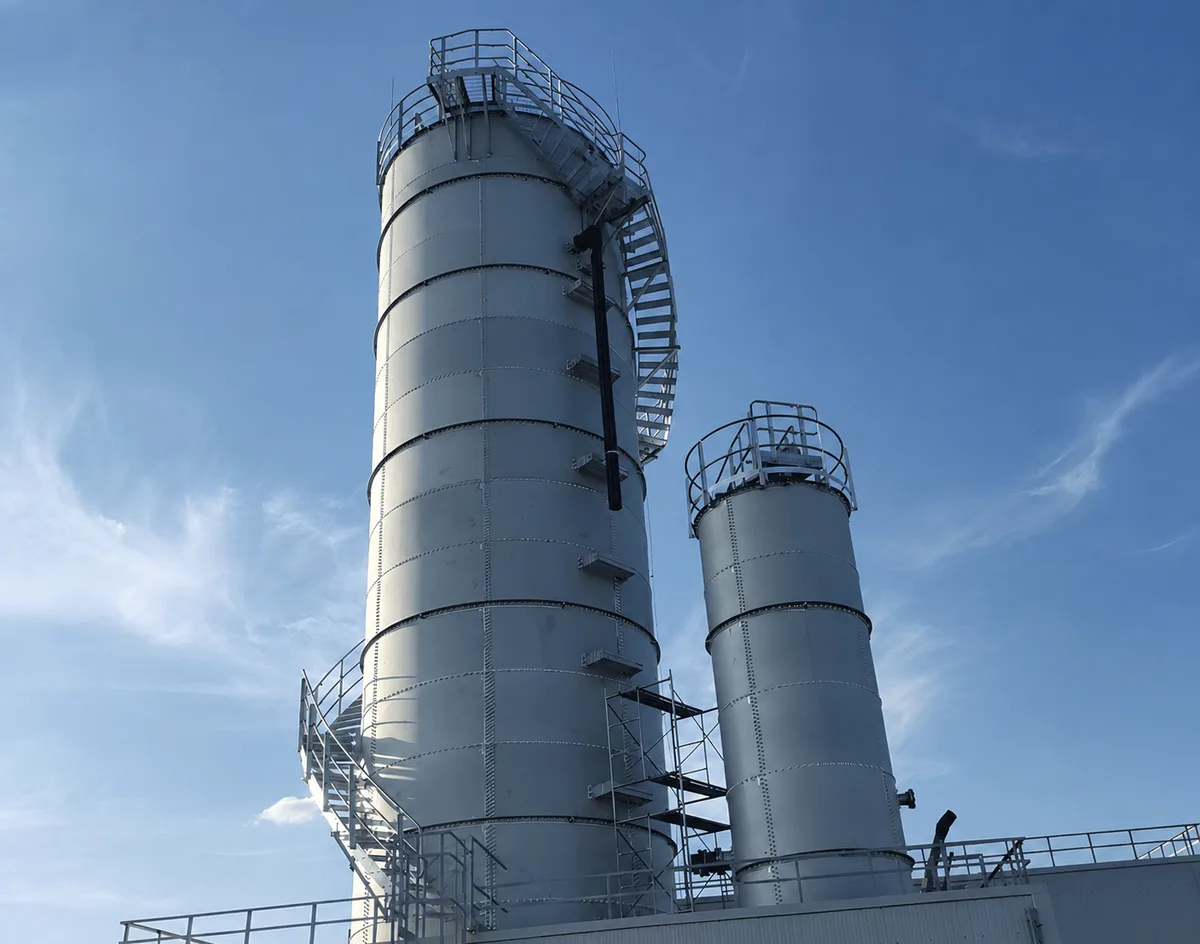
Application guide for municipal water storage covering supply duty, water quality, usable reserve, roof and access, distribution interfaces, inspection, and RFQ preparation.
Municipal water storage planning connects source-water condition, usable reserve, hygiene, distribution, access, inspection, and the owner-defined acceptance route.
Reserve Volume Must Match the Water-Service Duty
Municipal water storage can sit between source, treatment, transmission, pumping, pressure zones, distribution networks, and emergency operating plans. The tank is a component of a water-service system, not a universal assurance of water quality or supply reliability. Before selecting a tank, the owner and responsible utility team should define the incoming water condition, treatment stage, demand profile, required usable reserve, normal and minimum operating levels, turnover, source reliability, refill rate, distribution boundary, sampling, cleaning, and the regulatory or authority process that applies to the specific location.
The design basis should distinguish drinking-water reserve from process, irrigation, fire, washdown, or emergency duties. If a vessel supports more than one duty, the priority, isolation, operating rule, backflow controls where required, and minimum retained volume need to be explicit. The industrial water tanks page provides tank-system context; this application page focuses on the utility and operating information needed to turn a capacity request into a coordinated water-storage scope.
Municipal Water Storage Application Inputs
Review area
Inputs required before solution comparison
Service duty
Demand profile, source reliability, refill rate, required reserve duration, peak demand, pressure-zone role, outage response, expansion plan, and interaction with other water uses.
Water condition
Source, treatment stage, representative water data, disinfectant or additives, temperature, sediment, cleaning chemicals, sampling protocol, expected variation, and acceptance requirements.
Tank operation
Gross and usable volume, operating levels, turnover, roof, venting, overflow, drains, level instruments, access, cleaning, disinfection, inspection, and security controls.
Site and delivery
Foundation, drainage, wind or seismic inputs where applicable, connection boundary, access, lifting, installation, testing, documents, commissioning, and final acceptance.
Define the Service Role Before Sizing
A municipal storage tank may buffer treated-water production, support transmission and distribution, provide balancing volume, cover a source interruption, or maintain an owner-defined reserve. Those functions have different demand patterns and operating risks. The project team should state the capacity calculation basis, expected peak and average demand, source and pumping availability, required autonomy, normal and low levels, refill rate, and any planned demand growth. The resulting usable volume should be visible separately from gross geometric volume.
The enquiry should identify all duties assigned to the storage volume. Where drinking water shares a site with process, irrigation, washdown, or fire-water equipment, the owner needs a documented priority and isolation strategy. A storage tank supplier can describe its supplied equipment, but allocation of network capacity and the final water-service operating rule belong to the owner and responsible utility or engineering parties.
Protect Water Quality Through the Full Operating Cycle
The correct tank arrangement depends on the water delivered to its inlet and the procedure used after storage. Define the source, treatment stage, representative quality data, disinfectant or additives, temperature, sediment, sampling, expected changes, and cleaning or disinfection chemicals. These inputs affect material and gasket review, roof and vent details, overflow protection, access hatches, drains, instruments, sampling route, and the owner-defined acceptance process.
Storage can introduce risks through poor turnover, uncontrolled access, sediment, unsuitable cleaning, unprotected vents, damaged seals, or an unclear return-to-service procedure. The project should state how the tank will be sampled, inspected, flushed, cleaned, disinfected, drained, isolated, and returned to operation. For broader selection context, compare the duty with the fusion bonded epoxy tanks page only after the final water condition and approval route are documented.
Make Roof, Access, and Distribution Interfaces Operable
Roofing, vents, screens, hatches, overflow, ladder and platform arrangement, fall protection, drains, level instruments, and access controls all affect the practical operation of a municipal tank. The RFQ should identify weather exposure, dust, roof drainage, access security, inspection frequency, safe-entry policy, cleaning access, and the route for drain-down or recovered cleaning liquid. Those choices should be coordinated with the owner operating procedure instead of treated as late accessories.
The pipework and controls battery limits should identify inlet, outlet, bypass, pump, pressure management, treatment, isolation, sampling, level signals, alarms, overflow, electrical supply, telemetry, and the response to source or power interruptions. A tank can be mechanically complete yet fail its service duty if the connection and control interfaces were never made explicit.
Issue a Comparable Utility RFQ
Before award, compare usable reserve, water-condition assumptions, roof and access package, vents, drains, instruments, distribution boundary, foundation, installation, inspection, tests, records, operating information, and exclusions. Require bidders to identify assumptions rather than leaving the buyer to infer which work is included. This is especially important when tank supply, civil works, pumps, piping, controls, and commissioning are delivered by separate parties.
Use the industrial tank RFQ data checklist to collect process, mechanical, site, quality, and documentation inputs in one issue package. A disciplined data set helps buyers compare proposals for the actual municipal water-service duty without making unsupported claims about universal approval or water quality.
Data to Include in the RFQ
A municipal water storage RFQ should make the service duty, incoming water condition, usable reserve, hygiene, operating levels, network interfaces, site data, and acceptance responsibilities visible.
Service area, source reliability, peak and average demand, refill rate, required reserve duration, pressure-zone role, outage response, future expansion, and any shared water-use priorities.
Source and treatment stage, representative water data, disinfectant or additives, temperature, sediment, sampling, turnover, cleaning and disinfection method, local acceptance requirements, and return-to-service procedure.
Gross and usable volume, normal and minimum levels, roof, vents, screens, hatches, overflow, drains, instruments, access, security, inspection, cleaning, and distribution-pipe or pump interfaces.
Foundation and site data, weather and loads where required, drainage, access, lifting, installation, tests, quality records, manuals, commissioning boundary, operating responsibility, and final acceptance.