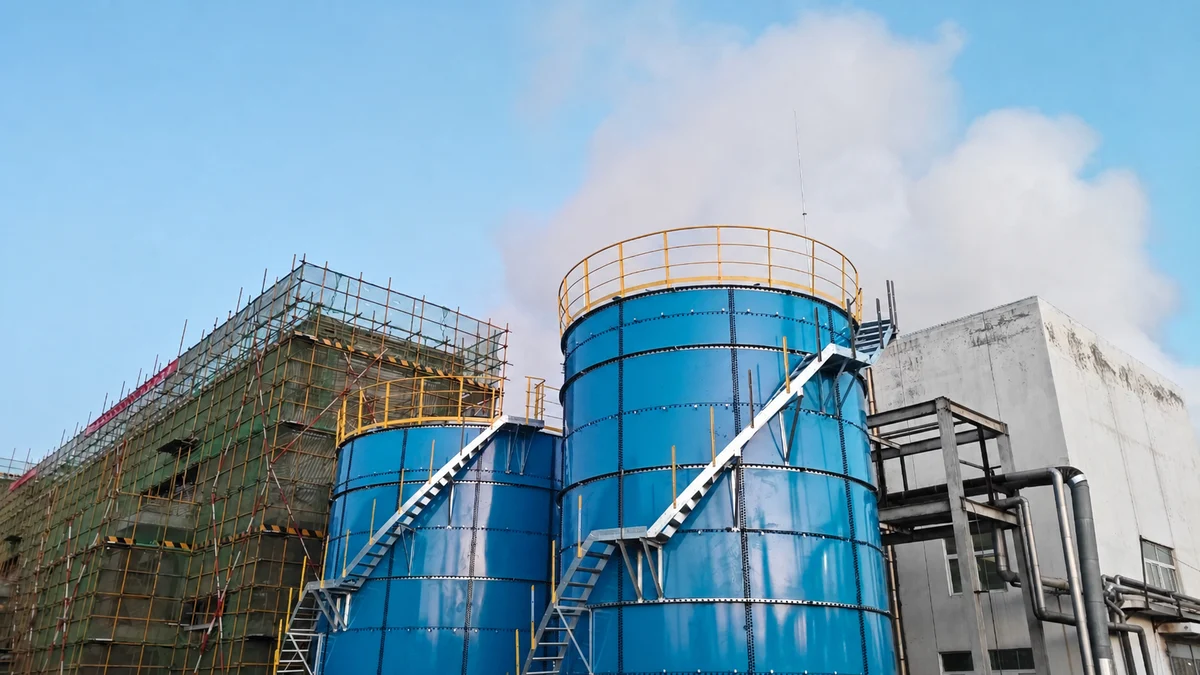
Plan slaughterhouse wastewater storage by flow variation, fats, solids, pH, cleaning discharges, equalization, tank materials, access, and RFQ data.
Slaughterhouse wastewater storage needs a defined equalization, solids, cleaning, odor, and maintenance strategy before tank capacity is selected.
Start With the Treatment Train, Not a Generic Wastewater Tank
Slaughterhouse wastewater can combine blood, fats, proteins, suspended solids, washdown water, disinfectants, cleaning chemicals, and intermittent high-flow events. A storage tank may serve equalization, screening feed, fat separation support, anaerobic pretreatment, sludge handling, emergency retention, or a downstream biological process. These duties have different hydraulic, solids, odor, cleaning, and material requirements and should not be combined under a generic wastewater description.
The buyer should provide actual wastewater analysis and the planned treatment sequence. The tank supplier needs average and peak flow, pH range, temperature, fats, oils and grease, solids, cleaning-cycle discharges, upstream screening, mixing or aeration interfaces, and the expected operating levels. That data determines usable volume, nozzle layout, roof and vent arrangement, internal access, drainability, and the corrosion or coating review.
For the full treatment context, use the wastewater treatment application page. Where a modular, factory-coated construction route is under review, compare the epoxy coated tank page with the actual wastewater chemistry and installation conditions.
Slaughterhouse Wastewater Storage Duty Matrix
Duty
Questions that must be answered
Flow equalization
Average and peak flow, daily and seasonal pattern, hold time, mixing, minimum level, overflow route, and downstream process feed rate.
Solids and fats
Screening or dissolved-air-flotation interface, fats and oils loading, sediment behavior, cleaning frequency, drain route, and access for removal.
Chemical exposure
pH range, cleaners, disinfectants, chlorides where relevant, temperature, vapor-space conditions, and material or coating compatibility.
Odor and gas control
Roof, vents, extraction or treatment interface, confined-space procedures, access hatches, and operating responsibility.
Map Flows and Cleaning Events Before Sizing Storage
Processing schedules can create sharp wastewater peaks during slaughter, carcass washing, equipment cleaning, floor washdown, and sanitation cycles. The equalization duty should be based on the treatment designer’s water balance, not on average daily flow alone. The operating plan needs normal, low, high, and emergency levels, as well as the maximum feed rate accepted by the downstream process. A tank that only provides nominal volume may not solve a short peak or cleaning discharge if the inlet and outlet sequence is undefined.
The project team should identify which drainage streams can enter the tank. Blood-rich flow, high-fat drainage, chemical cleaning streams, stormwater, and sanitary wastewater may require separation or different upstream treatment. A storage tank can support a designed treatment train, but it cannot compensate for undefined mixing of incompatible or highly variable streams. The RFQ should document the intended routing, isolation points, and response to an upset or spill event.
Design for Fats, Solids, Cleaning and Access
Fats, oils, grease, settleable solids, hair, and debris can change inlet design, low-point geometry, mixer requirements, pump selection, cleaning method, and maintenance frequency. The buyer should state what screening, grease removal, flotation, or solids separation occurs before storage and which party supplies any internal process equipment. If the tank must be cleaned manually or with a flushing arrangement, the access openings, fall protection, isolation boundary, and waste route must be part of the design.
Wetted surfaces and vapor spaces should be reviewed separately. pH, temperature, cleaners, disinfectants, chlorides, deposits, and intermittent dry-wet cycling can affect a coating or material system differently. Avoid choosing a tank material from a general food-processing label. Give the supplier representative analysis, temperature limits, cleaning chemistry, and expected inspection approach so it can state its accepted design basis and exclusions.
State solids and fats handling upstream of the storage tank.
Confirm whether mixers, aeration, pumps, odor control, and sludge equipment are tank-supplier scope or process-supplier scope.
Define cleaning access, confined-space procedure, drain route, and recovery or disposal responsibility.
Coordinate Roof, Vent and Odor Interfaces
A roof decision affects rainwater exclusion, odor containment, ventilation, inspection, access, and structural loading. The chosen arrangement should follow the treatment process and local environmental controls. If the tank connects to an odor collection or treatment system, the gas flow, connection loads, condensate handling, safety measures, and operating responsibility need to be defined. The tank supplier can provide structural interfaces, but the complete odor-control performance depends on the process system.
External access is equally important. Stairs, platforms, handrails, level devices, lighting, sample points, and manways must be arranged so operators can inspect and maintain the tank without unsafe temporary access. For a broader preparation checklist, use the industrial tank RFQ checklist before issuing comparable enquiries.
Compare the Whole Package, Not Just Tank Volume
A complete proposal identifies tank capacity and usable volume, design liquid, material or coating system, roof, vents, inlets, outlets, drains, access, instruments, mixing interfaces, inspection scope, foundation data, shipping, erection, testing, and handover documents. It also separates tank scope from civil works, treatment equipment, electrical work, piping, odor treatment, and commissioning. This makes bid comparison practical and exposes missing interfaces early.
The final RFQ should include project location, wind and seismic data where applicable, ambient conditions, construction access, installation responsibility, and the regulatory or authority requirements supplied by the owner. The supplier should not infer plant compliance or treatment performance from a tank drawing. Clear inputs allow a storage package to be engineered for the intended duty without overstating what the tank alone can achieve.
Data to Include in the RFQ
A slaughterhouse wastewater storage RFQ should state the wastewater analysis, treatment duty, flow pattern, solids and fats strategy, operating levels, tank interfaces, and site scope.
Average, peak and cleaning-cycle flow; water balance; equalization volume; hold time; normal and emergency operating levels; and downstream feed rate.
Wastewater analysis including pH, temperature, fats, oils and grease, suspended solids, chlorides where relevant, cleaning chemicals, and vapor or odor conditions.
Upstream screening, fat removal, flotation, mixing, aeration, pumps, odor-control interfaces, sediment or sludge handling, and cleaning method.
Tank material or coating review, roof, vents, inlets, outlets, overflow, drains, manways, access, instruments, platforms, and fall protection.
Project country, local environmental and safety requirements, foundation, site loads, installation boundary, construction access, and utility interfaces.
Inspection and test plan, material or coating records, leak test, installation records, operation and maintenance documents, and commissioning scope.