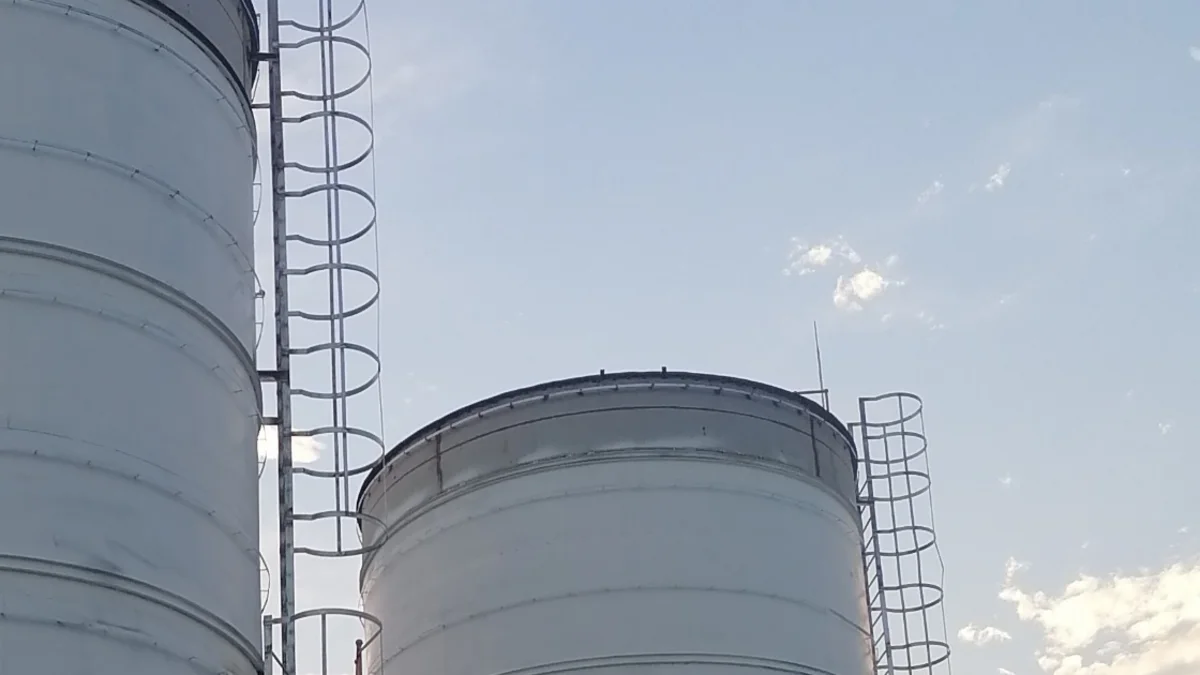
Carbon steel storage tank guide for oil, fuel, process water, chemical-compatible liquids, roof selection, corrosion allowance, coating, and RFQ preparation.
Carbon steel storage tank selection should confirm stored media, design standard, corrosion allowance, coating or lining, roof type, nozzles, and inspection scope.
Carbon Steel Storage Tanks for Industrial Liquid Projects
Carbon steel storage tanks are used when buyers need a strong and widely supported steel tank route for oil, fuel, raw water, process water, selected chemical-compatible liquids, and other industrial storage duties. The material name is only the starting point. The final tank specification depends on stored media, capacity, pressure condition, roof type, coating or lining, corrosion allowance, site loads, and inspection requirements.
For petroleum or fuel storage, buyers often review welded steel construction, API-style design basis, fixed or floating roof requirements, vents, fire protection interfaces, bunding, and inspection documents. For water or process liquids, corrosion protection and cleaning practice may be more important than shell thickness alone.
Oil, diesel, crude oil, process liquid, water, compatible chemical family, specific gravity, temperature, pH or corrosion risk, and cleaning method.
Tank configuration
Capacity, diameter and height preference, vertical or horizontal arrangement, atmospheric or low-pressure duty, fixed roof or floating roof, nozzles, manways, vents, drains, and instruments.
Protection system
Internal coating or lining, external coating, corrosion allowance, cathodic protection if specified, insulation, vapor exposure, and maintenance interval.
Standards and QA
API, AWWA, EN, local code, owner specification, weld/NDT scope, hydrotest, coating inspection, material records, drawings, and handover documents.
Where Carbon Steel Fits Best
Carbon steel is often a strong option for large-capacity tanks, petroleum and fuel service, process liquids that can be managed with a suitable coating or lining, and projects where the owner already specifies welded steel construction. It can also be used for some water duties when the coating system and inspection plan are clearly defined.
Do not compare carbon steel suppliers by steel weight alone. A complete proposal should identify the design basis, plate or panel route, roof system, corrosion protection, nozzle schedule, inspection and test plan, packing or field erection boundary, and installation responsibility.
Buyer Review Guidance
Use the specification points above to compare tank options, clarify project requirements, and prepare a more accurate RFQ before discussing final pricing.
For a quotation, confirm the stored media, required capacity, project location, design or document requirements, roof and accessory scope, inspection needs, and installation responsibility.
Procurement Scope and Handover Notes
Carbon Steel Storage Tanks for Industrial Liquid Projects should be reviewed as part of a complete storage system. Before final pricing, the buyer should confirm whether the supplier scope includes engineering drawings, material or coating records, roof and accessory supply, packing protection, installation documents, and commissioning support.
For international RFQs, the same tank volume can lead to different quotations if site loads, corrosion data, inspection requirements, approval standards, or installation responsibility are missing. A stronger inquiry clearly separates confirmed data from assumptions so the supplier can respond with a comparable technical proposal.
Next RFQ Steps
Send media, capacity, project country, standard basis, tank dimensions, roof type, corrosion allowance, coating or lining requirement, nozzle schedule, inspection level, and installation responsibility.
Establish the service envelope before choosing carbon steel
Carbon steel can be considered for a range of industrial storage duties, but suitability depends on the stored medium and the complete operating envelope. An RFQ should identify normal and upset chemistry, water content, dissolved salts, solids, temperature, pressure or vacuum conditions, filling and draining pattern, vapor-space condensation, external atmosphere, insulation or heating interfaces, and expected service life. A description such as oil, process water, or industrial liquid does not by itself define corrosion risk or the required protection system.
The buyer should also state whether the tank is atmospheric or subject to a defined pressure duty, whether it is welded or bolted, the required design basis, site loads, foundation boundary, nozzles and piping reactions, roof and venting arrangement, access steelwork, containment, inspection, and testing scope. Those inputs determine whether a proposed tank package matches the installation rather than merely matching a capacity range.
For a structured discussion of project documents and unresolved inputs, start with the RFQ data checklist and ask the engineering review to distinguish confirmed facts from quotation assumptions.
Define protection, inspection, and repair before the order is released
Where corrosion control is required, the project should define the proposed protection system, preparation and application responsibilities, inspection records, acceptance criteria, transport and erection handling, field repair method, and limitations. The shell, welds, cut edges, nozzle connections, roof interfaces, supports, drainage details, and external attachments can see different exposures. Protection must therefore be specified as part of the configuration, not assumed from a general carbon steel designation.
The delivery boundary also needs to identify what the tank manufacturer supplies and what belongs to civil, piping, electrical, instrumentation, fire protection, installation, testing, or commissioning contractors. Final documentation should connect the approved drawings, material or coating records where contracted, inspection evidence, repair records, and operating information to the final supplied configuration. This supports handover without implying that a tank package is the complete facility.
Review fabrication and site interfaces as one controlled delivery path
The procurement plan should connect shop fabrication or panel production to packing, transport, site receipt, lifting, assembly, testing, and final records. Identify the released document revision, inspection hold points, responsibility for foundation readiness, handling restrictions, field modifications, pipe reactions, roof equipment, and acceptance of repairs. A field change should not be treated as routine simply because the shell material is familiar; its effect on the approved configuration needs review.
At handover, the owner should be able to trace the supplied configuration through the agreed drawings, records, and accessory schedule. This supports future inspection and maintenance while keeping the manufacturer's equipment scope distinct from the performance and compliance responsibilities of the complete facility.