Home›Products›Galvanized Pressed Steel Water Tanks
Galvanized Pressed Steel Water Tanks
Galvanized pressed steel water tank guide for modular water storage, sectional panel tanks, potable or utility water duty, coating review, and RFQ data.
Galvanized pressed steel water tanks should be reviewed by water quality, panel design, zinc coating, roof/accessory scope, and site assembly conditions.
Galvanized Pressed Steel Water Tanks
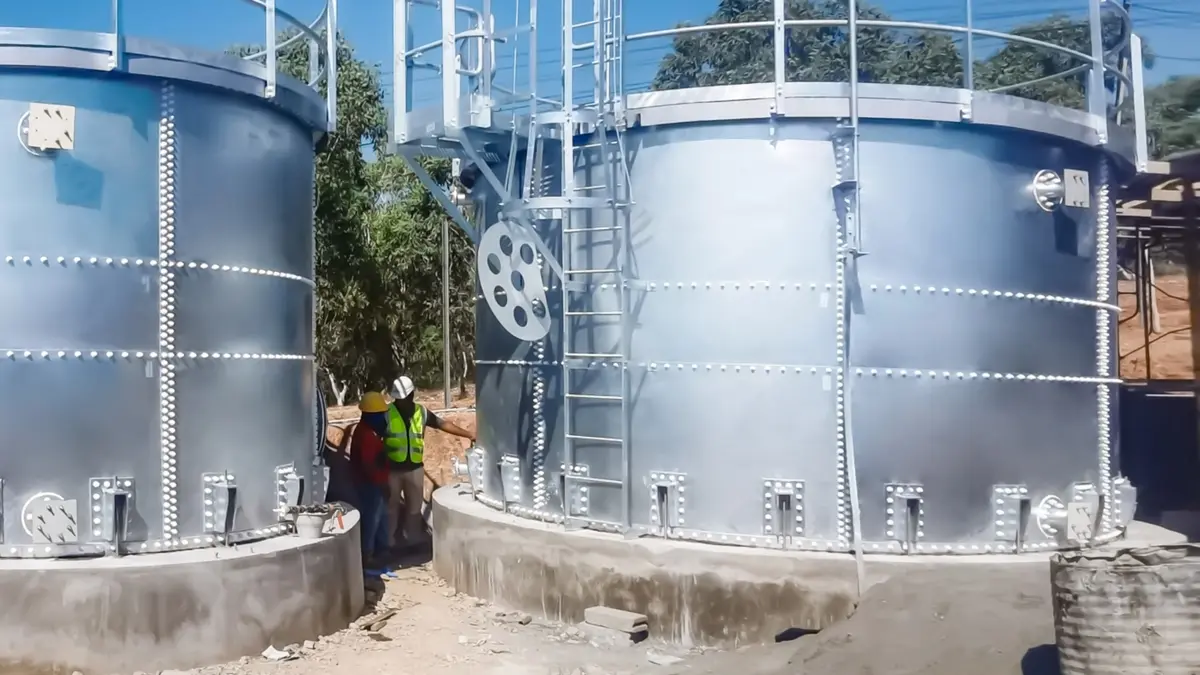
Galvanized pressed steel water tanks are sectional panel systems used for modular water storage where shipment, site access, capacity flexibility, and field assembly are important. They are commonly reviewed for utility water, fire reserve water, agricultural water, building services, and selected industrial water duties.
The buyer should confirm whether the tank is for potable water, raw water, fire reserve, process water, or non-potable utility water. Water chemistry, pH, chlorides, disinfection method, internal lining requirement, roof protection, and maintenance plan all affect whether a galvanized pressed steel system is suitable.
Potable, raw, utility, fire reserve, agricultural, or process water; pH, chlorides, temperature, disinfection, and cleaning method.
Panel system
Pressed panel size, hot-dip galvanized or zinc-coated basis, internal lining if required, joint sealing method, bolt material, and repair procedure.
Tank package
Capacity, dimensions, roof, access hatch, ladder, platform, nozzles, overflow, drain, vents, level instruments, and partition requirement if any.
Site and documents
Indoor or outdoor installation, foundation or support frame, wind/seismic data, installation responsibility, drawings, inspection records, and packing list.
When Pressed Steel Water Tanks Are Suitable
Pressed steel water tanks are useful when modular panels simplify delivery and site assembly. They can be practical for rooftop, basement, utility, farm, fire reserve, and industrial service where the water chemistry and approval requirements match the coating or lining route.
For aggressive wastewater, leachate, chemical service, or high-chloride conditions, buyers should compare GFS, epoxy coated, stainless steel, or custom engineered tank systems instead of assuming galvanized panels are universal.
Buyer Review Guidance
Use the specification points above to compare tank options, clarify project requirements, and prepare a more accurate RFQ before discussing final pricing.
For a quotation, confirm the stored media, required capacity, project location, design or document requirements, roof and accessory scope, inspection needs, and installation responsibility.
Procurement Scope and Handover Notes
Galvanized Pressed Steel Water Tanks should be reviewed as part of a complete storage system. Before final pricing, the buyer should confirm whether the supplier scope includes engineering drawings, material or coating records, roof and accessory supply, packing protection, installation documents, and commissioning support.
For international RFQs, the same tank volume can lead to different quotations if site loads, corrosion data, inspection requirements, approval standards, or installation responsibility are missing. A stronger inquiry clearly separates confirmed data from assumptions so the supplier can respond with a comparable technical proposal.
Next RFQ Steps
Send water duty, capacity, dimensions, water chemistry, indoor/outdoor site data, roof/accessory list, lining or approval requirements, installation plan, and documents needed.
Define the water duty before selecting a pressed steel tank
Pressed steel tank selection begins with the water duty, not panel geometry alone. The enquiry should state whether the system stores untreated water, process water, irrigation water, utility water, fire reserve, or water intended for human consumption. It should also identify expected water quality, cleaning method, temperature, residence time, external atmosphere, and whether the tank experiences intermittent refill, continuous turnover, or long standby periods.
The design team also needs the required volume, usable operating level, footprint and height limits, site loads, foundation responsibility, roof and access configuration, pipe and pump interfaces, overflow and drain routing, and local approval route. A catalogue capacity does not establish the usable system capacity once operating level, freeboard, fittings, maintenance access, and hydraulic interfaces are defined.
For potable or municipal use, connect this review to the drinking water storage application page and have the owner define the applicable water-contact evidence and system hygiene responsibilities for the destination project.
Review joints, access, and maintenance as part of the tank package
A bolted panel tank is a system of panels, fasteners, joints, seals, roof elements, nozzles, ladders, platforms, vents, and accessories. The procurement review should identify which components are supplied, which are field-installed, which materials are proposed for liquid contact and external exposure, and how transport damage or site adjustments are assessed and repaired. The compatibility of each detail must be considered against the actual water and atmosphere, not only against the nominal tank type.
Access and maintenance should be defined before purchase: internal inspection route, safe isolation, cleaning access, roof access, level instruments, sampling points, drainage, and replacement strategy for serviceable components. A clear scope avoids transferring civil, piping, electrical, testing, or commissioning responsibility by assumption. The RFQ data checklist can turn these requirements into comparable quotation inputs.
For a broader decision between corrosion-control approaches, use the corrosion protection guide and request a written statement of the operating assumptions behind the proposed system.
Confirm site release and acceptance records before delivery
Before fabrication or shipment, the order should identify the released drawings, foundation and anchor interfaces, packing sequence, site receipt checks, assembly scope, test basis, and acceptance authority. At handover, the owner should receive the agreed final drawings, component schedule, inspection and repair records where applicable, installation information, and a list of open items. These records establish what was supplied and checked; they do not replace the owner's operating, cleaning, or regulatory program.
This level of definition is useful for both new tanks and replacements because the existing pipework, access structures, controls, and water-management practices can impose constraints that are not visible in an outline capacity request.