Projects›How to Evaluate Industrial Tank Project References
How to Evaluate Industrial Tank Project References
A buyer-focused method for assessing whether an industrial tank project reference is technically relevant to a new storage requirement.
A useful project reference shows comparable duty, engineering conditions, supplied scope, installation context, and traceable evidence rather than only a finished-tank photograph.
Project references are evidence for qualification, not substitute designs
Industrial buyers often ask whether a supplier has completed a similar tank. The useful answer is more specific than a country name or photograph. A relevant reference should help the buyer compare stored medium, tank construction, capacity range, roof and accessory package, environmental loads, installation conditions, supplied scope, and operating objective.
This page explains how to assess those comparisons. The searchable case directory remains on the industrial tank projects page; this guide helps procurement and engineering teams decide which references deserve closer technical review before a supplier is shortlisted.
Project reference qualification matrix
Evidence area
What makes a reference relevant
Stored duty
Comparable liquid, gas, wastewater, potable water, dry bulk material, or process role rather than only a similar tank shape.
Tank system
Construction type, coating or material, roof, seals, nozzles, access, instruments, and corrosion-control approach.
Design environment
Capacity range, site wind or seismic context, temperature, coastal or industrial atmosphere, foundation and erection constraints.
Supplied scope
Clear distinction between tank supply, roof, accessories, civil works, installation supervision, process equipment, testing, and commissioning.
Verification value
Drawings, data, documented inspection, installation context, or operating lessons sufficient to support qualification without disclosing confidential client information.
Compare the operating problem before comparing the hardware
Two tanks can look similar while solving different problems. A potable-water reserve, aggressive wastewater equalization tank, fire-water tank, dry bulk silo, and biogas holder have different process, hygiene, corrosion, safety, and approval requirements. The buyer should first classify the duty and then shortlist references with the closest operating conditions.
Capacity is also contextual. Nominal volume does not show usable reserve, operating level, freeboard, sediment allowance, gas buffer role, or future expansion. Where dimensions or capacity are confidential, a range can still help determine whether the project is structurally and logistically comparable.
Separate product capability from complete-project responsibility
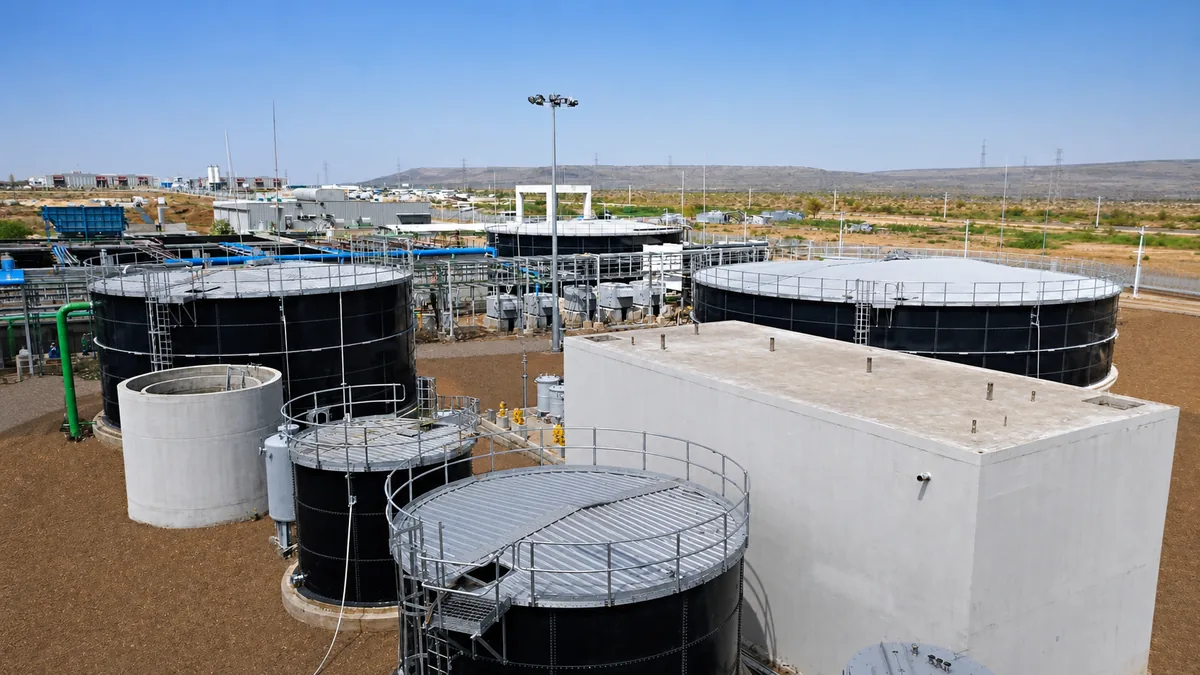
A project image may show tanks, roofs, platforms, piping, pumps, treatment equipment, electrical controls, and civil works supplied by different contractors. A credible reference should state the role of the tank supplier and avoid implying responsibility for the whole facility when the actual scope was limited to equipment, drawings, supervision, or selected accessories.
For a new RFQ, map those boundaries line by line. Tank engineering, foundation design, piping supports, containment, electrical work, hazardous-area review, erection, testing, and commissioning need named owners. The value of a reference is that it reveals interfaces the current project should clarify, not that it guarantees an identical scope.
Use references to form better technical questions
A relevant case should lead to questions about material selection, coating or enamel records, seal and fastener system, roof purpose, access, nozzle loads, packing, site assembly, inspection hold points, and handover documents. Asking these questions makes supplier comparisons more useful than requesting a general project list.
References must also be interpreted within their jurisdiction and date. Local regulations, owner requirements, standard editions, water-contact approvals, fire requirements, and environmental conditions may differ. The current project still needs its own responsible engineering and approval route.
Protect confidentiality while preserving traceability
Some owners do not permit publication of client names, exact coordinates, capacities, or process details. A responsible reference can still describe application, region, tank type, engineering challenge, approximate scope, and transferable procurement lessons. Confidentiality should not be filled with invented precision.
Internally, the content record should retain its source and evidence path. Publicly, the page should present only verified, buyer-relevant facts. This separation lets the site remain useful for engineering research without exposing private project documents or presenting assumptions as completed-project data.
Next Step
Select references with comparable duty, tank system, site conditions, supplied scope, and evidence. Then send your own medium data, capacity basis, site loads, accessories, inspection requirements, and delivery boundary for a project-specific review.