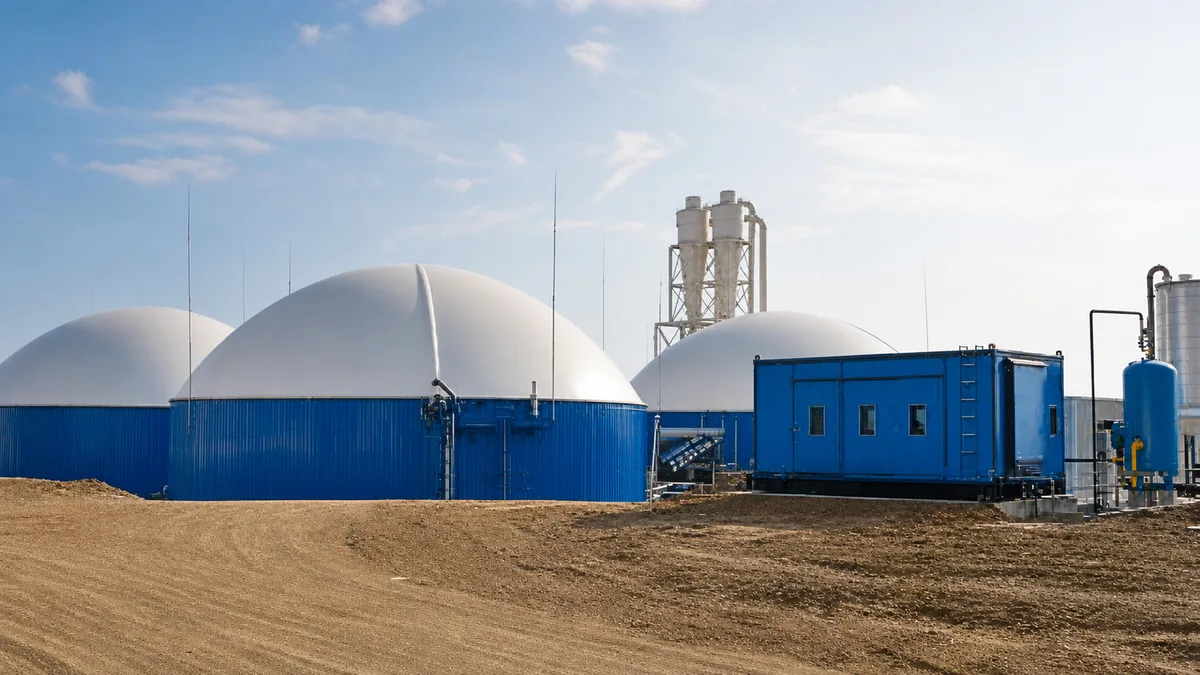
Review biogas digester tank projects for organic wastewater, anaerobic digestion tanks, gas holders, membrane roofs, safety interfaces, and RFQ data.
Biogas digester projects should separate digestion tank duty, gas holder interface, membrane roof scope, and process safety data.
Biogas digester projects combine liquid storage and gas handling
Biogas digester projects usually combine anaerobic digestion tanks, organic wastewater or slurry storage, gas holder systems, membrane roofs, gas cleanup equipment, and safety accessories. They should not be treated as ordinary water tank projects.
A comparable project records feedstock, organic loading basis, digestion route, tank volume, operating temperature, gas-production expectation, membrane or roof scope, instrumentation, and installation boundary.
Biogas digester project inputs
Input
Why it matters
Feedstock
Food waste, manure, sludge, POME, brewery wastewater, or mixed organic wastewater changes tank and process review.
Tank duty
Hydrolysis, digestion, equalization, sludge storage, digestate storage, or gas buffering.
Gas interface
Membrane roof, separate gas holder, pressure range, gas cleanup, safety valves, and instrumentation.
Corrosion exposure
H2S, condensate, organic acids, pH, temperature, and vapor space conditions.
Project boundary
Tank supply, roof, membrane, gas holder, installation supervision, piping, and commissioning responsibility.
Separate digestion and gas storage scope
A digester tank may be specified around liquid volume, residence time, mixing, heat retention, and corrosion exposure. A gas holder or membrane roof is specified around gas volume, pressure range, safety accessories, and weather loads. Combining these scopes without clear data creates weak quotations.
When comparing references, check whether the project includes tank only, roof only, membrane gas holder, or a broader biogas package.
Corrosion and process review
Biogas projects often include H2S, condensate, organic acids, warm operating conditions, and aggressive vapor spaces. Coating or material selection should be tied to actual feedstock and operating data rather than a generic biogas label.
Send feedstock type, flow rate, solids, pH, temperature, target working volume, gas production estimate, H2S data if available, roof or membrane scope, pressure range, site loads, and installation responsibility.
If the project is still in concept stage, label process values as preliminary so the supplier can separate budget discussion from final engineered design.
Mixing, heating, and gas-system interfaces
The tank package must be coordinated with process equipment. Mixer type and support loads, heating coils or external heat exchangers, recirculation connections, feed and digestate nozzles, foam control, sampling, pressure monitoring, condensate drainage, and emergency relief all affect the mechanical scope. Residence time and working volume are process decisions; the tank supplier needs confirmed design loads and connection data rather than making biological-performance assumptions.
Where a membrane roof or separate gas holder is included, define normal and upset pressure, usable gas volume, blower or air-support requirements, gas composition, H2S and moisture conditions, anchoring, weather loads, and interfaces to cleanup, flare, boiler, engine, or upgrading equipment. Liquid-side and gas-side guarantees should remain clearly separated.
Safety, commissioning, and operating records
Biogas contains combustible gas and may include toxic or corrosive constituents. Hazardous-area classification, gas detection, ventilation, earthing, lightning protection, isolation, pressure relief, flame control, and confined-space procedures must be developed by the responsible project engineers under the applicable local rules. A tank or membrane quotation cannot replace the site process-safety study.
Commissioning records should cover tank tightness, membrane or gas-holder checks, instrument calibration, alarm and trip tests, pressure-control verification, condensate routes, operating procedures, and responsibility for biological startup. The maintenance plan should define inspection access, membrane condition checks, coating review, mixer servicing, and response to abnormal pressure or gas quality.
Feedstock quantity and composition can vary with season, production schedule, or collection practice. The documented design basis should state credible ranges for flow, solids, pH, temperature, organic loading, sulfur, and expected gas output. Controls, storage margin, mixing, heating, and flare capacity should be reviewed against those ranges rather than one average operating point.
Standards and Reference Notes
The U.S. EPA AgSTAR Project Development Handbook provides project-development and operating context for anaerobic digestion systems. It is a United States program resource, not a global tank code; local process-safety and permitting requirements remain controlling.
Next RFQ Steps
Send feedstock, liquid data, working volume, gas data, roof or membrane scope, H2S, temperature, site loads, and installation boundary.
Use project references to map the digestion-to-gas boundary
A biogas reference is useful when it makes the equipment boundary visible. The buyer should distinguish feed or equalization storage, digestion volume, liquid handling, gas collection, gas-holder volume, roof or membrane assembly, pressure-control interfaces, condensate management, safety devices, and downstream gas treatment. A photograph or project title alone does not prove which of those functions were included in the supplied package.
When comparing references, request the service description, tank construction route, cover or gas-holder arrangement, medium, documented operating boundary, supplied accessories, site responsibilities, and handover scope. Biogas output can change with feedstock, retention time, temperature, process biology, mixing, operating practice, and plant configuration. It should not be inferred from a tank size, a membrane image, or a marketing label.
For a process-led starting point, connect the reference review to the biogas and anaerobic digestion application page and identify where the supplier package ends and EPC, civil, piping, electrical, instrumentation, and gas-treatment interfaces begin.
Treat operating evidence and project claims separately
Project experience can help a procurement team frame questions, but it is not a transferable design certificate. Each new installation still needs its own process basis, site loads, corrosion review, gas-safety strategy, owner requirements, local approval route, and engineering acceptance criteria. A responsible comparison identifies facts supplied for the reference and labels remaining assumptions instead of turning an earlier project into an unqualified promise for a new feedstock or country.
The project record should also establish what must be available at handover: released drawings, interface schedule, material or coating records where contracted, inspection evidence, installation instructions, gas-system operating information, punch-list ownership, and final revisions. This is especially important when multiple packages meet at roof penetrations, gas piping, condensate lines, access platforms, or instrumentation connections.