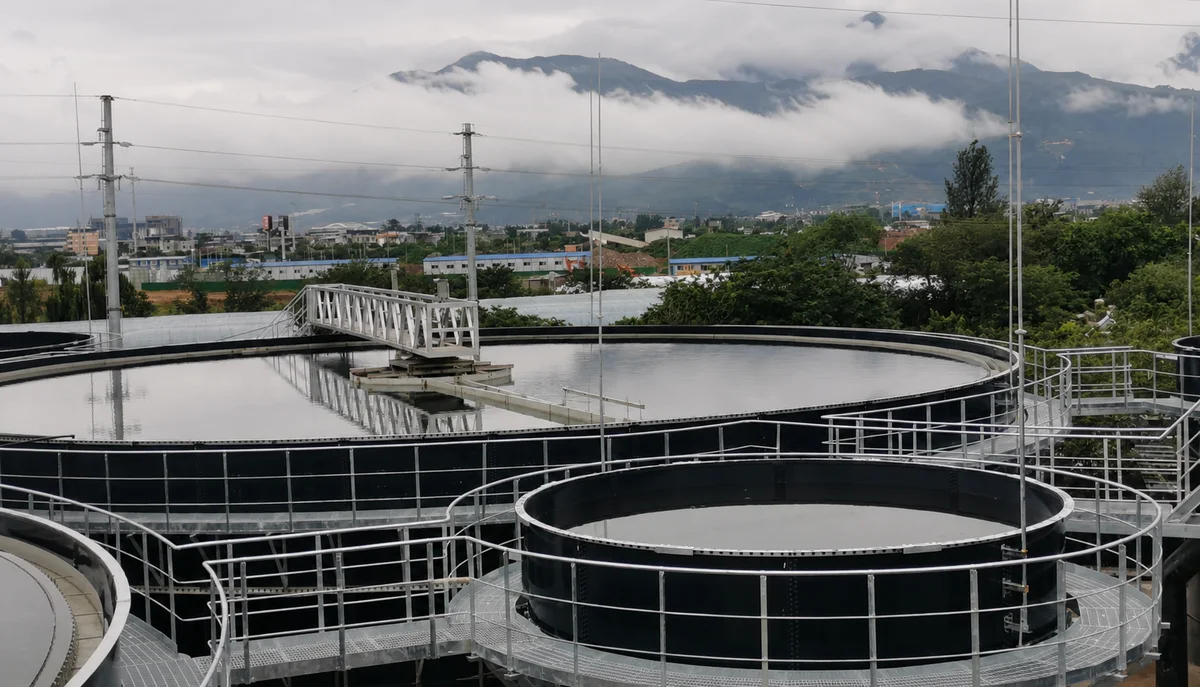
Chile desalination storage reference for water streams, materials, roof and access interfaces, installation, documentation, and RFQ inputs.
This desalination project reference frames water-stream, material, access, and supply-boundary questions; it does not establish a transferable capacity or performance claim.
A Reference for Defining Desalination Storage Scope
This project reference shows circular storage tanks with roof-level access bridges and perimeter railings at an industrial utility site. It can help identify the questions that should be resolved before adapting a similar visible arrangement to a desalination facility: stored stream, chemistry, tank duty, material system, roof and venting configuration, access, civil interface, installation route, inspection plan, and supply boundary. It is not evidence of the capacity, owner, local approvals, operating pressure, production performance, or delivery scope of another project.
Desalination facilities may handle seawater intake, pretreatment water, process water, permeate, product water, cleaning solutions, concentrate or brine, and site drainage. These streams have different chemistry and operating requirements. The project team must state exactly which stream enters each tank, its design analysis and temperature, whether it is potable or process service, the required residence time, treatment interfaces, and the owner-approved material compatibility basis. A tank photograph cannot resolve these decisions.
Questions to answer before specifying a comparable tank package
Stored stream
Seawater, pretreatment water, permeate, product water, cleaning solution, concentrate, process water, or drainage; design chemistry, temperature, solids, and intended use.
Tank duty
Buffering, equalization, treated-water storage, chemical-service interface, emergency containment, washwater storage, or another owner-defined process function.
Materials and protection
Shell, floor, roof, bolts, gaskets, nozzles, access components, coating or lining basis, repair procedure, inspection, and compatibility responsibility.
Mechanical and site interface
Working volume, levels, roof and venting, access bridges, ladders, platforms, instruments, pipe loads, foundations, containment, drainage, transport, lifting, and installation sequence.
Handover
Drawings, calculations where applicable, inspection and test plan, material or coating records, installation documents, operating limits, maintenance data, and final acceptance criteria.
Identify the Water Stream Before Selecting the Tank
Desalination is a treatment process, not a single storage chemistry. A treated-water tank, raw seawater buffer, cleaning-chemical vessel, and concentrate or brine interface may each require different materials, fittings, roof arrangements, containment, and operating controls. The RFQ must name the stream and provide design pH, temperature, dissolved salts, suspended material, cleaning or disinfection chemicals, expected stagnation or cycling, and permitted wetted materials. The responsible engineer should approve compatibility.
The functional duty must be equally clear. A tank intended for product-water storage may need a defined hygiene, cover, vent, overflow, access, and sampling approach, whereas an equalization or process-water tank may be governed by hydraulic variation, pumping, sediment, or treatment interfaces. The visible arrangement should prompt those questions, not imply that one construction, coating, or roof type is suitable for every stream.
Treat Access, Roofs and Pipework as Engineering Interfaces
Roof-level bridges, railings, ladders, platforms, nozzles, vents, and instruments carry defined loading, access, safety, inspection, and maintenance requirements. The project should state pipe-support responsibility, roof access frequency, fall-protection system, lift points, weather exposure, maintenance clearances, drainage, and restrictions on later additions. These details affect tank and civil interfaces at the same time.
Venting and overflow arrangements must be selected from operating conditions and water quality, not copied from a reference image. The owner should define filling and withdrawal rates, pump control, high-level protection, overflow destination, air and insect-control requirements where relevant, cleaning and isolation procedures, and pressure or vacuum conditions. The final arrangement must follow the approved design basis and local requirements.
Name the exact stream and issue its design chemistry.
Define the hydraulic function and normal, alarm, and emergency levels.
Coordinate roof access, pipe loads, drainage, and maintenance through approved drawings.
Use the Reference Without Transferring Unverified Claims
A project image can help buyers evaluate site access, circular tank geometry, handrails, roof access, and adjacent equipment. It cannot prove the capacity, standard, material grade, coating system, water quality, installation sequence, certification, performance, schedule, or scope of a new project. Those matters should remain in the current project documents and be verified through a technical proposal, drawings, and the owner's acceptance process.
Comparable design should begin with a responsibility matrix. It should separate the tank supplier's scope from process design, membranes or filtration, pumps, pipework, electrical controls, foundation, containment, installation, testing, commissioning, and water-quality acceptance. This allows bids to be compared without assigning unpriced obligations to a tank package or relying on an earlier reference.
Prepare a Project Package That Can Be Installed
Site conditions can decide whether a suitable tank arrangement is practical. The RFQ should include foundations, soil or structural inputs provided by the owner, wind and seismic data where required, access roads, crane area, storage space, weather exposure, temporary works, drainage, utilities, lifting restrictions, and installation sequence. The proposal should state its assumptions about field assembly, inspection, and acceptance.
For a robust comparison, request drawings, material and coating records, inspection checkpoints, test basis, repair procedures, installation method, manuals, spare parts, and handover documents. Use the tank RFQ data checklist to bring process, mechanical, civil, electrical, and operational requirements into one enquiry before procurement.
Data to Include in the RFQ
A desalination storage enquiry should define the exact water stream and process function, then connect those inputs to materials, mechanical details, site installation, quality records, and the owner's supply boundary.
Exact stored stream, intended use, representative and design water analysis, pH, temperature, dissolved salts, solids, cleaning or disinfection chemicals, and compatibility responsibility.
Gross and working volume, flow profile, normal, alarm and emergency levels, pumps, inlet and outlet details, overflow, drains, vents, instrumentation, and sampling.
Tank material or coating basis, floor, roof, gaskets, bolts, nozzles, access hardware, corrosion review, inspection plan, repair procedure, and documentation.
Foundation and containment interfaces, local design loads, site access, lifting, storage, weather exposure, drainage, utilities, pipe supports, electrical and controls boundary, installation, testing, and commissioning.
Required drawings, material certificates, coating records, inspection reports, manuals, maintenance requirements, spares, acceptance criteria, and warranty boundary.