
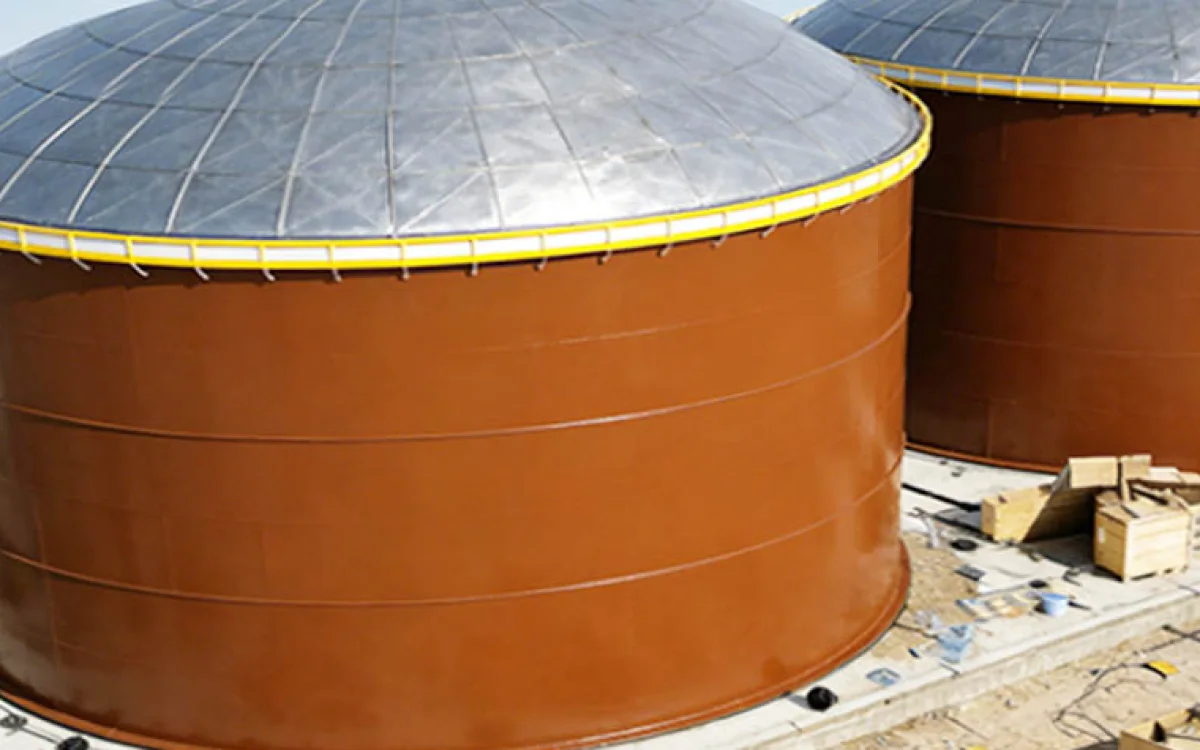
Industrial park wastewater projects can be difficult to specify because the influent may come from several tenants or production lines. The tank supplier needs more than a volume request; the RFQ should explain whether the tank is used for equalization, reaction, sludge holding, treated water, or emergency storage.
This Guangdong industrial park reference should be connected to wastewater treatment and GFS tanks. It is a useful example for buyers who need modular tanks but still need corrosion and process-interface review.
Mixed Effluent Review
Industrial park wastewater can vary by tenant mix, operating shift, cleaning cycle, and treatment plant operating mode. The buyer should identify pH range, temperature, salinity or chloride, suspended solids, oil and grease, chemical dosing, odor risk, and whether the effluent may change after new tenants join the park.
Tank role also matters. Equalization tanks need volume and mixing review; reaction or process tanks may need nozzles and chemical compatibility; sludge tanks need drain and cleaning access; treated-water tanks need a different hygiene and maintenance plan.
Engineering and Access Details
For GFS or coated steel tanks, corrosion protection should be matched to the expected chemistry. The RFQ should ask for coating or enamel inspection records, sealant compatibility, bolt specification, repair procedure, and packing list. Where the project includes several tanks, each tank should have its own nozzle schedule and duty description.
Accessories such as platforms, ladders, manways, level instruments, mixers, vents, overflow, and drain points should be defined early. The installation guide can help the project team clarify foundation, access, packing, and assembly responsibilities.
RFQ Takeaway
A complete industrial park wastewater RFQ should include tank count, volume per tank, wastewater profile, operating role, site location, design loads, roof or cover requirement, nozzle schedule, inspection access, installation boundary, and documentation needs. This prevents the quotation from becoming a generic tank price and supports a more reliable supplier comparison.
Engineering Limits and Handover
Industrial parks should plan for wastewater variation. If future tenants may discharge different effluent, the buyer should define an expected chemistry range and any reserved nozzle or expansion requirements. A storage tank selected only for the first tenant may become under-specified after the park changes production mix.
Before handover, the owner should receive tank drawings, nozzle schedule, inspection records, coating or enamel documentation, packing list, installation notes, and maintenance guidance. For multi-tank projects, each tank should have a clear duty tag so operators understand which unit is equalization, reaction, sludge storage, treated water, or emergency storage.
Buyer Questions Before Quotation
Before requesting a final quotation, the project team should confirm whether the industrial park wastewater plant will be expanded in phases. Future expansion can affect nozzle reservation, pipe rack location, control interface, and available installation space. If the tank supplier understands this early, the storage system can be planned with fewer field changes later.