Home›Projects›Guangxi Chemical Wastewater Epoxy Tank Project Reference
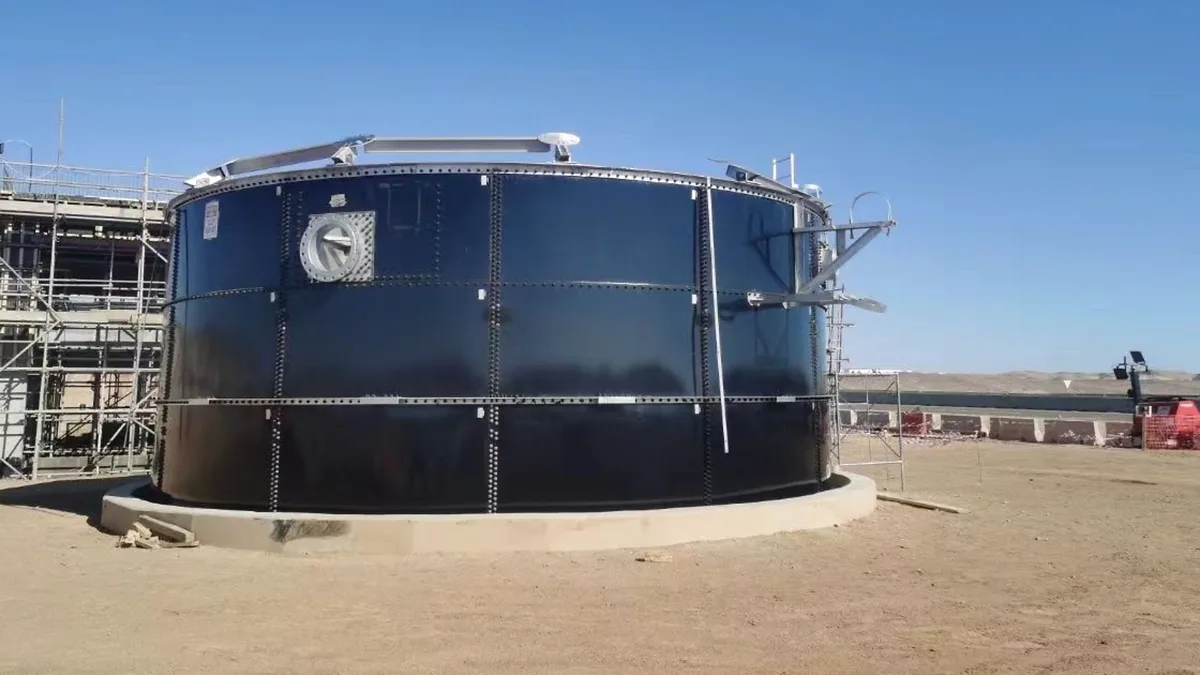
Guangxi Wastewater Tank Project
Review a chemical wastewater epoxy tank project reference with corrosion protection, wastewater chemistry, process interfaces, and RFQ lessons.
Chemical wastewater projects require an RFQ package that connects liquid chemistry, tank coating, accessories, and inspection documents.
Chemical wastewater projects need a project-specific tank basis
Chemical wastewater storage is rarely a standard water tank duty. The liquid may include variable pH, salts, suspended solids, cleaning chemicals, oxidizers, or process residues. The tank quotation should therefore be based on wastewater data and operating conditions instead of a generic storage volume.
This project reference is organized as a buyer-side review of an epoxy coated bolted tank application for chemical wastewater treatment. It connects the project duty with fusion bonded epoxy tanks, corrosion protection, accessory coordination, and documentation that an owner or EPC contractor should request before award.
When project capacity or detailed process data is not public, buyers should not assume the same specification can be copied. Use the structure below to prepare a complete RFQ for your own chemical wastewater project.
Confirm cleaning interval, sludge removal, inspection access, spare parts, repair procedure, and whether shutdown windows are limited.
Export execution
Review packing method, panel protection, container loading, site storage, installation tools, and remote technical support before shipment.
Why epoxy coated tanks are reviewed for chemical wastewater
Fusion bonded epoxy can be suitable for many industrial wastewater tanks when the coating system is selected for the actual service and the manufacturing controls are documented. Buyers should ask for coating inspection records and transport protection because coating damage during handling can create avoidable field repair risk.
For more aggressive chemistry, the quotation review may also include upgraded gaskets, stainless accessories, special nozzles, or alternative material selection. The wastewater treatment application page can help connect this project type with broader treatment plant requirements.
Lessons for EPC and owner RFQs
EPC buyers should freeze nozzle orientation, platform requirements, pipe load assumptions, and foundation interface early. Late changes are usually more expensive after panel fabrication and packing, especially for export projects.
Owners should compare quotations by design basis, coating review, inspection documentation, installation support, and after-sales parts availability. A lower initial price can be misleading if the quotation leaves out accessories, packing detail, or site support requirements.
What should be documented in a chemical wastewater case
A useful project record should separate public project facts from engineering assumptions. If capacity, exact wastewater analysis, or treatment-process details are not available, the case study should not invent them. Instead, it should explain why the duty is technically demanding and which RFQ data must be verified for a similar project.
For chemical wastewater, the buyer should ask whether the tank is used for equalization, process buffering, sludge holding, emergency storage, or treated effluent. Each duty changes mixing, cleaning, roof, nozzle, and overflow requirements. A tank that works well as an equalization tank may need different details for high-solids sludge or chemically aggressive wastewater.
How to evaluate supplier professionalism
A professional supplier should be able to explain the coating selection logic, inspection steps, panel packing method, installation support, and document list. The buyer should not accept a quotation that only states volume and unit price without the engineering basis.
For international projects, ask how the supplier controls panel damage during long-distance transport and how field repairs are documented. Coating quality depends on factory process, but tank life also depends on unloading, storage, installation, bolt tightening, cleaning, and final inspection.
Standards and Reference Notes
For wastewater permitting and discharge context in the United States, the U.S. EPA National Pollutant Discharge Elimination System program provides a regulatory framework through EPA NPDES resources. International buyers should use the equivalent local authority requirements for their project country.
For bolted steel water and wastewater tank specifications, AWWA standards are often used as a contract reference. Start from the official AWWA standards store and confirm the exact standard edition and project-specific modifications with the owner or engineer.
RFQ Preparation
Use this project reference to prepare wastewater chemistry, design standard, tank configuration, accessory list, coating inspection requirements, and installation scope for quotation.