
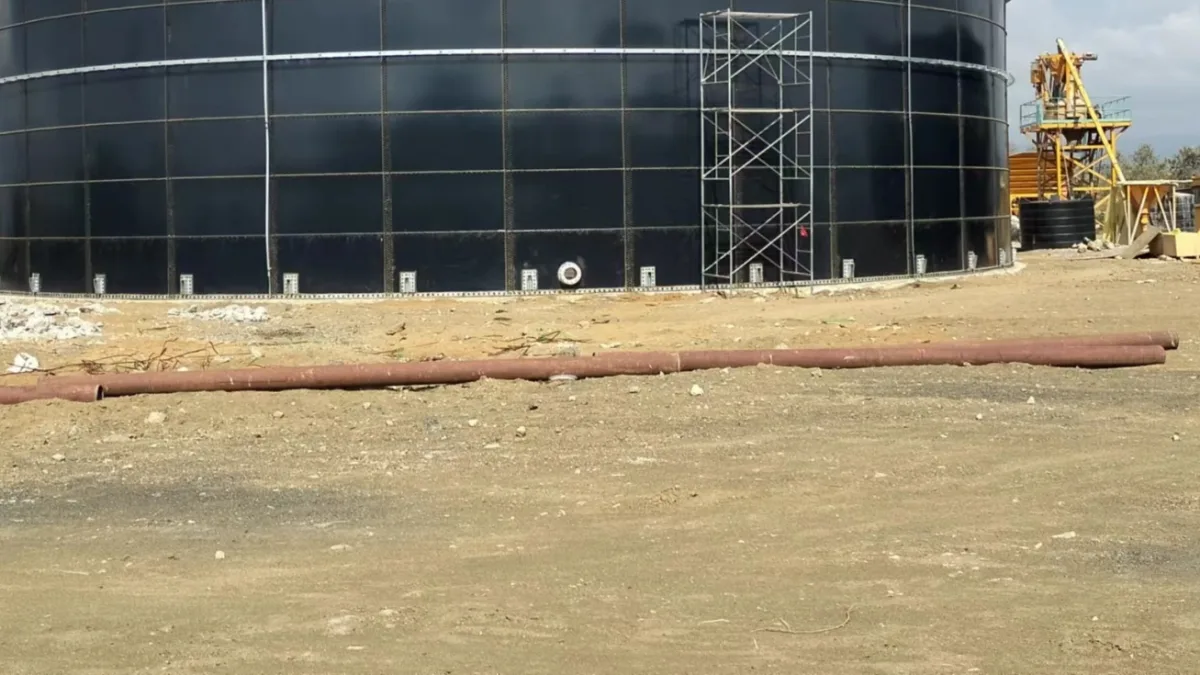
Project Snapshot
- Project Category: Wastewater treatment storage reference
- Application: Textile and dye wastewater treatment
- Tank / Gas System: Epoxy coated bolted steel tank
- Key RFQ Inputs: pH, dye chemistry, temperature, COD/COD variation, equalization volume, roof/access needs, and installation scope
Why this project matters
Textile and dye wastewater is a demanding storage duty because the liquid profile can change by production recipe, washing cycle, and chemical dosing method. Colorants, salts, surfactants, pH adjustment chemicals, suspended solids, and warm discharge can all affect coating selection and maintenance planning.
A project buyer should therefore treat the tank as part of the wastewater treatment process, not as a generic steel container. The RFQ should define whether the tank is used for equalization, neutralization, intermediate storage, sludge holding, or treated water buffering.
Tank selection logic
Epoxy coated bolted steel tanks can be suitable when the internal coating system is compatible with the wastewater chemistry and when modular shipment or site assembly is preferred. Factory coating control, panel inspection, and repeatable bolted erection are practical advantages for overseas projects.
The buyer should confirm coating thickness, curing records, holiday testing, sealant compatibility, roof requirements, mixer or aeration connections, overflow, drain, and safe access before comparing quotations. A lower price is not useful if the coating assumptions do not match the actual wastewater.
RFQ and engineering review
For textile wastewater, provide expected pH range, temperature, dissolved solids, dye chemistry, cleaning chemical exposure, peak and average flow, required retention time, and whether the tank will be covered. These details help the tank supplier review panel coating, nozzle layout, accessory requirements, and installation sequence.
The final specification should also clarify site wind and seismic data, foundation interface, tank quantity, ladder and platform layout, delivery method, installation supervision, and inspection documentation. These items reduce uncertainty before fabrication starts.
Procurement document package
A stronger quotation package for Textile and dye wastewater treatment should include more than a price sheet. Buyers should request a technical proposal, general arrangement drawing, tank or holder data sheet, coating or membrane description, accessory list, packing method, installation boundary, and inspection records that match the selected Epoxy coated bolted steel tank.
The supplier should also clarify what is included and excluded from the delivery scope. Typical boundary items include civil foundation, anchor bolts, lifting equipment, site labor, electrical and control wiring, gas safety instruments, process piping, hydrotest or leak-test responsibility, and commissioning support. These details are often where project cost and schedule risk appear after the purchase order is placed.
Quality and site coordination notes
For international B2B projects, the buyer should check factory inspection photos, material certificates where applicable, panel or membrane packing labels, spare parts list, installation manuals, and repair instructions before shipment. If the project has an EPC contractor, local installer, or owner engineer, all parties should review the same interface list before fabrication drawings are released.
Use this project reference as a qualification aid rather than a copied specification. Final sizing, design pressure, load data, chemical compatibility, local code compliance, and safety devices must be confirmed by the project engineer based on actual site and process data.
Recommended Review Path
Use this case together with the related wastewater treatment page, the epoxy coated tanks page, and the RFQ data checklist before submitting drawings or tank data.
For a similar project review, send operating data, project location, stored medium, tank quantity, interface list, drawing requirements, and installation scope through the industrial tank inquiry form.