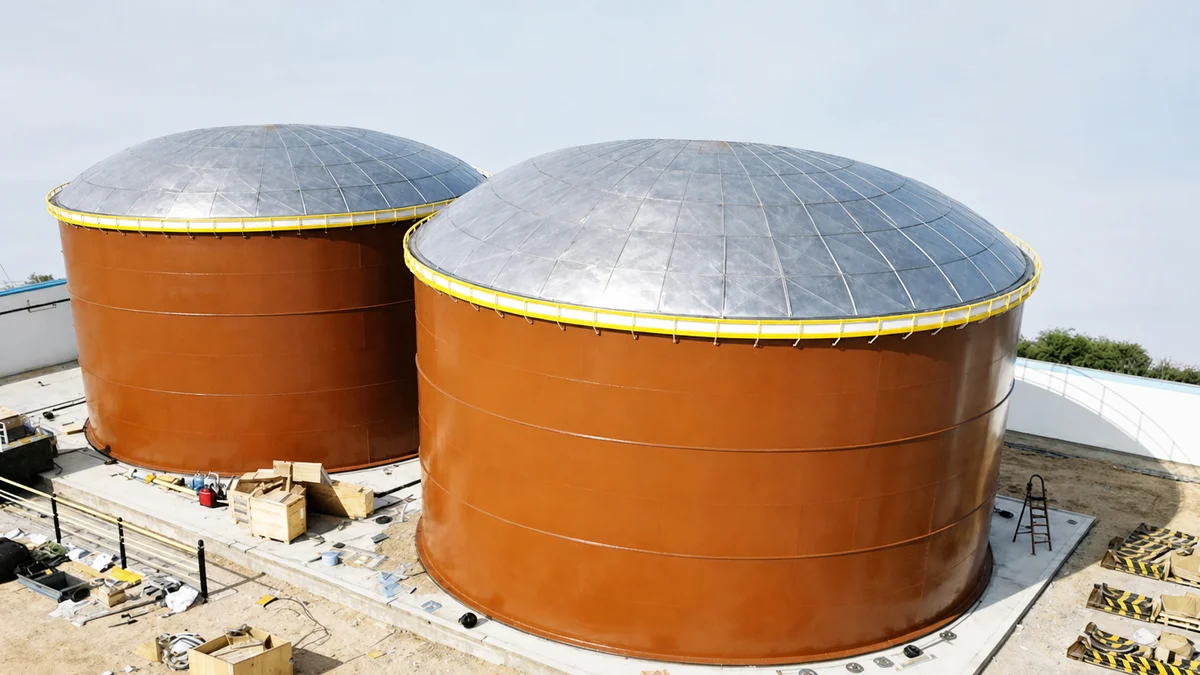
Compare API 620 and API 650 tank selection by design pressure, temperature, stored media, roof, site loads, documentation, and engineering review.
The correct design basis follows the actual pressure, temperature, media, geometry, roof, loads, and contractual code requirements for the project.
Choose the Design Basis From the Stated Duty
API 620 and API 650 are often mentioned together in oil, chemical, utility, and industrial storage enquiries, but they are not interchangeable labels. Selection begins with the owner’s governing code requirement and the actual design envelope: stored media, internal pressure and vacuum, temperature, tank geometry, roof arrangement, site loads, service life, inspection, and jurisdictional approval path. A supplier should not assign a code from capacity, a product name, or a marketing claim.
In broad terms, API 650 is commonly used as an atmospheric welded-steel storage tank design basis, while API 620 addresses large welded low-pressure storage tanks. The current contract documents and the nominated edition control the exact scope, limits, materials, details, and acceptance requirements. If pressure, vacuum, cryogenic service, hazardous materials, or unusual temperatures are involved, the owner’s qualified engineer must confirm the governing design basis before the tank is quoted as a standard atmospheric vessel.
Normal, maximum and transient internal pressure and vacuum; venting philosophy; emergency relief; blanketing; and connected-system scenarios.
Temperature
Minimum metal temperature, maximum operating and design temperature, thermal cycles, insulation, heating, cooling, and ambient conditions.
Tank configuration
Diameter, height, bottom, roof, shell attachments, nozzles, platforms, internals, access, floating or fixed cover, and external pipe loads.
Code and documents
Nominated edition, authority requirements, material records, weld controls, NDE, test method, inspection plan, calculations, and handover dossier.
Pressure and Temperature Are the First Screen
The basic question is not which code name sounds more familiar; it is what pressure and temperature the complete system can impose on the tank. Normal operation, startup, shutdown, blocked vent conditions, thermal expansion, vapor generation, blanketing, pump-out, emergency relief, and external vacuum can all affect the design envelope. The enquiry should identify design values and credible transients, not only nominal operating values.
Temperature must include the lowest relevant metal temperature as well as the highest liquid and vapor temperature. Material behavior, welding, impact requirements, insulation, roof details, and testing can depend on that range. If the duty involves refrigerated, cryogenic, pressurized, or otherwise unusual service, it needs a dedicated engineering review. Do not stretch an atmospheric-storage comparison into a pressure-vessel or low-temperature design without the correct specialist scope.
Media, Roof and Venting Define the Storage System
Crude oil, refined products, water, chemicals, and process liquids can create different vapor, corrosion, contamination, and environmental-control questions. The media data sheet should be supplied with density, vapor behavior, solids, corrosive components, temperature, and the required inventory range. The tank designer also needs to know whether the stored medium requires a fixed roof, floating roof, geodesic cover, inerting, vapor-control interface, or other equipment outside a shell-only scope.
Roof selection is part of the system design. It affects venting, rainwater exclusion, emissions interfaces, inspection access, wind loading, and attached equipment. A project using a floating or dome roof should define the required operating conditions and interface loads rather than simply naming the roof type when preparing the roof and access portion of the RFQ.
Give the tank designer the actual media and vapor data, not only a commercial product name.
State normal, maximum and emergency pressure or vacuum conditions and the relief/vent responsibility.
Identify roof type, attached equipment, access loading, emissions or vapor-control interface, and maintenance route.
Code Selection Does Not Remove Site-Load Responsibility
Wind, seismic actions, foundation behavior, settlement criteria, snow where relevant, corrosion allowance, nozzle loads, platforms, pipe supports, insulation, and thermal effects remain project inputs after a design code is nominated. The tank supplier needs a clear site data package and responsibility matrix. A code reference cannot replace the civil, piping, process, electrical, and installation interfaces that determine the final tank arrangement.
The project should distinguish the code of design from the authority or client specifications that govern approvals, documentation, inspection hold points, and commissioning. Where an owner has an existing standard, it should be issued with the enquiry. When the design code, local regulation, and client specification conflict, the owner or EPC contractor must resolve the hierarchy before fabrication begins.
Issue a Comparable Engineering RFQ
A useful RFQ states the requested design basis, but also includes the inputs needed to validate it. Each bidder should identify accepted pressure and temperature limits, assumptions on stored media, roof and vent scope, material selection, corrosion basis, site loads, foundation interface, test method, and documents. This prevents a low-price offer from silently excluding a nozzle, vent, platform, instrument, inspection record, or engineering calculation essential to the stated duty.
Before release, use the RFQ data checklist to coordinate process, mechanical, civil, piping, electrical, and inspection information. The goal is not to force a predetermined code on every tank; it is to establish a traceable design basis that the owner, engineer, manufacturer, and inspector can apply consistently.
Data to Include in the RFQ
An API 620 or API 650 enquiry should state the owner-nominated code edition and provide the pressure, temperature, media, roof, site-load, inspection, and documentation data needed for an engineering review.
Owner or authority-nominated design code and edition, project specifications, code hierarchy, approval path, and any deviation-control procedure.
Stored media data, density, vapor behavior, contaminants, temperature range, design pressure and vacuum, normal operating levels, and credible transient conditions.
Tank dimensions, bottom and roof configuration, vents and relief interfaces, nozzles, attachments, platforms, internals, access, instruments, and external loads.
Site country, wind, seismic, snow and ambient data where applicable; foundation, anchoring, settlement criteria, installation access, and erection responsibility.
Material, corrosion, insulation, heating or cooling, coating, welding, NDE, inspection, test, and repair requirements.
Calculation package, drawings, material traceability, weld records, inspection plan, test records, operating instructions, spare parts, and handover documents.