Review Jet A-1 floating roof tank design boundaries, API 650 scope, ASTM D1655 fuel quality, seals, materials, water management, grounding, inspection, and RFQ data.
A Jet A-1 storage system combines tank structural design, approved wetted materials, floating-roof and seal details, water management, bonding, inspection, and terminal operating procedures.
Separate Tank Design From Fuel Quality Control
Jet A-1 storage is a contamination-control duty as well as a structural tank project. The tank, internal floating roof, seals, drains, water draw-off, vents, sampling points, transfer lines, filtration, operating procedures, and inspection plan all affect whether fuel can move through the terminal without unacceptable water, particulate, microbial, or material-compatibility risk.
The American Petroleum Institute identifies API Standard 650 as “Welded Tanks for Oil Storage.” It provides a recognized basis for welded aboveground atmospheric storage where the contract adopts it, but it does not by itself define aviation-fuel quality, terminal operating practice, or every local regulatory requirement. See the official API Standard 650 information.
ASTM D1655 defines minimum property requirements for Jet A and Jet A-1 and lists acceptable additives. The active ASTM D1655 aviation turbine fuel specification also explains that separate procedures govern continued quality assurance through the distribution system. This distinction matters: a tank can be structurally compliant and still require a separate owner-approved fuel-quality and operations specification.
Jet A-1 Tank and Floating Roof Review Matrix
Design area
Questions for engineering review
Tank basis
Applicable edition and addenda, atmospheric pressure/vacuum, capacity, design liquid level, temperature, corrosion allowance or lining, wind, seismic, settlement, roof loads, and foundation interface.
Floating roof
Full-contact or pontoon/deck concept, buoyancy, design liquid range, landing position, supports, anti-rotation, rim seal, penetrations, vents, drains, and inspection access.
Fuel-contact materials
Owner-approved alloys, elastomers, coatings, seal fabrics, fasteners, bonding components, and restrictions on copper-, zinc-, cadmium-, or other incompatible materials.
Water and cleanliness
Bottom slope, sump, water draw-off, roof/vent weather protection, drainage, internal finish, cleaning, flushing, sampling, and filtration interface.
Safety and operations
Bonding and grounding, static-control philosophy, overfill protection, hazardous-area classification, fire protection, gas freeing, confined-space access, and maintenance isolation.
Internal Floating Roof Selection Is Project-Specific
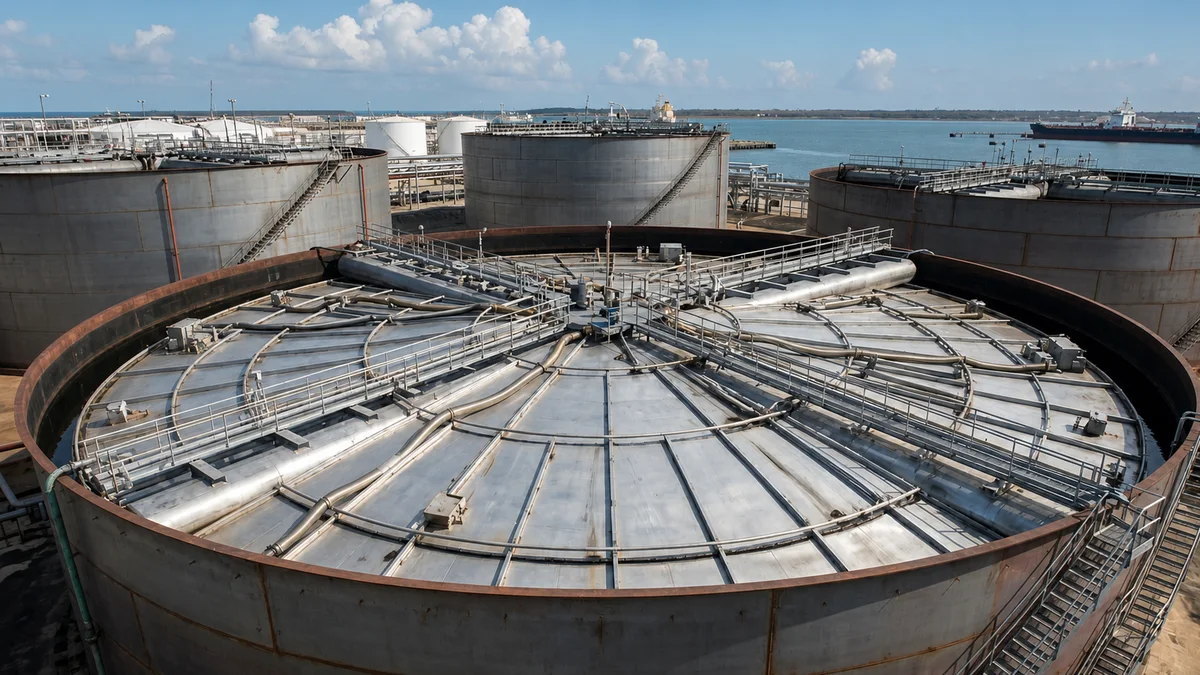
An internal floating roof moves with the liquid and reduces the exposed liquid surface under a fixed roof. Selection still requires the owner to define product compatibility, emissions or vapor-control objective, usable operating range, deck and buoyancy philosophy, rim-seal performance, column and penetration seals, support and landing conditions, and access for inspection. A generic “API 650 floating roof” description is not a complete specification.
The supplier should demonstrate how the roof remains buoyant under the defined damage assumptions, how it is guided without binding, how bonding continuity is maintained, and how components can be inspected or replaced. Start from the floating roof product guide and then apply the aviation-fuel owner requirements.
Water Management and Cleanliness Need Hardware and Procedures
Water can enter through receipt fuel, condensation, maintenance, or deficient weather protection. The tank system should support detection and controlled removal through a defined bottom geometry, sump and draw-off arrangement, sampling method, and inspection access. Low points that cannot be drained or inspected create an operating problem even when the tank shell is sound.
Cleanliness planning includes fabrication debris control, coating or surface acceptance, final cleaning, flushing, sampling, filtration interfaces, and protection after commissioning. The terminal operator should define acceptance criteria and inspection frequency. The tank manufacturer supplies hardware and records; the operator controls the fuel-quality program.
Materials and Static Control Require Owner Approval
Wetted materials, coatings, seal fabrics, gaskets, fasteners, hoses and internal components should be submitted for owner review. Avoid broad statements that one alloy is always acceptable. Compatibility depends on the fuel specification, additives, water exposure, temperature, cleaning agents, galvanic couples, and the operator material-control list.
Bonding and grounding details must coordinate the floating roof, tank shell, fixed roof, gauge and guide components, and transfer system. The design should follow the project electrical and hazardous-area philosophy rather than relying on an isolated cable detail. The broader petroleum duty is covered on the petrochemical and oil storage page.
Documentation Is Part of the Tank Package
The document register should include design calculations, drawings, material certificates, welding procedures, welder qualifications, NDE records, dimensional reports, coating or surface records, floating-roof assembly details, seal data, bonding details, inspection and test plans, hydrotest records, cleaning records, manuals, and spare-parts recommendations.
The applicable standards and editions must be named in the contract. Use the site’s tank design standards guide to separate structural codes from owner specifications and local approval requirements.
Retrofit Projects Require a Verified Survey
Installing an internal floating roof in an existing tank requires verified as-built diameter, shell roundness and verticality, internal columns and obstructions, gauge wells, nozzles, bottom condition, manway access, support arrangement, corrosion condition, and settlement history. Original drawings are useful but should not replace field measurements. The survey must also confirm how modular components will enter the tank and whether any hot work is permitted.
The retrofit method should coordinate cleaning and gas freeing, confined-space controls, temporary ventilation and lighting, removal of existing internals, new support and seal details, bonding, testing, and return-to-service inspection. Changes to operating level or roof landing height can affect usable capacity and water draw-off access. These issues belong in the engineering package before fabrication, not as installation adjustments after material reaches site.
For a new tank, the floating roof supplier should review shell tolerances, roof supports, columns and penetrations while the tank design is still developing. Early interface review reduces seal gaps, interference and late changes between tank, roof, instrument and terminal contractors.
Data to Include in the RFQ
A Jet A-1 tank RFQ should let structural, mechanical, electrical, fire-protection, fuel-quality, and operations teams review the same defined scope.
Fuel grade and owner operating specification, applicable structural standard and edition, terminal standards, and local approvals.
Gross and usable capacity, receipt/dispatch rates, operating levels, temperature, design pressure/vacuum, and overfill philosophy.
Tank diameter and height constraints, shell/bottom/roof system, corrosion or lining basis, foundation/settlement data, wind and seismic loads.
Internal floating roof type, deck and buoyancy requirements, seals, penetrations, supports, landing height, anti-rotation, bonding, and inspection access.
Approved wetted materials, coatings, elastomers, cleanliness criteria, bottom slope, sump, water draw-off, sampling, filtration, vents, and drains.
Fire protection, hazardous-area classification, grounding, instrumentation, leak/hydrotest, cleaning and commissioning, documentation, training, and spares.