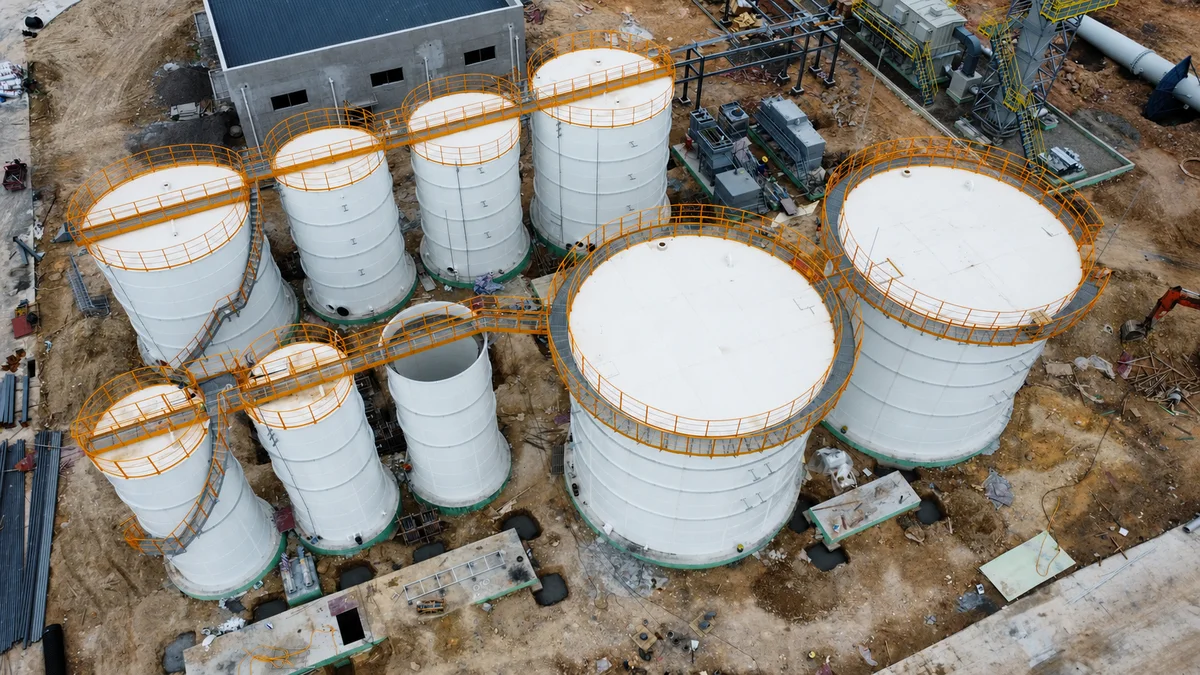
Plan brewery wastewater tanks around flow variation, organics, solids, pH, temperature, cleaning discharges, equalization, treatment stages, and RFQ data.
Brewery wastewater tanks should be assigned by process duty: collection, equalization, anaerobic treatment, aerobic polishing, sludge storage, or treated-water reuse.
Start With the Wastewater Profile, Not a Tank Name
Brewery wastewater changes with production schedule, product losses, yeast and solids recovery, bottle or keg washing, floor cleaning, and cleaning-in-place cycles. Storage and equalization are therefore operating controls, not only containment. A well-defined equalization tank dampens flow, organic-load, temperature, and pH peaks before biological treatment and gives operators time to respond to abnormal batches.
U.S. EPA training material describes brewery wastewater as influenced by brewing ingredients, yeast, cleaning solutions, and intermittent high-strength discharges. That reference is useful process background, not a global discharge limit; every project must follow its local permit and receiving-treatment requirements. See the EPA brewery wastewater training material for the underlying process discussion.
The application can use coated bolted, glass-fused-to-steel, welded steel, stainless steel, or concrete structures depending on chemistry, capacity, process stage, and owner standards. This page owns the brewery duty. Product pages explain construction systems; project pages provide references. That separation avoids repeating generic wastewater text across multiple URLs.
Tank Duties Within a Brewery Treatment Train
Process duty
Engineering review focus
Collection and equalization
Peak flow, batch timing, mixing, pH and temperature variation, odor, overflow control, and emergency holding volume.
Anaerobic treatment
Influent conditioning, reactor configuration, gas collection, pressure protection, cover interface, mixing, and corrosion in liquid and vapor zones.
Solids concentration, settling, mixing, withdrawal points, access for cleaning, odor control, and dewatering interface.
Treated water or reuse
Required water quality, contact-material approval, disinfection, roof/vent protection, turnover, and downstream reuse requirement.
Equalization Protects Downstream Biology
The equalization volume should be calculated from measured flow and load profiles rather than a simple percentage of daily flow. Production shifts, cleaning cycles, planned shutdowns, and high-strength side streams can create short peaks that are hidden by daily averages. The process designer should define the operating level range, minimum mixing duty, pH-control approach, and emergency diversion philosophy.
Tank inlets and mixing should avoid stagnant zones and uncontrolled foaming. The roof or cover decision should consider odor, ventilation, access, condensation, and whether gas is expected. A sealed tank is not automatically a gas holder; pressure and vacuum protection must be designed for the actual process.
Coating and Material Selection Follow Chemistry
Brewery effluent is often described as biodegradable, but clean-in-place chemicals, temperature changes, sulfide generation, solids abrasion, and vapor-space condensation can govern material performance. The RFQ should include measured pH range, temperature, conductivity or chlorides where relevant, cleaning chemicals, sulfides, fats/oils/grease, total and suspended solids, and expected cleaning method.
Factory-coated bolted tanks can be practical for modular installation and corrosion control. Review the fusion bonded epoxy tank system as one option, while keeping coating approval tied to actual wastewater data and the selected treatment stage.
Project Layout Must Include Operations
Access platforms, sampling points, drains, washdown, level instruments, overflow routing, mixers, pumps, gas piping, odor control, and isolation strategy should be coordinated before nozzle drawings are frozen. The operator should be able to inspect, clean, isolate, and return each tank to service without unsafe improvisation.
One grab sample is rarely enough for equalization or treatment design. The wastewater study should cover representative production days, cleaning events, product changeovers, shutdown and restart, peak discharge periods, and unusual side streams. Flow-proportional or time-composite samples may be appropriate for organic loading, while pH and temperature peaks can require higher-frequency monitoring. The process engineer should define the sampling plan and laboratory methods.
Data quality affects equalization volume, mixer duty, chemical dosing, biological loading, gas-production estimates, sludge volume, odor control, and the materials exposed in each tank. The tank manufacturer does not design a complete treatment process from a brochure value. The quotation should state which loads are supplied by the buyer, which are calculated by the process designer, and which structural or equipment loads are the tank supplier’s responsibility.
The owner should also identify segregated streams that should not enter the main treatment line, such as concentrated product recovery, cleaning chemicals, cooling water, or maintenance fluids. Source control and by-product recovery can reduce the size and operating burden of downstream storage, but those decisions belong to the facility wastewater plan rather than to the tank shell alone. Sampling locations, preservation, chain of custody, analytical detection limits, and units should be documented so design teams compare consistent data instead of mixing laboratory results from incompatible methods or unrepresentative operating periods.
Data to Include in the RFQ
The RFQ should describe the brewery process and each tank duty separately so capacity, coating, mixing, roof, accessories, and documents are priced on the same basis.
Production schedule, average and peak wastewater flow, batch discharge timing, and emergency holding requirement.
Measured BOD/COD or organic load, TSS, pH range, temperature, conductivity/chlorides where relevant, cleaning chemicals, and sulfide risk.
Duty of each tank: collection, equalization, anaerobic, aerobic, sludge, treated water, or reuse.
Capacity and operating levels, mixing/aeration loads, roof or cover, odor/gas scope, nozzles, drains, overflow, instruments, and access.
Site country, wind and seismic data, foundation status, installation boundary, and local permit/approval requirements.
Coating or material approval, inspection records, commissioning tests, manuals, spare parts, and handover documents.