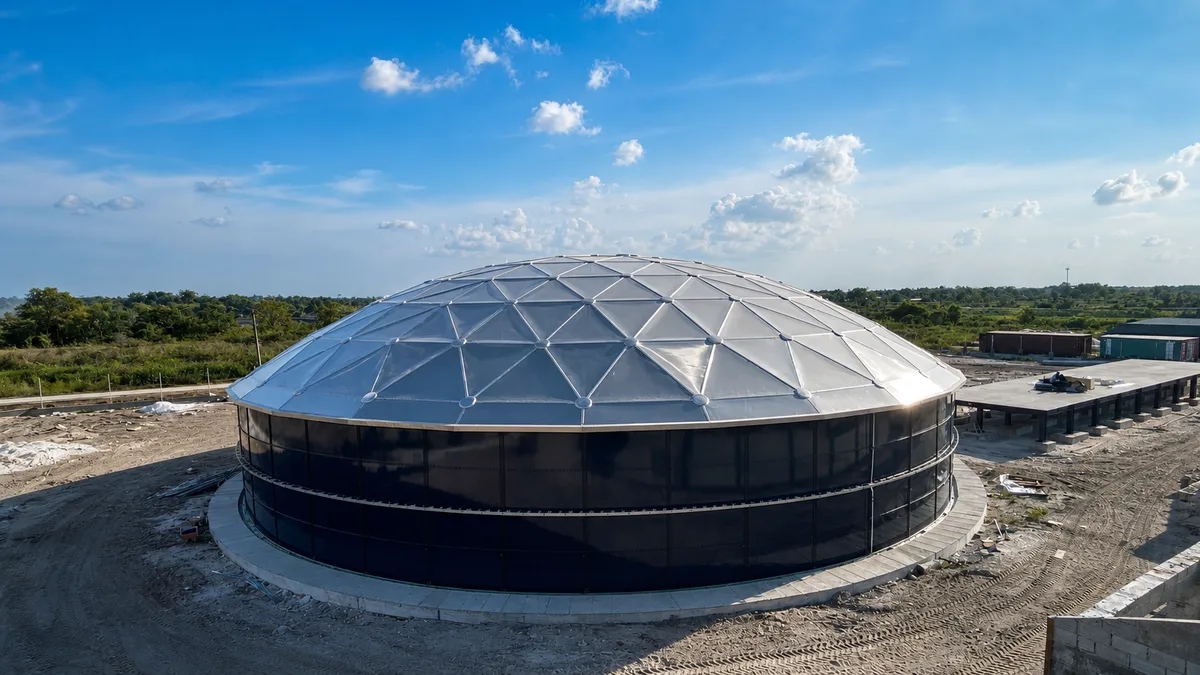
Mining and process water storage solution page for slurry, process water, raw water, roof systems, corrosion, and project RFQ data.
Mining storage duties should confirm slurry solids, abrasion, process chemistry, roof/access requirements, and site logistics before quotation.
Mining and Process Water Storage Solutions
Mining and process water applications can include raw water, process water, slurry, tailings-related water, chemical dosing support, and treatment buffer storage. These duties vary widely in abrasion, corrosion, solids content, and site access requirements.
Bolted steel tanks, welded steel tanks, GFS tanks, epoxy coated tanks, and aluminum dome roof systems may be reviewed depending on the service. The buyer should describe the medium and operating conditions instead of requesting a generic mining tank.
For slurry or high-solids service, nozzle design, drain arrangement, cleaning access, internal protection, and maintenance plan are especially important. The corrosion protection guide should be used together with this application page.
Mining and Process Water RFQ Data
Review Area
Buyer Data to Provide
Medium
Raw water, process water, slurry, solids content, particle size, pH, temperature, chlorides, chemicals, and abrasion risk.
Tank duty
Buffer storage, process feed, treatment support, emergency storage, slurry holding, or reclaimed water storage.
Nozzles, drains, mixers, roof/cover, ladder/platform, instruments, manways, lining/coating, and inspection records.
Project Risk in Remote Sites
Mining sites often make installation, transport, and maintenance more difficult. Modular tank systems can help, but the quotation must include packing, assembly sequence, and site support assumptions.
Use the specification points above to compare tank options, clarify project requirements, and prepare a more accurate RFQ before discussing final pricing.
For a quotation, confirm the stored media, required capacity, project location, design or document requirements, roof and accessory scope, inspection needs, and installation responsibility.
Procurement Scope and Handover Notes
Mining and Process Water Storage Solutions should be reviewed as part of a complete storage system. Before final pricing, the buyer should confirm whether the supplier scope includes engineering drawings, material or coating records, roof and accessory supply, packing protection, installation documents, and commissioning support.
For international RFQs, the same tank volume can lead to different quotations if site loads, corrosion data, inspection requirements, approval standards, or installation responsibility are missing. A stronger inquiry clearly separates confirmed data from assumptions so the supplier can respond with a comparable technical proposal.
Next RFQ Steps
Send medium data, solids/abrasion risk, capacity, site conditions, roof/accessories, coating needs, installation constraints, and inspection documents required.
Separate mine water, process water, and contact water duties
A mining site may store raw make-up water, pit water, storm contact water, recycled process water, tailings return water, wash water, or treated discharge. These streams can differ substantially in suspended solids, dissolved salts, pH, temperature, reagents, and abrasion. The RFQ should name each duty instead of applying one generic mine-water description to every tank.
Tank role also changes the operating basis. Equalization storage needs mixing and variable-level operation; clarifier feed or recycle storage may need solids management; emergency containment depends on credible upset volume and transfer strategy. The process flow, water balance, and maintenance philosophy should establish usable capacity and nozzle arrangement before product selection.
Design for solids, abrasion, and remote-site maintenance
Suspended mineral solids can settle at low velocities and abrade high-velocity inlets, mixers, drains, and recirculation zones. Buyers should define particle characteristics where known, expected settling, cleanout method, drain size, wear-sensitive locations, and whether the tank must remain online while another unit is cleaned.
Remote sites place extra value on protected packing, labeled components, repair materials, spare fasteners or seals, installation supervision, and inspection access. A technically suitable tank can still become difficult to operate if replacement materials, lifting access, safe entry, or sludge-removal routes are not considered during procurement.
Coordinate environmental and civil interfaces
Mining locations may involve high wind, seismic loading, altitude, freeze-thaw cycles, large temperature swings, dust, industrial fallout, limited roads, and constrained crane access. The tank proposal should state the site basis used and identify missing geotechnical, foundation, drainage, containment, or anchoring information as hold points.
Where water quality or discharge is regulated, the owner and responsible environmental team determine monitoring, containment, overflow, and release requirements. The tank supplier should provide relevant equipment interfaces and records without implying that equipment compliance alone constitutes approval of the complete mine-water system.