Hydraulic Oil Storage Is a System Interface
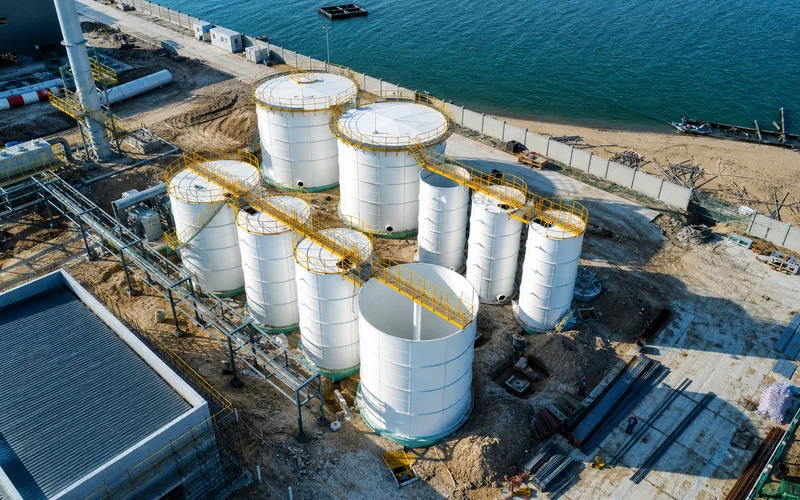
Hydraulic oil storage tanks are used to hold new oil, operating reserves, return-flow volume, make-up oil, or maintenance inventory. Their purpose is not limited to storing a liquid safely. The tank must support the oil-management strategy: keeping incompatible fluids apart, limiting ingress of water and particles, accommodating thermal expansion and level variation, providing practical fill and withdrawal points, and allowing inspection and cleaning without creating new contamination paths.
A suitable construction route depends on project capacity, site constraints, oil chemistry, operating temperature, pressure and vacuum conditions, fire and environmental requirements, and the interfaces to pumps, filters, heaters, coolers, breathers, level instruments, and containment. Atmospheric oil storage should not be described as a pressure vessel unless the project design basis actually requires that classification. When pressure, vacuum, or hazardous-area conditions apply, the owner must state the governing project requirements before structural scope is confirmed.
This product page covers hydraulic-oil storage duty. For wider fuel and process-liquid context, review the petrochemical and oil storage application page. For a tank-shell construction comparison, use the welded steel tanks guide rather than assuming all oil tanks have the same fabrication, inspection, or installation boundary.
Hydraulic Oil Storage Tank Selection Matrix
| Decision area | Information required before quotation |
|---|---|
| Fluid condition | Oil grade, additive package, density, viscosity range, temperature, water sensitivity, compatibility restrictions, and whether new and used oil are segregated. |
| Operating cycle | Normal level, low level, maximum level, fill and withdrawal rate, return flow, temperature swing, seasonal storage, and emergency holding requirement. |
| Contamination control | Required cleanliness target, filtration and sampling interfaces, breather or inerting philosophy, water draw-off, drainability, and cleaning procedure. |
| Tank package | Gross and usable volume, orientation, roof, vents, overflow, nozzles, manways, level instruments, access platforms, lifting points, and secondary containment interface. |
| Project data | Location, wind and seismic data, foundation and anchoring interface, installation boundary, inspection plan, documents, and local approvals. |
Define the Oil Service Before Selecting Materials
Hydraulic oil is a broad service description. Mineral oils, fire-resistant fluids, biodegradable fluids, water-glycol products, and different additive packages can have different compatibility, water-management, elastomer, coating, and cleaning requirements. The RFQ should identify the actual fluid and provide the applicable safety or technical data sheet. A generic oil-tank description is not enough to confirm internal coating, gasket, sealant, filtration, or maintenance compatibility.
The service review must include liquid phase, vapor space, condensation, drain points, low-flow corners, sampling points, and any connection to equipment that returns warm or aerated oil. If there is a possibility of mixed fluids, used-oil storage, flushing oil, or cleaning chemicals, those duties should be stated separately. The tank can then be designed with suitable segregation, drainability, labelling, and maintenance access rather than relying on operating practice alone.
Control Water and Particulate Entry at the Tank
Tank geometry and fittings should support the facility contamination-control plan. Breathing during level and temperature changes can introduce humid air; outdoor tanks also need practical decisions on roof drainage, vent location, weather protection, and inspection access. The correct arrangement depends on the owner standard and the actual oil-management system, not on a universal accessory list.
Suction, return, fill, overflow, drain, sample, and level connections need enough separation to avoid short-circuiting flow or making water and sediment removal impractical. The buyer should define which filtration, conditioning, and laboratory systems are in the supply scope. A tank supplier can provide nozzles and structural interfaces, but performance of the complete oil-cleanliness program depends on piping, transfer equipment, operating procedures, and maintenance discipline.
- Identify whether a bottom drain or low-point sump is permitted and how recovered liquid is handled.
- State the required sampling point, safe access, and any lockout or isolation procedure.
- Confirm whether filtration skids, heaters, coolers, or transfer pumps impose nozzle or platform loads.
Design for Filling, Withdrawal, and Maintenance
Hydraulic oil storage may be filled from drums, bulk deliveries, fixed transfer lines, or a process return system. Each route changes the need for unloading access, spill control, flow measurement, venting, high-level protection, and hose or pipe support. The practical layout should let operators connect, sample, isolate, inspect, and drain the tank without working over uncontrolled spills or improvising temporary access.
Maintenance planning belongs in the first quotation. Ask how the tank can be opened, ventilated, cleaned, inspected, repaired, and returned to service. Include manway size and location, roof access, fall protection, lighting, internal inspection limitations, drain route, waste-oil handling, and the responsibility for test water or cleaning residues. These choices affect total project cost more than a shell-only capacity comparison.
Compare Tank Proposals on the Same Scope
A usable bid comparison separates structural tank scope from pumps, filtration, instruments, access steelwork, insulation, electrical work, containment, foundation, freight, installation, and commissioning. Each bidder should identify the accepted design conditions and exclusions. This avoids a low initial price that excludes the vent, platform, instrument nozzle, drain, or document required for safe operation.
For corrosion and coating questions, include the actual exposure data in the project review. For the final enquiry, combine the fluid information with the industrial tank RFQ checklist so every supplier receives the same design inputs.
Data to Include in the RFQ
A hydraulic oil storage RFQ should give suppliers the fluid data, operating cycle, contamination-control requirements, tank arrangement, project loads, and scope boundary needed for an engineering review.
- Oil product name, data sheet, density, viscosity and temperature range, additives, compatibility restrictions, and new/used-oil segregation.
- Gross and usable volume, normal operating levels, fill/withdrawal rates, return flow, thermal range, and emergency holding requirement.
- Cleanliness target, filtration and sampling interfaces, vent/breather philosophy, water control, drainability, and cleaning procedure.
- Tank orientation, roof, nozzles, manways, access, level/overfill instruments, platforms, containment, and connected-equipment loads.
- Project country, local environmental or fire requirements, hazardous-area information where applicable, site loads, foundation, and installation boundary.
- Inspection and document requirements including material records, weld or coating scope where applicable, leak test, operating instructions, and spare parts.