Process Duty Defines the Fermentation Tank
Stainless steel fermentation tanks are used where a process needs a controlled vessel for biological, food, beverage, chemical, or industrial fermentation service. The word fermentation does not define a single tank: product chemistry, solids, viscosity, cleaning method, operating temperature, batch duration, gas evolution, transfer rate, and the process-control philosophy can all change the vessel and accessory package. A credible RFQ starts with the process description rather than a nominal volume alone.
The selected construction must distinguish atmospheric storage from any duty involving positive pressure, vacuum, or a pressure-relief scenario. A vessel that experiences filling, emptying, cooling, cleaning, or gas evolution can face conditions that are not apparent from a simple capacity request. The owner should nominate the governing design basis and provide normal, maximum, and upset operating cases before a supplier confirms the shell, roof, venting, or relief arrangement.
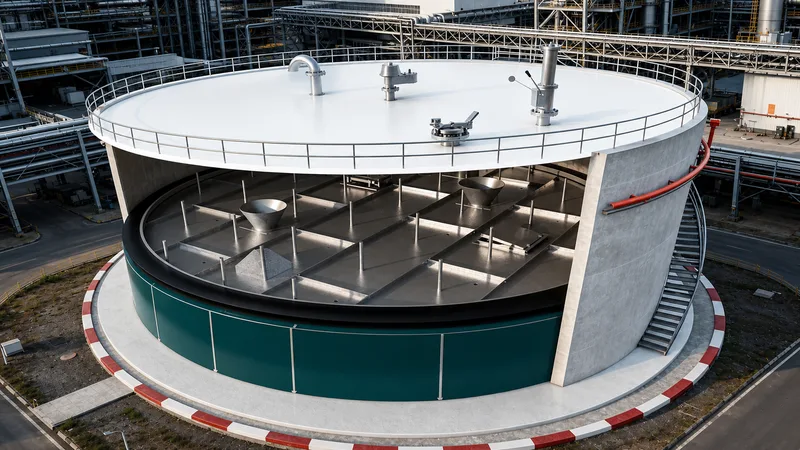
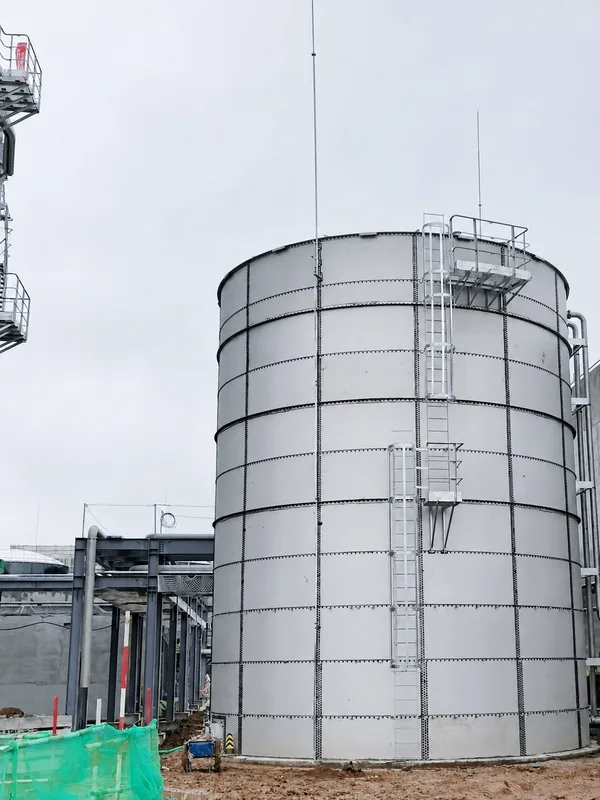
This page focuses on fabricated stainless fermentation equipment. Where site access, shipment limits, or a large field-assembled system point toward a modular solution, compare the scope with stainless steel bolted tanks. The right option depends on hygiene expectations, site erection capability, production schedule, dimensions, and the full operating duty.
Fermentation Tank RFQ Matrix
| Decision area | Information needed before design confirmation |
|---|---|
| Product and process | Feedstock, batch or continuous operation, composition range, solids, density, pH, temperature, cleaning chemicals, residence time, gas behavior, and safety data. |
| Operating envelope | Gross and working volume, fill and withdrawal rates, normal and maximum pressure, vacuum case, temperature range, agitation loads, and thermal cycle. |
| Hygiene and finish | Material grade, internal finish or cleanability target, drainability, CIP/SIP interfaces where required, pickling/passivation scope, and restrictions on wetted materials. |
| Mechanical package | Roof, bottom, jackets or coils, insulation, manways, nozzles, vents, instruments, agitator, sampling, load cells, platforms, and pipe support loads. |
| Quality records | Material certificates, welding procedure requirements, weld map, inspection plan, dimensional report, leak or pressure test basis, surface-treatment record, and handover documents. |
Material Selection Is a Compatibility Decision
Stainless grade selection should follow the complete service environment. Product acidity, chlorides, dissolved salts, cleaning chemicals, temperature, deposits, oxygen exposure, crevices, and vapor-space condensation can affect corrosion behavior. A generic reference to stainless steel, or to a commonly used grade, is not a substitute for a documented compatibility review. The RFQ should include representative process data and identify whether the supplier is expected to provide a material recommendation, a fabrication-only quotation, or both.
The interface materials need the same discipline. Gaskets, elastomers, sealants, instrument wetted parts, coatings on non-stainless attachments, and dissimilar-metal connections can all determine the practical service limit. For uncertain liquid chemistry, begin with the industrial tank corrosion protection guide and obtain the owner or process engineer's compatibility decision before release for fabrication.
Cleanability and Drainability Should Be Designed In
A process tank can be structurally sound yet difficult to clean or return to service. Buyers should state the cleaning route, expected soils, allowable cleaning agents, required access, bottom drainage, roof and nozzle arrangement, and any need for spray devices or inspection openings. Product traps, dead legs, inaccessible roof fittings, poorly drained bottoms, and unsuitable gasket locations should be identified while drawings can still be adjusted.
If the tank includes an agitator, recirculation, cooling or heating, the mechanical loads and process interfaces should be included in the design package. These components can affect roof reinforcement, nozzle details, support structure, thermal movement, maintenance access, and the inspection plan. They should not be treated as late add-ons to a shell-only quotation.
Control Pressure, Venting and Gas Interfaces Explicitly
Fermentation can involve gas production, temperature changes, cleaning steps, transfer pumps, and operating sequences that create pressure or vacuum conditions. The process team must specify normal operation, blocked outlet or inlet cases, cleaning and cooling scenarios, emergency isolation, gas composition, vent routing, relief philosophy, and any hazardous-area constraints. A roof opening is not a pressure-control design, and the final arrangement must be reviewed against the owner's nominated standard and plant safeguards.
When biogas or another process gas is part of the system, separate the fermentation vessel scope from the gas storage, treatment, compression, flare, and downstream-use scope. The biogas and anaerobic digestion application guide helps define these interfaces so that a tank RFQ does not leave critical responsibilities between suppliers.
- State normal, maximum, and vacuum design cases rather than only a working volume.
- Identify gas composition, condensate, relief route, isolation, and instrumentation responsibility.
- List all external loads from agitators, piping, access equipment, and thermal attachments.
Agree Inspection and Documentation Before Pricing
The inspection plan should be connected to the actual construction route and governing requirement. Typical elements may include material identification, fit-up review, weld visual inspection, nondestructive examination where specified, dimensional checks, leak or test verification, surface-treatment acceptance, and final document review. Methods and acceptance criteria should be established in the contract; a long list of tests without an acceptance basis does not create a reliable quality plan.
For export or EPC work, identify which party owns foundation data, lifting, site welding, insulation, controls, piping, commissioning, cleaning validation, and final acceptance. This responsibility matrix should be reviewed with the manufacturing and installation sequence. The agreed quality plan should state the records that buyers require at handover.
Data to Include in the RFQ
A useful fermentation tank RFQ gives the supplier the process data needed to confirm material, mechanical design basis, cleanability, thermal package, inspection scope, and supply boundary.
- Product composition, representative analysis or safety data, batch or continuous duty, solids, density, pH, temperature, cleaning agents, and expected gas behavior.
- Gross and working volume, fill and withdrawal rates, normal, maximum and vacuum conditions, agitation, thermal cycle, and operating sequence.
- Required stainless grade, internal finish, drainability, CIP/SIP or washdown interfaces, gasket restrictions, and permitted wetted materials.
- Roof, bottom, nozzles, manways, vents, relief, instruments, samples, agitator, jacket or coils, insulation, ladders, platforms, and external pipe loads.
- Project location, site loads, foundation interface, transport limits, workshop or site fabrication boundary, installation responsibilities, and commissioning scope.
- Nominated design basis, inspection and test plan, documentation, material traceability, welding records, surface-treatment record, operation manual, and spare parts.