
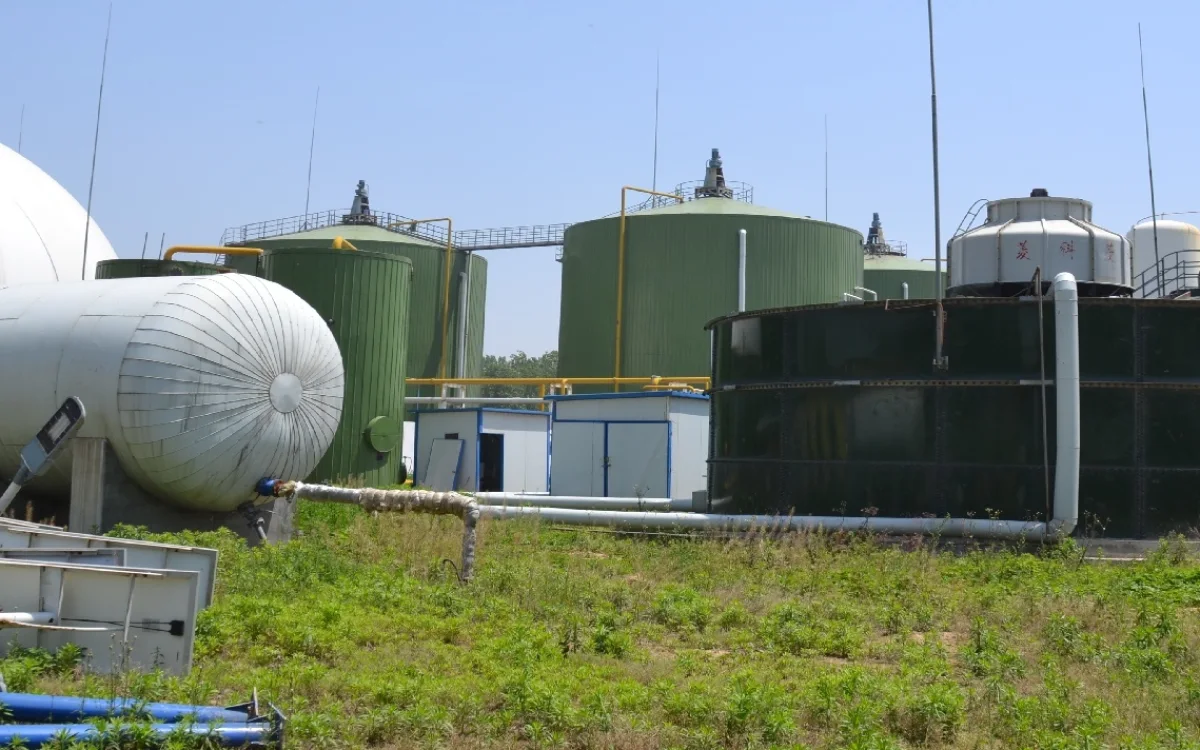
Cassava processing wastewater can contain high organic load and starch-related suspended solids. In many projects, anaerobic treatment is considered because the wastewater can generate biogas when the process is controlled correctly. A membrane gas holder provides the short-term gas buffer needed between digestion and downstream gas use.
This project type belongs in the same decision path as industrial wastewater treatment, but it also has food-processing characteristics. The buyer should not compare tanks only by volume because solids, pH behavior, temperature, odor, and gas production all affect the equipment package.
Process Conditions to Confirm
Starch wastewater can settle, ferment, and change pH if it is not equalized and handled properly. The RFQ should therefore identify whether the tank is used before anaerobic treatment, inside the digestion stage, after treatment, or only for gas buffering. Mixing, drain points, manways, sludge removal, and roof or cover requirements depend on that duty.
Some cassava-processing sites may also require review of process-specific compounds and local effluent rules. These should be confirmed by the plant engineer or wastewater designer before selecting a coating system, membrane material, or gas-handling accessory.
Gas Holder Function
The membrane gas holder stabilizes pressure and protects downstream gas users from short-term variation. It should be sized using expected gas production, usable storage volume, pressure range, and operating mode. If the gas is sent to a generator or boiler, the supplier should coordinate pressure control, condensate drainage, gas treatment, and emergency relief with the EPC scope.
For the liquid-side tank, buyers can compare anaerobic digester tanks, coated bolted tanks, and related roof systems based on chemistry and site assembly needs. The corrosion protection guide can help organize coating questions before procurement.
RFQ Data to Prepare
The RFQ should include wastewater flow, COD/BOD range, suspended solids, pH and temperature range, expected gas production, methane range if known, H2S estimate, tank role, roof or membrane requirement, local wind data, and whether installation supervision is required. Without this data, quotations may look similar but omit very different process risks.
Related cases under wastewater treatment projects can be used to compare cassava duty with other food or industrial effluent duties before sending a final inquiry.
Procurement Notes
Cassava plants may operate in regions where transport distance, site utilities, and installation labor strongly affect execution risk. A bolted or modular tank package should therefore be checked for container loading plan, part labeling, spare bolts and sealants, installation drawings, and repair material. These items reduce site uncertainty when the project is far from the supplier factory.
For wastewater with high starch solids, the buyer should confirm whether sludge removal, bottom slope, drain location, and cleaning access are included in the tank design. If these details are left out of the quotation, the installed system may require field modification after commissioning, which is usually more expensive than engineering the interfaces at the RFQ stage.