
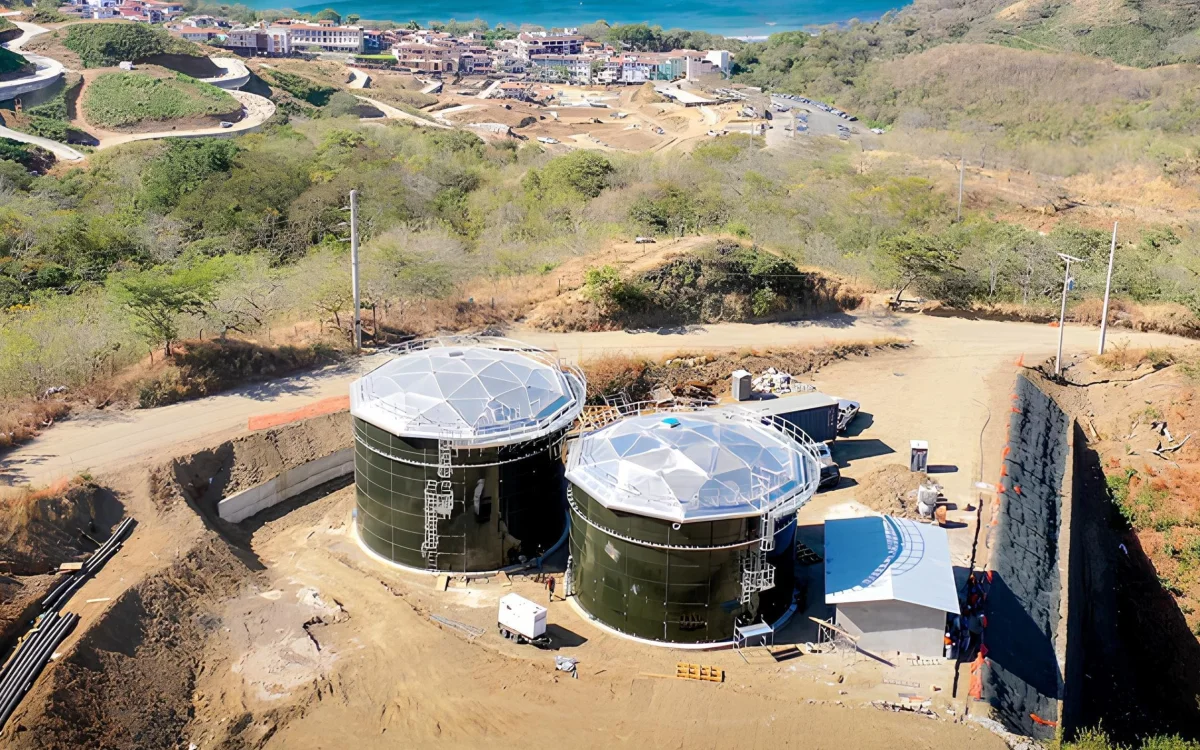
A potable water tank roof protects more than the tank structure. It helps keep rain, debris, sunlight, animals, and airborne contamination away from stored drinking water. For this reason, aluminum dome roof projects should be reviewed together with tank hygiene, ventilation, access, and local authority requirements.
This Costa Rica reference connects drinking water storage with aluminum dome roofs. The roof is not just an accessory; it is part of the water quality protection and maintenance system.
Roof Design Review
The buyer should provide tank diameter, shell height, site wind data, stored water duty, required roof load, access requirements, and any owner-specific potable water documentation. Vents, manways, hatches, handrails, level instruments, overflow screens, and roof penetrations should be defined before roof fabrication.
For potable water service, ventilation needs to balance pressure equalization with contamination protection. Vent screens, insect protection, access hatch sealing, and overflow screening are small details that can become major owner concerns during commissioning or inspection.
Procurement and Installation Notes
Aluminum dome roofs are often selected for corrosion resistance, light weight, and clear-span coverage. The supplier should define roof panel packing, support details, sealant or gasket scope, installation sequence, and whether the roof interfaces with a new tank or an existing tank.
If the roof is installed on an existing tank, the tank rim condition, roundness, anchor interface, and available working platform should be checked before quotation. If it is a new tank package, the roof and shell should be coordinated as one system through the tank drawings.
RFQ Takeaway
A complete inquiry should include tank dimensions, roof type, potable water requirements, local loads, accessories, inspection access, packaging expectations, and installation support needs. The roof selection guide and RFQ checklist can help buyers prepare these details before requesting a final price.
Engineering Limits and Handover
A roof quotation should state whether the supplier is responsible for only the dome roof, the roof-to-shell interface, or the complete tank and roof package. This boundary affects anchor design, seal details, installation responsibility, and warranty interpretation. For replacement or retrofit projects, the existing tank dimensions and rim condition should be verified before the roof is ordered.
After installation, the owner should receive roof drawings, accessory list, vent and hatch details, packing and installation records, and any inspection photos required for handover. These records are especially useful for potable water operators because maintenance teams need to know how roof penetrations, screens, and access points should be inspected over time.
Buyer Questions Before Quotation
Before sending the RFQ, buyers should confirm whether the roof will be installed during new tank construction or after the tank is already in service. They should also define who supplies scaffolding, lifting equipment, seal inspection, and final water-tightness review. These boundary questions prevent the roof package from being quoted without the site work needed to install it correctly.