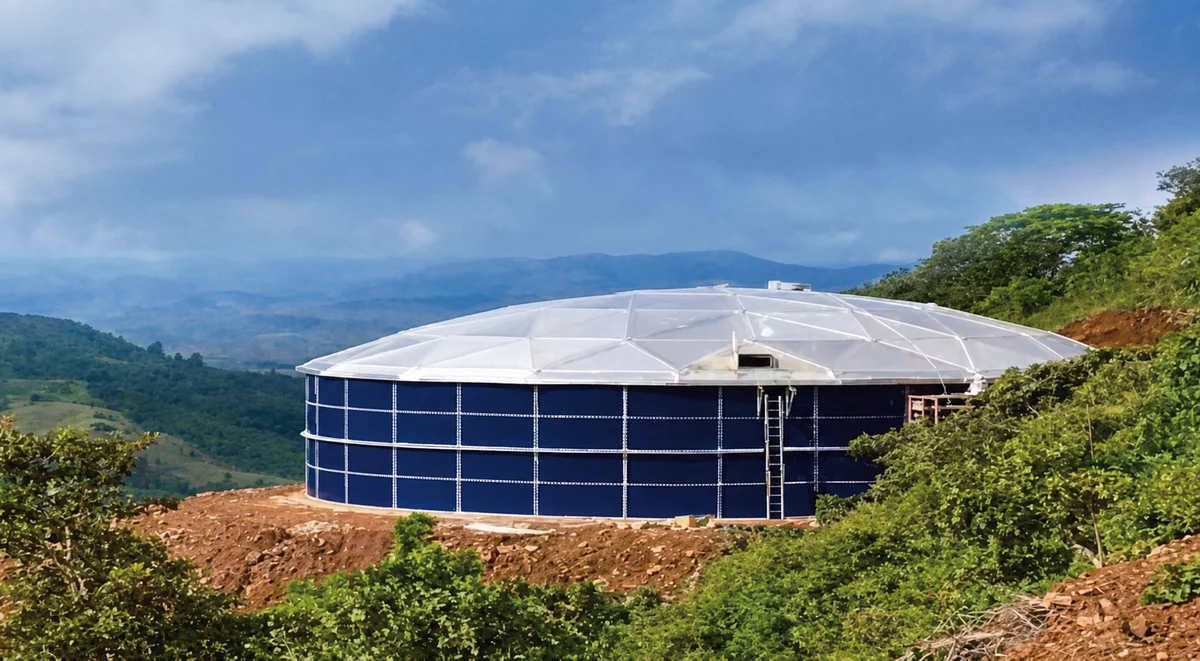
Malaysia biogas roof project reference covering single-membrane roof selection, climate exposure, gas interfaces, access, inspection, and RFQ preparation.
This project reference illustrates a bolted tank and single-membrane roof arrangement in a tropical biogas setting; final gas and structural details remain project-specific.
A Project Reference for Tropical Biogas Roof Planning
This Malaysia reference shows a blue bolted tank fitted with a white single-membrane roof in a tropical hillside setting. It is useful as an installation and qualification reference for biogas or anaerobic-digestion projects where weather exposure, access, roof drainage, gas routing, maintenance, and site logistics need to be reviewed together. It should not be used to infer capacity, gas volume, pressure, process performance, owner identity, delivery date, or design standard for another project.
A single-membrane roof can perform a defined cover or gas-handling role within a complete biogas system, but it is not a substitute for a project gas-balance, safety review, or pressure-control philosophy. The process designer must define substrate, gas production variability, operating pressure, gas treatment, condensate handling, emergency protection, roof loads, instrumentation, and the boundary between tank, membrane, piping, and downstream equipment.
Rainfall, wind, lightning, UV exposure, temperature, site drainage, access-road condition, and maintenance weather windows.
Tank and roof
Tank diameter and height, membrane type, roof support concept, attachment details, drainage, access, inspection openings, and fall protection.
Gas system
Expected gas generation range, normal and maximum pressure, gas composition, condensate, relief, isolation, treatment, and downstream use.
Site interfaces
Foundation, anchors, slopes, lifting plan, scaffold or platform access, power, controls, piping supports, and installation responsibility.
Documentation
Design basis, calculations, material and membrane records, installation method, test plan, operating limits, maintenance procedure, and handover data.
Tropical Weather Is a Design Input
A tropical site needs more than a generic outdoor-tank assumption. High rainfall, wet-ground access, seasonal storms, wind, UV exposure, drainage around the shell, vegetation control, and lightning protection interfaces can affect installation sequence and long-term maintenance. The project team should define local environmental loads and the responsibility for civil drainage, access roads, lifting areas, and safe maintenance routes before the roof and tank layout are fixed.
Roof drainage and water exclusion must be considered with the membrane arrangement. Ponding, debris accumulation, uncontrolled runoff, and blocked drains can change loads and reduce accessibility. The final design should identify inspection intervals, roof-access restrictions, working-at-height controls, and the procedure for cleaning or repairing the membrane without disturbing connected gas equipment.
The Tank Roof Is One Interface in the Gas System
Biogas production and storage depend on the full process chain, not on the roof alone. Feedstock characteristics, digestion temperature, retention time, gas yield variability, desulfurization, moisture removal, compressor or flare interfaces, and downstream consumption all influence the gas-management design. The owner or EPC contractor should issue the gas balance and operating scenarios before a membrane roof is selected or quoted.
Pressure and safety conditions require project-specific engineering. The RFQ should specify normal, maximum, and upset pressure, any vacuum scenario, relief route, isolation philosophy, gas composition, condensate management, hazardous-area requirements, and instrument interfaces. A project reference can demonstrate an arrangement, but it cannot establish the safe operating limits for a different substrate, climate, or process configuration.
Provide the gas-balance and pressure-control basis with the RFQ.
Confirm roof attachment, drainage, access, and membrane inspection responsibilities.
Define the boundary between the tank supplier, membrane supplier, process contractor, and electrical or controls contractor.
Plan Installation and Maintenance at the Same Time
The site team should agree how tank panels, membrane components, access equipment, lifting gear, temporary works, and weather protection will be delivered and assembled. Hilly or wet sites can restrict crane positioning and storage space, so route surveys and foundation readiness should be part of the installation plan. The supplier needs the exact site constraints rather than a simple location name.
Maintenance planning includes safe roof and ladder access, gas isolation, inspection points, membrane repair method, replacement parts, documentation, and clear responsibility for emergency response. For a wider portfolio of comparable work, use the biogas project references and assess each case against its own documented design data.
Use the Reference Without Overstating Its Data
This reference supports early-stage discussion of a bolted-tank and single-membrane-roof arrangement in Malaysia. It does not publish verified capacity, gas volume, owner, production yield, or commissioning performance, so those figures should not be copied into a buyer specification. The safest use is to identify questions that must be answered for the next project: climate loads, substrate and gas conditions, roof arrangement, access, foundation, installation, inspection, and scope division.
A comparable proposal should state the accepted design inputs and list exclusions. It should distinguish tank structure, membrane, gas piping, treatment equipment, controls, civil works, power, installation, testing, and commissioning. That structure gives buyers a realistic basis for comparing options and avoids treating a project photograph as proof of an identical operating solution.
Data to Include in the RFQ
A biogas roof RFQ needs a defined process and site basis, including gas conditions, roof duty, climate exposure, tank interfaces, installation scope, and documentary requirements.
Substrate, digestion process, gas generation range, gas composition, normal and maximum pressure, vacuum scenario, condensate, relief, treatment, and downstream use.
Tank diameter and height, liquid operating levels, roof or membrane duty, attachment concept, access openings, roof drainage, ladders, platforms, and fall protection.
Malaysia site conditions or equivalent local data: rainfall, wind, lightning, UV, ambient temperature, seismic data where applicable, slopes, drainage, and construction access.
Inspection and maintenance access, gas isolation procedure, membrane repair or replacement approach, spares, emergency response, and operating limitations.
Design records, calculations, membrane and material records, installation method, test plan, commissioning scope, operation manual, and handover documents.