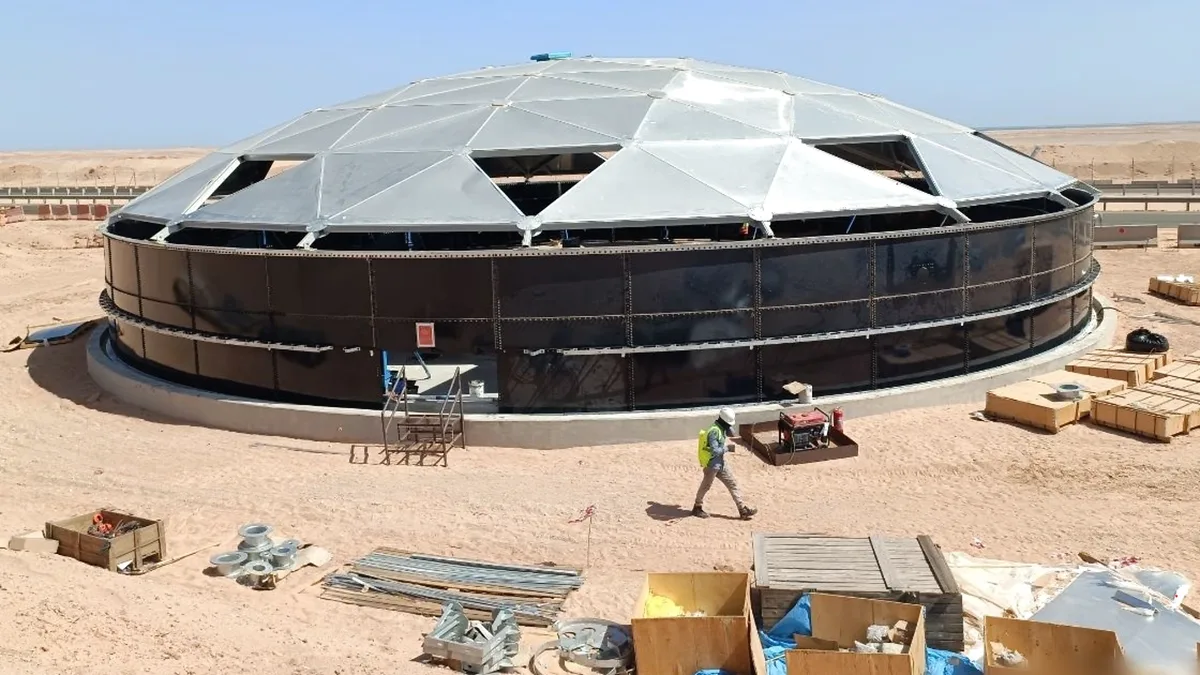
Use this aluminum dome roof checklist to review tank diameter, loads, roof interface, venting, access, corrosion, and retrofit RFQ data.
Aluminum dome roofs should be reviewed against tank diameter, top ring condition, wind load, access, and venting requirements.
A dome roof is an engineered interface, not only a cover
Aluminum dome roofs are widely reviewed for water tanks, wastewater tanks, bulk storage, and retrofit projects because they can provide a lightweight, corrosion-resistant cover without internal columns in many configurations. The engineering review still has to start from the tank diameter, top angle or compression ring, site load data, stored medium, venting demand, and inspection access.
For new tanks, the roof and tank shell can be coordinated from the beginning. For retrofits, the existing tank geometry and top ring condition must be confirmed before any final design. Buyers comparing aluminum dome roofs should ask for the design basis and interface assumptions, not only a square-meter roof price.
This checklist is intended for RFQ preparation and preliminary technical review. Final roof design should follow the applicable project standard, local building code, and owner specification.
Roof Engineering Inputs
Input
What to Confirm
Tank diameter and shell interface
Inside diameter, out-of-round tolerance, top angle or ring beam condition, attachment method, and whether the project is new build or retrofit.
Environmental loads
Wind load, snow load, seismic requirements where applicable, temperature range, and coastal or chemical exposure conditions.
Stored medium and vapor space
Drinking water, wastewater, chemical vapor, dust, odor, or gas service affects venting, seals, access hatches, and material selection.
Access and maintenance
Manholes, inspection hatches, platforms, handrails, vents, nozzles, skylights if specified, and safe maintenance route.
Tank contents and roof air space
Review whether the roof must control rainwater, dust, odor, evaporation, product contamination, or vapor release.
Retrofit survey evidence
Existing tank photos, shell roundness checks, top ring condition, previous roof attachment details, and available drawings should be submitted before pricing.
New tank and retrofit reviews are different
In a new tank package, the roof supplier can coordinate the shell top detail, nozzle locations, ladders, platforms, and tank accessories before fabrication. This reduces field modification and makes packing and installation documents more reliable.
In a retrofit, the existing tank may have deformation, corrosion, previous roof attachments, or incomplete drawings. A practical RFQ should include photos, diameter checks, shell-top details, previous repair records, and load requirements. These inputs should be reviewed together with the tank design standards page.
Venting and access should be settled early
Roof quotations can miss critical details when venting and access are left open. Drinking water, wastewater, fire water, and bulk material storage each have different operational expectations. Vent size, screen requirements, odor control connection, emergency overflow, and maintenance hatches should be coordinated before order confirmation.
For aggressive environments, buyers should also review fastener material, seal compatibility, galvanic isolation details, and inspection access. A lightweight roof does not remove the need for disciplined corrosion and maintenance planning.
Load review should be explicit in the quotation
A roof quotation should identify which wind, snow, seismic, live load, and dead load assumptions were used. If the supplier does not state the load basis, the buyer cannot compare quotations fairly. A low roof price may simply reflect missing load data, weak access assumptions, or an incomplete tank interface review.
The tank shell and foundation also matter. A dome roof transfers load to the tank top structure, so the tank top angle, compression ring, anchor design, and shell condition should be reviewed together. For retrofit work, the existing tank may need a field survey before the roof design can be finalized.
Operational details that affect roof design
Water storage, wastewater, bulk solid, and industrial process tanks do not use roofs in the same way. Some projects emphasize sanitary protection, others prioritize odor control, corrosion resistance, dust control, evaporation reduction, or reduced maintenance. Each purpose changes venting, seals, access hatches, and accessory locations.
Buyers should also define whether the roof package includes vents, access hatches, handrails, platforms, nozzles, skylights, bird screens, or special sealing details. If accessories are excluded from the roof scope, the quotation should clearly show the boundary so the EPC contractor can price the missing items.
Standards and Reference Notes
For water-storage projects, AWWA standards are commonly used as a specification framework. Review the relevant AWWA standard family through the official AWWA standards store and confirm whether AWWA D108 or another owner-specified roof standard applies.
For welded steel oil storage tanks, API 650 includes tank roof design context, including aluminum dome roof provisions in applicable editions. Use the official API standards portal for standard identification, then apply the exact purchased standard required by the project.
RFQ Preparation
Send tank diameter, tank drawings, top ring photos, site load data, stored medium, venting needs, access requirements, and project standard for an aluminum dome roof review.