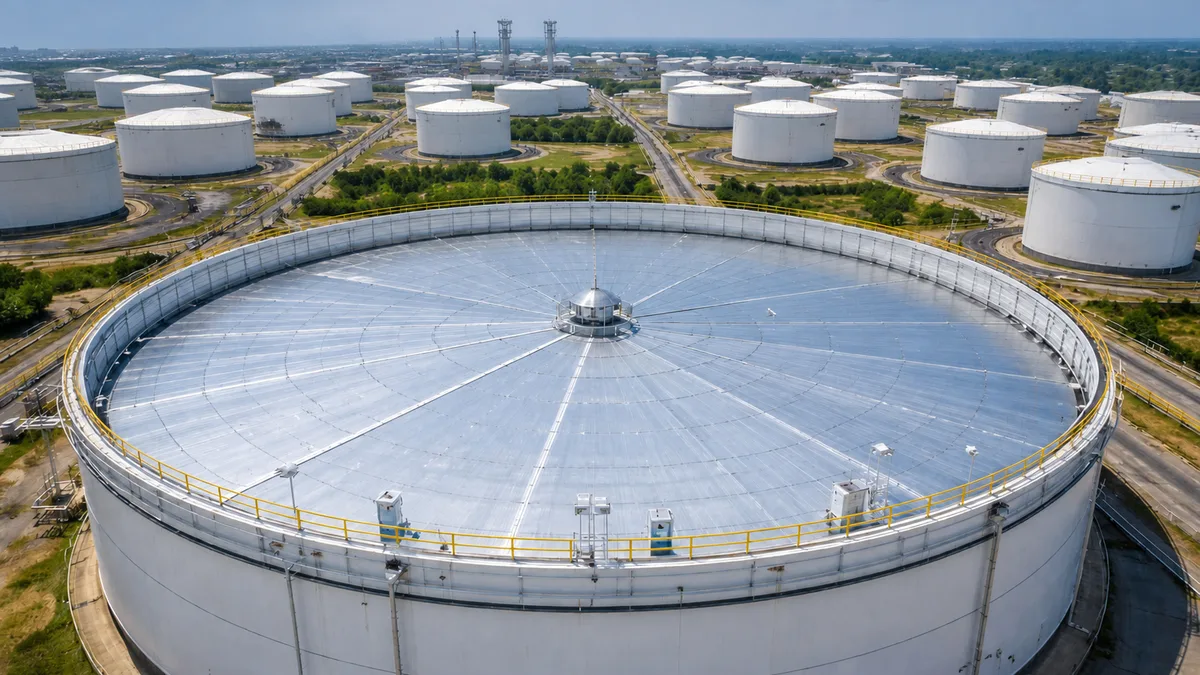
External floating roof drainage checklist covering movement, seals, rim area, access, attachments, inspection records, repair scope, and RFQ data.
External floating roof drainage and inspection planning should be based on the actual roof design, operating range, weather exposure, seal system, access controls, and owner maintenance procedures.
Treat Drainage as Part of the Roof System
An external floating roof is a moving component within a complete storage-tank system. Drainage, rim seals, roof attachments, roof legs, access, vents, gauges, anti-rotation devices, and the tank shell all work together as the liquid level changes. A drainage concern cannot be assessed from a roof photograph alone; the owner needs the approved roof drawings, operating range, weather exposure, inspection history, and the project-specific design and maintenance requirements.
This checklist is intended for planning an inspection, repair review, retrofit discussion, or RFQ. It does not replace the tank owner's operating manual, a code-required inspection program, a supplier's approved repair procedure, or an engineer's assessment. Any work that changes roof drainage, buoyancy, attachments, seal geometry, roof loading, or access must be reviewed against the governing design basis and the actual as-built configuration.
For broader roof selection context, see the floating roof product page and the tank roof selection guide. The focus here is the practical information that should be collected before deciding whether a drainage or roof condition needs routine maintenance, detailed engineering, or a replacement scope.
External Floating Roof Inspection Matrix
Inspection area
Questions to resolve before repair or modification
Roof operating range
Minimum and maximum liquid levels, normal movement frequency, landing conditions, roof support arrangement, level instrumentation, and known restrictions.
Drainage arrangement
Installed drain type, route, flexible or articulated components, discharge path, low points, blockage history, test method, and owner acceptance criteria.
Rim and seals
Primary and secondary seal type where fitted, rim-space condition, shunts or bonding where applicable, shell contact, wear, vapor-control requirements, and repair history.
Roof deck and attachments
Deck condition, pontoons, legs, appurtenances, gauge wells, vents, access hatches, supports, drains, platforms, and any unapproved additions.
Safety and records
Permit and access route, atmosphere and isolation requirements, weather limits, fall protection, photographs, drawings, inspection records, and repair authorization.
Confirm the As-Built Drainage Arrangement
Before diagnosing ponding, leakage, or a suspected drain issue, confirm the installed configuration. Drain type, internal route, flexible sections, joints, supports, discharge point, roof low points, access openings, and the available test procedure must be known. A modification or repair based on an assumed arrangement can interfere with roof movement, buoyancy, inspection access, or the tank's original safety features.
The inspection should also distinguish rainwater on the roof from product, process water, or water entering through another path. Evidence may include observed liquid location, appearance, weather history, tank level, drain discharge condition, water-draw records, and controlled testing under the owner's procedure. The findings should be documented with locations and photographs so the final scope addresses the cause rather than only the visible symptom.
Review Roof Movement, Rim Space and Attachments Together
A floating roof moves with liquid level, and its condition is affected by shell roundness, roof centering, guide or gauge components, roof legs, seals, accumulated debris, and attachments. Unusual roof position, rub marks, seal wear, blocked movement, or damage near the rim can be related to more than drainage. The review should identify the operating level at which the condition occurs and whether it changes during filling, emptying, landing, or weather events.
No new support, cable tray, pipe, temporary rigging point, or maintenance platform should be placed on the roof without a formal review. The roof deck and supporting elements have a defined load basis. Seemingly minor changes can alter drainage paths, local loads, seal clearances, access hazards, and inspection requirements. Record all existing attachments and distinguish approved equipment from temporary or unauthorized additions.
Record the liquid level and operating state when a condition is found.
Inspect rim, seals, legs, guide components, and roof attachments as a connected system.
Do not modify drainage or add roof loads without the owner's approved engineering review.
Plan Safe Access and Inspection Controls
Tank-roof work can involve hazardous atmospheres, hydrocarbon exposure, working at height, changing weather, confined-space interfaces, and operational constraints. The owner's permit process, isolation plan, gas testing requirements, rescue arrangements, fall protection, weather limits, communications, and emergency response controls must be established before inspection or repair begins. These controls are site-specific and cannot be inferred from a generic roof layout.
Inspection planning should also identify what equipment can be brought onto the roof, how tools and small parts are controlled, where personnel may stand, and how the roof will be examined without damaging deck surfaces or seals. If a full internal or external tank inspection is planned, coordinate the roof scope with cleaning, gas freeing, access, and the wider maintenance shutdown plan.
Write a Repair Scope That Can Be Quoted and Verified
A usable RFQ includes the as-built drawings, tank dimensions, roof type, service, operating range, photographs, observed condition, inspection history, desired work window, access restrictions, and the owner's required deliverables. The bidder should state whether the offered scope is inspection support, drain testing, component repair, seal work, roof retrofit, or a full engineered replacement. Assumptions and exclusions should be visible rather than hidden in a price.
The project documents should identify the governing code edition, owner requirements, and acceptance criteria for the work. An API reference in a project title is not enough to establish every design, inspection, or repair requirement; the contract and owner's engineering team must identify the applicable basis. For tank-design inputs beyond the roof itself, see the tank design standards resource and include those inputs in the review package.
Data to Include in the RFQ
For an external floating roof drainage or repair enquiry, provide the as-built arrangement, operating history, inspection evidence, owner safety controls, and the exact work boundary.
Tank service, nominal diameter and height, roof type, as-built drawings, roof operating range, landing arrangement, and known movement restrictions.
Drain configuration, route and discharge point, observed condition, rain or process-water history, prior repairs, testing records, and supporting photographs.
Seal and rim details, roof legs, guide or gauge components, vents, access hatches, platforms, attachments, corrosion or wear observations, and unauthorized additions.
Site permit process, isolation and atmosphere controls, access route, fall protection, rescue plan, weather limits, tool restrictions, and work window.