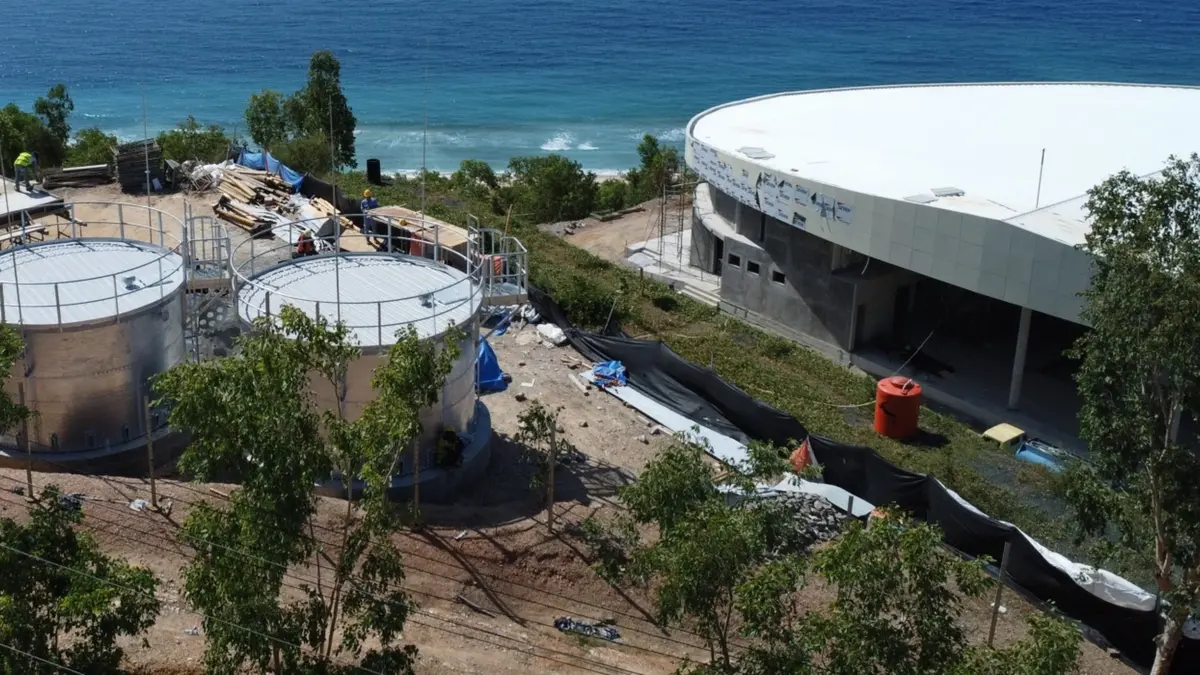
Prepare fire water tank RFQs with usable capacity, fire flow duration, pump and hydrant connections, local code review, appurtenances, and inspection data.
Fire water tank RFQs should define usable fire reserve, duration, appurtenances, and local approval requirements before pricing.
A fire water tank quotation needs more than nominal capacity
Fire water tanks are safety assets. A buyer may ask for a 500 m3 or 1,000 m3 tank, but the engineering question is usable fire reserve under the required fire flow and duration. The quotation should also identify pump suction arrangement, refill strategy, anti-vortex details, overflow, drain, roof, access, freeze protection, and the authority or insurer that will review the system.
This checklist supports fire water tank RFQs and fire water application reviews. It is not a substitute for a fire protection engineer, local authority, or insurer review. It is a practical data list that helps the tank supplier price the right scope and avoid missing appurtenances.
The tank shell is only one part of the system. Fire pumps, hydrants, sprinklers, test header, suction piping, valve pits, heat tracing, level alarms, access ladders, and inspection platforms may all affect the tank interface.
Fire Water RFQ Data Checklist
RFQ Data
Why It Matters
Required fire flow and duration
Determines usable reserve and may differ from the tank nominal capacity.
Applicable standard and approval authority
Local code, insurer requirement, owner standard, and authority having jurisdiction can change fittings and inspection scope.
Pump suction and pipe interface
Controls nozzle size, elevation, anti-vortex plate, pipe support, and foundation interface.
Refill and overflow plan
Affects inlet sizing, air gap, overflow routing, drain, and site water management.
Climate and site loads
Freezing, wind, seismic, snow, and corrosion environment affect material, roof, insulation, and anchorage.
Inspection and maintenance access
Ladders, platforms, roof hatches, manways, level indicators, and safe access should be included in the tank scope.
Usable capacity versus nominal capacity
Nominal tank volume is not always the same as usable fire reserve. Low-level pump suction, unusable bottom volume, overflow level, freeboard, and required safety margin can reduce effective storage. Buyers should state whether the requested capacity is nominal tank capacity or usable fire-fighting capacity.
If the tank also serves process water or utility water, the fire reserve must be protected by controls or physical arrangements. A shared-use tank may need level alarms, interlocks, or separate compartments depending on the project approval basis.
Scope boundaries that often cause change orders
Fire water tank quotations can vary because suppliers include different accessories. One quotation may include only shell, roof, bolts, gaskets, and basic nozzles. Another may include ladders, platforms, level gauges, anti-vortex devices, heating, insulation, internal coatings, foundation bolts, hydrotest support, and installation supervision. The buyer should list required appurtenances explicitly.
For projects that need rapid delivery, clarify whether the supplier is responsible for design drawings, fabrication, packing, export documentation, site installation, hydrotest support, or only material supply. The general RFQ data checklist can be used with this fire-specific checklist.
For coastal, mining, chemical, or power projects, also provide site corrosion data and wind/seismic conditions so the supplier can review coating, anchorage, and roof requirements.
Standards and Reference Notes
NFPA explains that NFPA 22 covers design, construction, installation, and maintenance requirements for water tanks used for private fire protection. Use of NFPA 22 is jurisdiction- and project-dependent; local code and insurer requirements must be confirmed.
Next RFQ Steps
Send required fire flow, duration, usable reserve, approval basis, pump connection, nozzle schedule, climate loads, appurtenances, and installation responsibility.
Define the water-demand basis and the usable reserve
A fire water tank RFQ should identify the owner-approved demand basis, required duration, number of duty scenarios, minimum operating level, reserve allocation, refill assumptions, pump suction conditions, inlet arrangement, overflow and drain path, and the authority or insurer requirements that apply to the project location. Nominal shell capacity is not the same as usable fire reserve once freeboard, low-level limits, dead volume, fittings, operating restrictions, and maintenance arrangements are considered.
The relevant standards and approval route depend on the jurisdiction, owner, insurer, system design, and selected tank construction. A named standard in supplier literature is not proof that every configuration is acceptable in every country. The buyer should issue the applicable project documents and request a written statement of what the proposed tank package covers, which evidence it provides, and which system, civil, pump, pipework, electrical, testing, and approval responsibilities remain outside that package.
Coordinate reliability, access, and handover evidence
The fire water tank must work with the complete fire protection system. Define roof or cover, vents, screens, access, anti-vortex or suction interfaces where specified by the system designer, level monitoring, alarms, heating or freeze protection where required, drain and test-water route, inspection access, corrosion protection, foundation, containment, site loads, and the maintenance isolation procedure. These interfaces should be resolved before drawings are frozen, not added after the tank is erected.
The handover package should identify the final drawings, applicable material or coating records, inspection and test evidence, installation records, repair records, accessories, operation information, and accepted punch-list items. For application and project context, see the fire water storage application page and fire water project references. Use the RFQ data checklist to keep tank scope, pump and pipework interfaces, installation, and acceptance responsibilities comparable across bids.
Review the complete fire protection boundary before award
A tank can be a critical component without being the whole fire protection system. The RFQ should state what is included in the tank supply and what remains with the fire-system designer, pump supplier, pipework contractor, civil team, electrical and controls team, installer, authority, insurer, or owner. Differences in testing, refill provisions, interfaces, site work, and documentation should be visible when bids are compared.
Before release, confirm the final usable reserve, drawings, level and alarm interfaces, roof and access scope, foundation and drainage assumptions, inspection hold points, installation plan, test acceptance, and handover records. This approach supports reliable procurement without assuming that one project standard or supplier certificate applies universally.