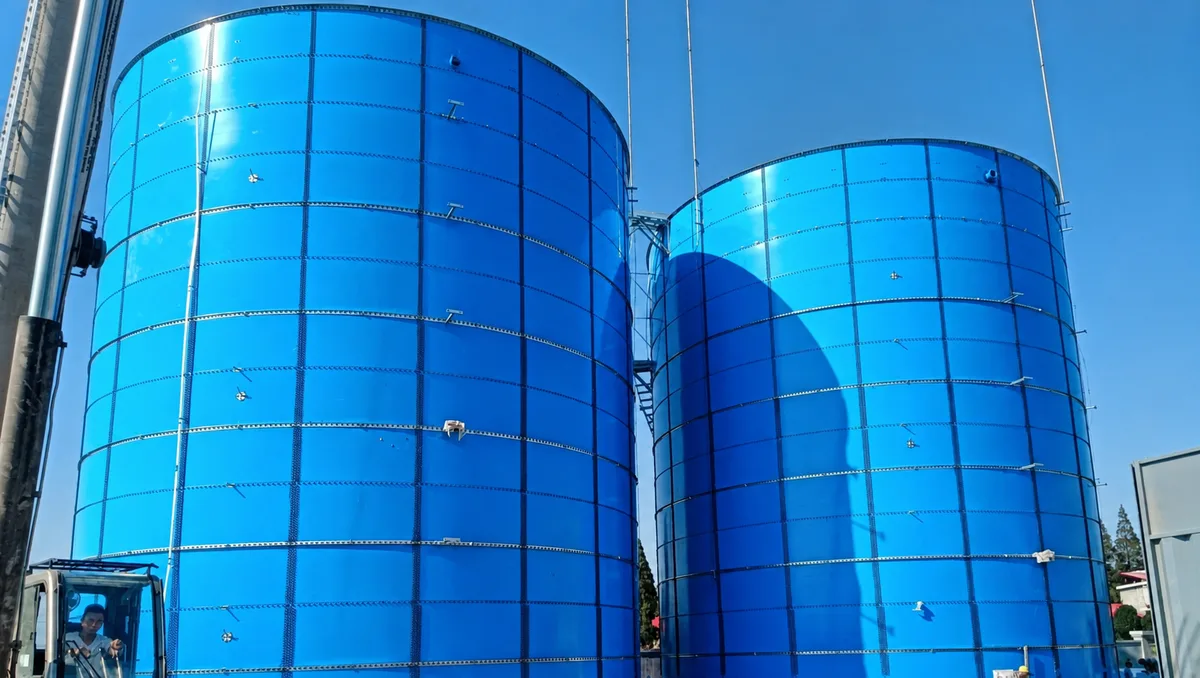
Livestock Water Tank Capacity and Site Data Checklist
Technical checklist for livestock water tank capacity and site data, covering demand basis, usable volume, operating levels, foundation interface, wind, access, distribution, and RFQ data.
Capacity, operating levels, distribution demand, foundation data, access, and maintenance need one coordinated livestock water storage design basis.
Capacity Is a Usable Operating Volume, Not Just a Gross Number
Livestock water-tank planning begins with a demand profile and a defined operating reserve, then converts those needs into a usable storage volume. Gross volume alone can hide normal operating level, low-level pump or outlet constraints, freeboard, emergency reserve, cleaning or drain-down allowance, future expansion, and the relationship between the tank and the distribution system. The owner should issue the animal and operating demand basis, source reliability, refill rate, required autonomy, normal and minimum levels, and the site data needed to install and maintain the selected tank.
This is a technical data checklist, not a claim that one design standard or one construction method applies globally. For application context, see the livestock drinking water storage page. The responsible engineer and owner must define the adopted project requirements, design loads, approvals, and final water-supply acceptance route for the actual site.
Capacity and Site Data Matrix
Data group
Questions to answer before a tank is selected
Demand basis
Animal category and count, peak and average demand, seasonal variation, washdown or process demand, water-source reliability, desired reserve duration, future expansion, and priority during shortages.
Usable storage
Gross volume, normal level, low operating level, emergency level, freeboard, outlet elevation, pump protection, turnover, cleaning and drain-down volume, and refill rate.
Tank and foundation
Construction type, material or protection assumptions, footprint, elevation, foundation interface, anchoring review where required, soil information, drainage, wind or seismic inputs, and external attachments.
Operation and delivery
Roof and access, vents, overflow, drains, instruments, distribution boundary, installation, inspection and tests, cleaning, records, manuals, and acceptance responsibilities.
Build a Time-Based Demand and Refill Model
The owner should state how much water is needed across a day and how that changes through heat, animal growth, production cycle, stocking, washdown, maintenance, and source interruptions. A reserve requirement needs a stated time basis: hours or days of independent supply, a defined source outage, or an approved operating rule. The tank and distribution system should be reviewed together because a high daily demand with a reliable fast refill is different from the same daily demand at a remote site with an intermittent source.
The calculation should distinguish drinking-water demand from cleaning, irrigation, processing, or emergency use. Where duties share storage, define priority, isolation, recharge sequence, and controls. Future animal count, additional buildings, or a new distribution zone should be treated as an explicit expansion case instead of an assumption embedded in a nominal tank volume.
Record Gross Volume, Usable Volume, and Operating Levels
The RFQ should state gross volume and the usable operating volume between defined levels. Minimum level can be affected by outlet elevation, pump protection, sediment allowance, suction design, mixing or recirculation requirements, and the need to retain a protected reserve. Maximum level can be affected by freeboard, alarm setting, overflow route, roof and vent arrangement, and the approved operating procedure. These definitions make proposals comparable and reduce disagreement after installation.
Level instruments, alarms, overflow, drains, sampling, and any automated refill or telemetry need a documented boundary to the electrical and distribution systems. The tank supplier can provide equipment within the listed scope; system response, alarm routing, operator procedure, and any remote-control function should be assigned to the responsible project team.
Use Site Inputs Before Finalizing Geometry
Tank diameter, height, access arrangement, foundation, and installation method depend on the plot and site conditions. The data package should identify available footprint, finished levels, soil and foundation information, groundwater or drainage conditions where relevant, wind and seismic inputs where required, access road, delivery restrictions, crane area, material laydown, weather, and nearby services. These inputs are needed before a final geometry or installation method can be responsibly compared.
The foundation interface should identify who supplies design data, prepares the base, checks tolerances, manages drainage, provides anchoring where required, and accepts civil work before tank installation. The tank package must not silently absorb or exclude site work that has not been defined. Access, inspection, cleaning, and distribution connections should be checked against the actual plot rather than a drawing-only assumption.
Review the Full Water-Contact and Maintenance System
Tank selection needs to consider more than the shell. Review roof, vents, screens, hatches, seals, nozzles, gaskets, drains, level devices, ladders, platforms, repair materials, cleaning chemicals, and any internal fittings against the water condition and operator procedure. The corrosion protection guide can help structure the protection and maintenance questions, but it does not replace project-specific water-quality or material-compatibility review.
The site should provide a workable route for inspection, sample collection, cleaning, disinfection, drain-down, safe entry where applicable, repair, lifting, and return to service. An otherwise adequate volume is not a complete solution if operators cannot safely maintain water quality or inspect the storage system.
Use the Checklist to Create a Comparable RFQ
A controlled enquiry should include demand profile, usable volume, level definitions, source and water condition, tank construction, roof and access, foundation and site data, distribution interfaces, inspection and testing, documents, and acceptance criteria. It should distinguish confirmed information from items that require owner, engineer, utility, or contractor review. This lets bidders state their assumptions instead of pricing different hidden conditions.
Use the industrial tank RFQ data checklist to consolidate the project record. The final technical comparison should identify what is included, what standards or owner specifications are adopted, what tests and records are required, and which responsibilities remain outside the tank supply boundary.
Data to Include in the RFQ
A livestock water tank RFQ should document the time-based demand and usable operating volume first, then connect them to site data, tank configuration, distribution, inspection, and handover.
Animal category and count, peak and average demand, seasonal variation, washdown or process use, water-source reliability, refill profile, reserve duration, expansion plan, and shortage priorities.
Gross and usable volume, normal, minimum, emergency, and high levels, freeboard, outlet elevation, pump protection, turnover, cleaning and drain-down allowance, instruments, alarms, overflow, and drain routes.
Water condition, tank construction, protection basis, roof, vents, hatches, access, nozzles, gaskets, repair method, distribution boundary, cleaning, disinfection, sampling, and maintenance procedure.
Footprint, foundation data, drainage, wind or seismic inputs where required, access, lifting, installation, inspection and tests, drawings, records, manuals, acceptance criteria, and responsibility matrix.