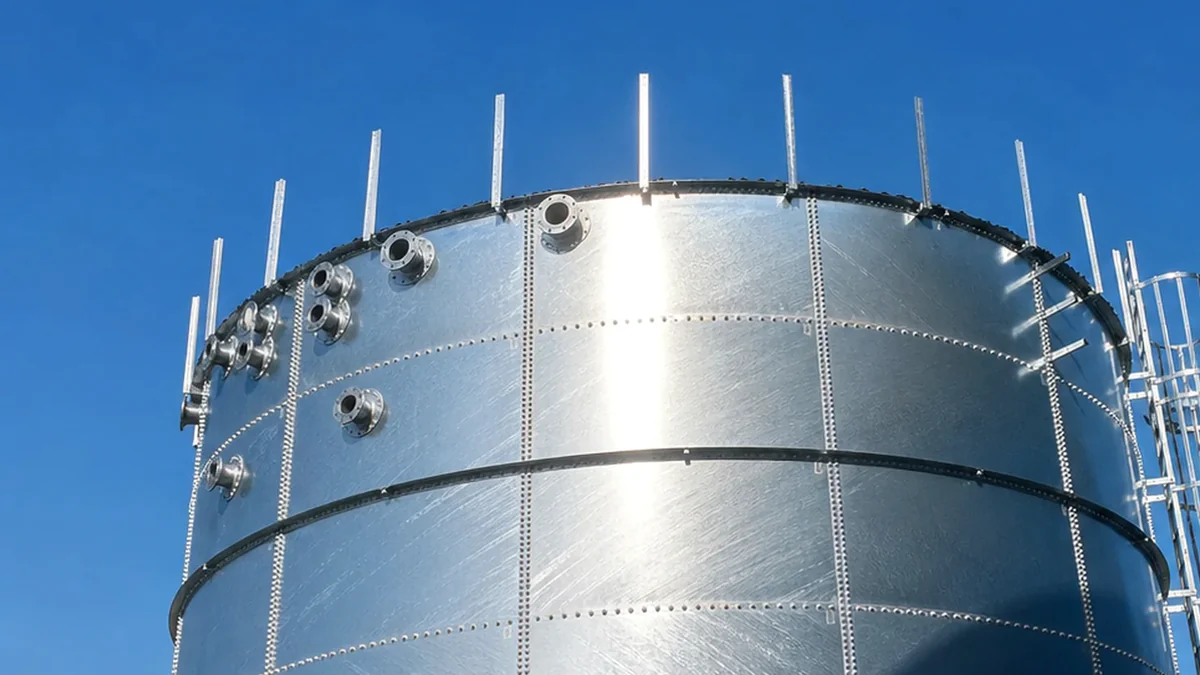
Bulk material storage solution page for grain silos, galvanized steel tanks, dry bulk storage, aeration, discharge, and RFQ preparation.
Bulk material storage must consider material flow, bulk density, moisture, filling and discharge equipment, roof/access, and foundation load.
Bulk Material Storage Solutions
Bulk material storage is different from liquid storage. Grain, feed, wheat, dry chemicals, and other solids require review of bulk density, flow behavior, bridging risk, aeration, moisture control, discharge method, roof access, and equipment integration.
Buyers often compare galvanized steel silos, grain storage silos, hopper-bottom bins, flat-bottom silos, and related access platforms. The suitable configuration depends on stored material, tonnage, filling rate, unloading system, site height limits, and maintenance plan.
Use the specification points above to compare tank options, clarify project requirements, and prepare a more accurate RFQ before discussing final pricing.
For a quotation, confirm the stored media, required capacity, project location, design or document requirements, roof and accessory scope, inspection needs, and installation responsibility.
Procurement Scope and Handover Notes
Bulk Material Storage Solutions should be reviewed as part of a complete storage system. Before final pricing, the buyer should confirm whether the supplier scope includes engineering drawings, material or coating records, roof and accessory supply, packing protection, installation documents, and commissioning support.
For international RFQs, the same tank volume can lead to different quotations if site loads, corrosion data, inspection requirements, approval standards, or installation responsibility are missing. A stronger inquiry clearly separates confirmed data from assumptions so the supplier can respond with a comparable technical proposal.
Next RFQ Steps
Send stored material, bulk density, capacity or tonnage, filling/discharge method, moisture/aeration needs, site load data, and installation schedule.
Specify bulk solids through flow and loading properties
Dry materials cannot be defined by volume alone. Bulk density range, particle size, moisture, internal friction, angle of repose, cohesion, dust, segregation, and potential bridging affect wall loading, hopper or outlet behavior, filling pattern, discharge equipment, and cleanout. Each planned material should be listed when one silo may serve several products.
The storage objective also matters. Seasonal grain inventory, continuous process buffering, mineral or powder storage, and strategic reserve require different turnover, monitoring, aeration, contamination control, and maintenance arrangements. The supplier should state the material assumptions behind the proposed geometry.
Integrate conveyors, outlets, and dust controls
Conveyors, bucket elevators, pneumatic lines, weighers, extraction equipment, dust collectors, and support steel may connect to the silo but fall under other contracts. Their loads, penetration locations, operating clearances, fill rate, discharge rate, and maintenance access should be included in the design interface schedule.
Dust behavior may influence venting, housekeeping, ignition-risk assessment, electrical classification, and explosion-protection decisions. These are material- and jurisdiction-specific safety matters. The owner and responsible specialists should define the required protection basis rather than expecting a generic silo quotation to infer it.
Protect material quality and prepare the erection site
Roof seams, hatches, vents, conveyor penetrations, access platforms, and wall joints should support the required weather and contamination control. Temperature monitoring, aeration, fumigation, lining, food-contact expectations, and condensation management should be identified before openings and accessories are finalized.
Foundation geometry, anchors, level tolerances, settlement criteria, wind, snow, seismic data, corrosion atmosphere, delivery limits, lifting, packing, and installation scope must be coordinated for the actual site. A dry bulk project succeeds when the structure, material handling, civil works, and operating procedure are designed as one system.