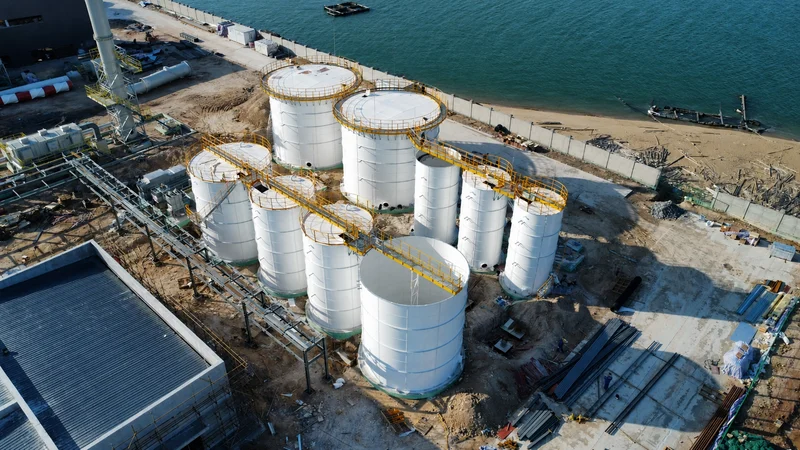
A Food-Oil Tank Is More Than a Volume Calculation
Vegetable oil storage tanks are used for crude, refined, blended, edible, and process oils, but these duties should not be treated as interchangeable. Oil type, free-water risk, temperature, turnover, cleaning chemicals, odor control, product segregation, and the receiving or dispatch arrangement all affect the tank package. The correct tank begins with a defined product and operating duty, not with a nominal volume alone.
For food and ingredient projects, the buyer should identify the applicable hygiene program, material compatibility requirements, traceability expectations, and cleaning method. A tank may need to hold warm product, receive truck deliveries, feed a process line, provide settling time, or retain a heel between grades. Each condition changes roof, vent, nozzle, drain, level, insulation, heating, access, and cleaning decisions.
For wider process context, review the food and beverage storage application page. A project that requires a fabricated shell and site-specific process interfaces should also compare the welded steel tank guide before fixing the construction route.
Vegetable Oil Tank Selection Matrix
| Decision area | Information to define before quotation |
|---|---|
| Product basis | Oil type, refined or crude condition, density, viscosity range, impurities, water risk, odor sensitivity, expected grade changes, and product data sheet. |
| Operating duty | Gross and usable volume, normal level, turnover, fill and withdrawal rate, transfer method, residence time, batch size, and emergency holding need. |
| Temperature | Minimum and maximum storage temperature, transfer temperature, seasonal conditions, insulation, heating requirement, heat source, and control responsibility. |
| Hygiene and cleaning | Cleaning method, permitted chemicals, drainability, internal access, product-contact materials, sampling, inspection, and contamination-control requirements. |
| Tank package | Roof, vents, manways, nozzles, level and overfill instruments, access steelwork, pump loads, containment interface, documents, and installation boundary. |
Define the Oil and Its Quality Risks
“Vegetable oil” does not define the engineering duty. Palm, soybean, rapeseed, sunflower, coconut, and blended oils can have different temperature behavior, viscosity, oxidation sensitivity, solids or wax formation, and cleaning requirements. Crude and refined oils can also have different impurities and downstream quality controls. The owner should provide the actual product specification and identify whether the tank will receive one grade continuously or alternate between grades and campaigns.
The storage arrangement should minimize avoidable contamination. Product-contact materials, gaskets, sealants, coatings where used, sampling devices, breathing path, drains, and temporary hose connections should be evaluated against the product and sanitation plan. Where the compatibility basis is incomplete, the supplier should state assumptions rather than imply universal suitability. A formal corrosion and compatibility review is more useful than selecting a material from a generic food-oil label.
Temperature, Flow and Drainability Need One Operating Plan
Some oils are transferred and stored at temperatures selected to maintain pumpability or avoid excessive viscosity. That is an operating requirement, not an automatic reason to add heating. The RFQ should state the required temperature range, heating medium, insulation boundary, control philosophy, expected heat-up time, and restrictions supplied by the product owner. Uneven heating, stagnant pockets, or uncontrolled temperature can create product-quality and maintenance problems.
The tank should be arranged for the actual filling and withdrawal sequence. Fill points, suction locations, return lines, overflow, vents, sampling, low-point drains, and any recirculation interface need to support stable operation and practical cleaning. A bottom arrangement that leaves an unmanaged heel may be acceptable for one product but unsuitable where grade change or full clean-out is required. State the acceptable residual volume and cleaning procedure before dimensions are frozen.
- Confirm the basis for product temperature, heat transfer, insulation, and thermal control.
- State batch sizes, peak transfer rates, truck or process interfaces, and required turnover.
- Identify grade-change, flushing, sampling, drain, and waste-product handling procedures.
Hygienic Access Has to Match the Cleaning Method
A storage tank is only as cleanable as its access and internal geometry allow. The project team should define whether cleaning is manual, spray-based, circulation-based, or performed by a specialist contractor. That decision affects manway dimensions and locations, roof openings, nozzle layout, drainability, internal fittings, safe entry arrangements, and the need to isolate connected piping. Product storage should not be designed as a shell with cleaning considered only after installation.
Inspection planning belongs in the same review. Operators need a safe route to check levels, vents, roof condition, nozzles, access rails, seals, ladders, and drains. Material certificates, fabrication records, leak-test method, coating or surface-treatment records where applicable, and operating instructions should be defined in the contract. For compatibility and environmental exposure questions, use the corrosion protection resource as an RFQ preparation aid.
Compare Proposals as Complete Storage Packages
A comparable offer separates the tank structure from pumps, heating, insulation, instruments, electrical work, platforms, containment, civil work, freight, erection, testing, and commissioning. It should state what liquid data and operating limits were accepted, what accessories are included, and which party provides site utilities, foundations, lifting, pipe supports, and controls. Comparing only capacity or shell weight leaves important interfaces unresolved.
The final review should also include the project country, ambient conditions, wind and seismic data where applicable, sanitation or food-contact approval path, export documentation, and long-term maintenance responsibility. This lets the owner compare suppliers on the same basis and prevents late additions for an omitted vent, access platform, level device, drain route, or cleaning connection.
Data to Include in the RFQ
A useful vegetable oil storage RFQ identifies the exact product, temperature and hygiene duty, operating cycle, tank interfaces, site conditions, and documentary requirements.
- Oil type, product specification, density, viscosity and temperature range, impurities or water risk, grade-change requirement, and cleaning chemicals.
- Gross and usable volume, normal levels, turnover, batch size, fill and withdrawal rates, residence time, and emergency holding requirement.
- Heating, insulation, temperature control, roof and vent philosophy, product-contact materials, sampling, drainability, and cleaning method.
- Nozzles, pumps, piping loads, manways, access, platforms, instruments, overfill protection, containment, and utility interfaces.
- Project location, ambient conditions, foundation, installation responsibility, food or hygiene approvals, and export or local documentation requirements.
- Inspection, leak or hydrostatic testing, material traceability, operation and cleaning manuals, spare parts, and handover records.