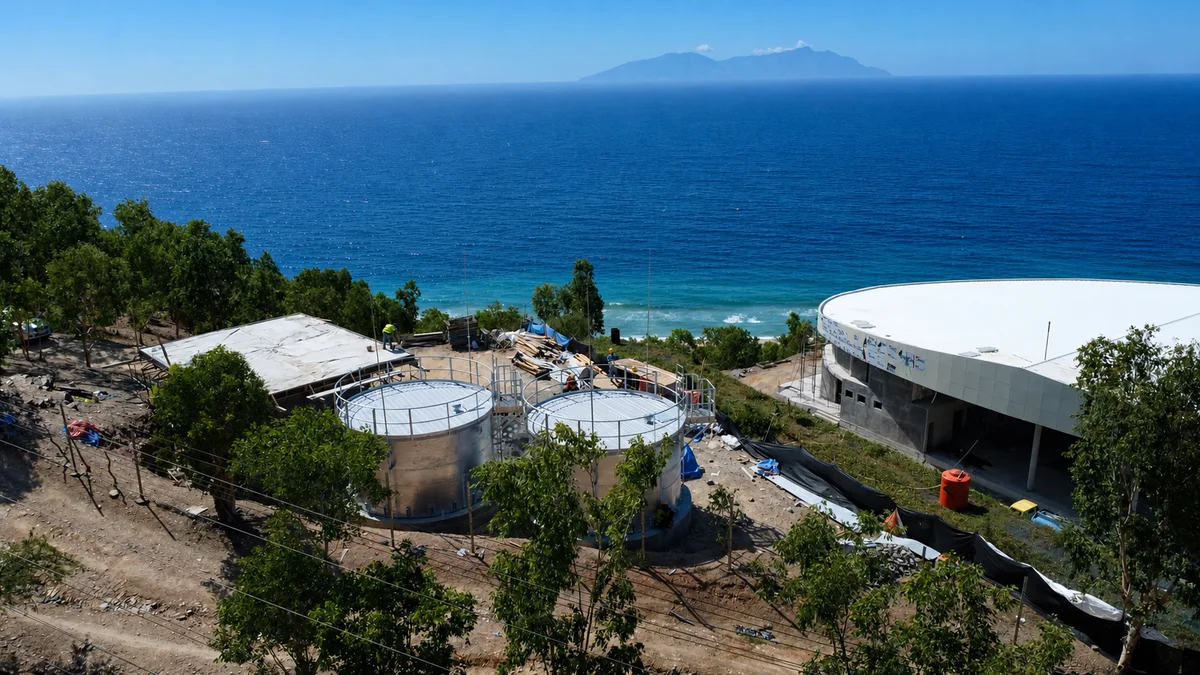
Review agricultural water tank projects for irrigation buffering, farm water, livestock water, site access, material choice, roof needs, and RFQ data.
Remote agricultural water projects require dependable refill planning, accessible maintenance routes, and a clearly defined installation scope.
Agricultural tank projects are driven by seasonal duty
Agricultural water tank projects may support irrigation buffering, livestock water, aquaculture, greenhouse supply, rural utility storage, or farm washdown. A useful project category must separate these duties because water quality, roof need, installation access, and maintenance expectations are different.
A comparable reference records the site country, water source, seasonal reserve target, refill reliability, tank capacity, material route, roof or screening requirement, and whether local crews or supplier supervision install the tank.
Agricultural project qualification points
Project factor
What to document
Water duty
Irrigation, livestock, aquaculture, greenhouse, washdown, or rural utility storage.
Seasonal demand
Peak day demand, drought reserve, refill source, pump cycle, and usable volume.
A farm water reference is useful only when the duty is clear. Irrigation buffer storage can prioritize capacity and refill reliability, while livestock drinking water may require better hygiene control and easier cleaning. Aquaculture or greenhouse water can require closer chemistry review.
Remote sites also change the project risk. Panelized delivery, simple unloading, clear installation documents, and accessible spare parts may be more valuable than a marginally lower tank price.
Material and roof decisions
Galvanized tanks can be practical for suitable water chemistry and outdoor farm service. GFS and epoxy coated systems may be preferred for larger capacity, longer design life, or stricter corrosion control. Stainless steel may be considered where cleanability or sensitive water quality is more important.
Roof or screening should be reviewed when debris, evaporation, algae, or livestock contamination is a concern. Link roof questions to roof selection before the RFQ is finalized.
RFQ data for agricultural water projects
The RFQ should include project country, water source, water analysis, working volume, seasonal reserve, roof need, outlet/inlet schedule, foundation status, site access, and installation boundary.
If the project is also potable water, review drinking water storage because approval and hygiene requirements may be different from irrigation-only storage.
Demand, refill, and hydraulic interfaces
Tank capacity should be based on usable water rather than nominal shell volume. The project team should define peak irrigation or livestock demand, the dependable refill rate, pump operating windows, minimum retained level, overflow allowance, and any drought or power-outage reserve. Where several fields or watering points share one tank, the outlet arrangement and pressure requirement must be coordinated with the distribution system.
Water-source variability also affects the package. Borehole water, harvested rainwater, canal water, and treated utility water can bring different sediment, salinity, biological growth, and cleaning concerns. Inlet calming, screens, drains, washout access, level instruments, overflow routing, and roof ventilation should be selected from the actual source and operating plan.
Foundation, installation, and handover
Remote agricultural sites need a practical execution plan. Confirm road access, container or truck unloading, lifting equipment, foundation tolerances, drainage around the tank, weather exposure, local labor capability, and the availability of water for testing. A modular tank can reduce field welding, but bolt control, sealant handling, panel protection, and supervisor responsibilities still need documented procedures.
The handover package should identify approved drawings, material or coating records, installation checks, leak or hydrostatic test requirements, operating instructions, spare parts, and the first inspection interval. Local water-quality, structural, electrical, and worker-safety rules remain controlling for the completed system.
Operational planning should also cover seasonal shutdown, low-level protection, sediment removal, algae monitoring, screen cleaning, and how the tank will be isolated without interrupting critical livestock or irrigation supply. These details influence valve arrangement, redundancy, drain location, and the quantity of spare seals or fasteners retained on site.
Standards and Reference Notes
FAO water harvesting and storage guidance provides general planning context for surface and tank storage. It is not a tank design code; local water, civil, structural, and safety requirements remain controlling.
Next RFQ Steps
Send water duty, seasonal demand, water analysis, capacity, roof need, site access, foundation status, and installation boundary for project review.