
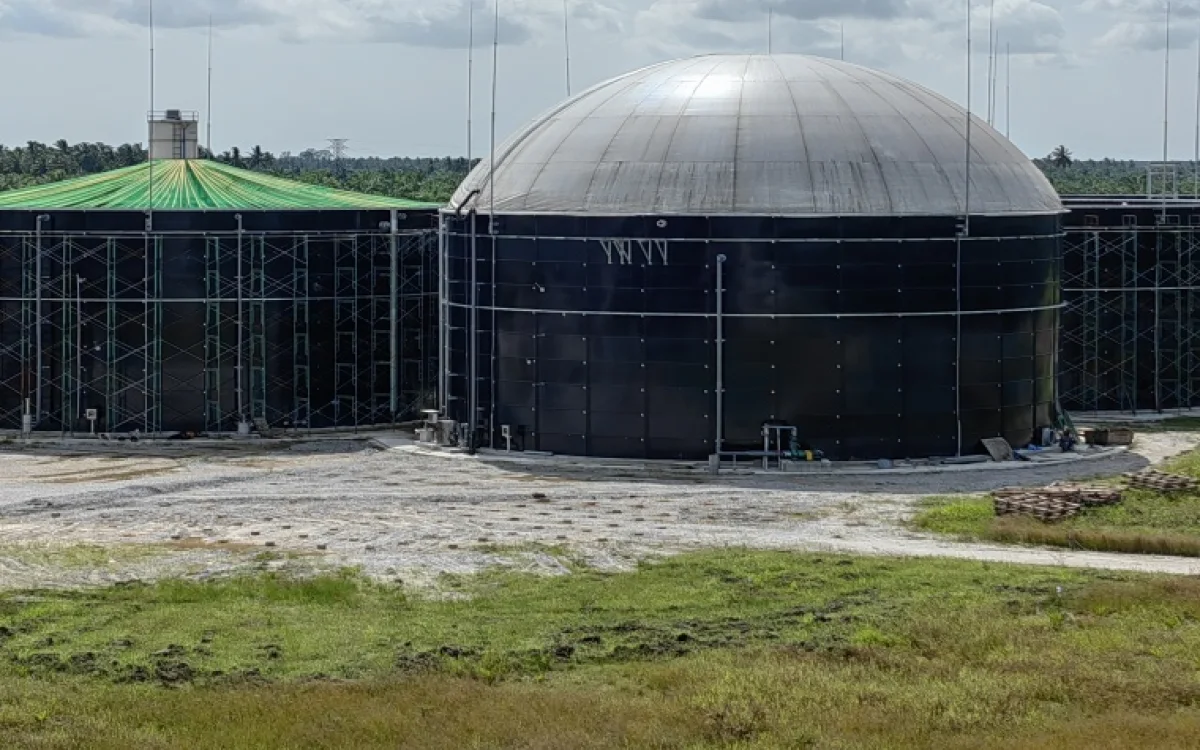
Cheese wastewater can be a strong candidate for anaerobic treatment because whey, lactose, fats, and proteins may create a high organic load. The same characteristics also make tank and gas-holder selection more demanding than ordinary water storage.
A membrane gas holder in this duty is part of the treatment train, not a decorative cover. It buffers biogas from anaerobic digestion and helps the plant manage gas pressure before the gas is flared, burned for heat, or used for power generation. Buyers should review the project under both food and beverage processing and wastewater treatment requirements.
Dairy Wastewater Review Points
Cheese plants often have variable wastewater quality. Production batches, whey recovery practice, sanitation cycles, and clean-in-place chemicals can change pH, temperature, COD, fats, and suspended solids. These conditions affect equalization volume, tank coating selection, odor management, and gas production stability.
The buyer should define whether the tank is used for equalization, anaerobic digestion, sludge holding, or treated effluent storage. Each duty changes the required roof, mixing, nozzles, cleaning access, and corrosion protection. If gas is recovered, the membrane gas holder needs its own pressure, anchoring, and safety review.
Gas Holder and Tank Interface
For a dairy wastewater project, the gas holder must tolerate wet biogas and potential H2S exposure while maintaining stable pressure. The interface should include condensate drainage, pressure relief, gas sampling, inspection access, and enough pipework detail to avoid site improvisation.
Where the liquid tank is a coated bolted system, buyers should review epoxy coated tank compatibility against wastewater chemistry and cleaning exposure. The supplier should provide coating records, panel inspection, sealant details, and repair procedures so the EPC team can confirm whether the system fits the project risk.
RFQ Data to Prepare
A useful RFQ should include daily wastewater flow, COD/BOD range, pH and temperature range, fats/oil/grease estimate, cleaning chemical exposure, tank role, expected biogas flow, pressure requirement, site wind data, and downstream gas-use equipment. If the project is in a food plant with strict access and hygiene rules, the inquiry should also define installation windows and site constraints.
Related references under food and beverage tank projects can help compare whether the buyer needs only wastewater containment or a complete anaerobic gas-handling interface.
Procurement Notes
Dairy plants usually need predictable downtime and clean site execution. The supplier should confirm how panels, membranes, accessories, and fasteners are packed and labeled, because poor packing can delay assembly in an operating food plant. If the tank is close to production areas, construction access, odor control, and commissioning sequence should be discussed before purchase.
The quotation should also separate process guarantees from tank supply. A tank supplier can define material, coating, membrane, and accessory scope; wastewater treatment performance depends on the process designer, pretreatment, loading control, temperature, and operation. This boundary should be clear in the RFQ to avoid unrealistic comparison between suppliers.