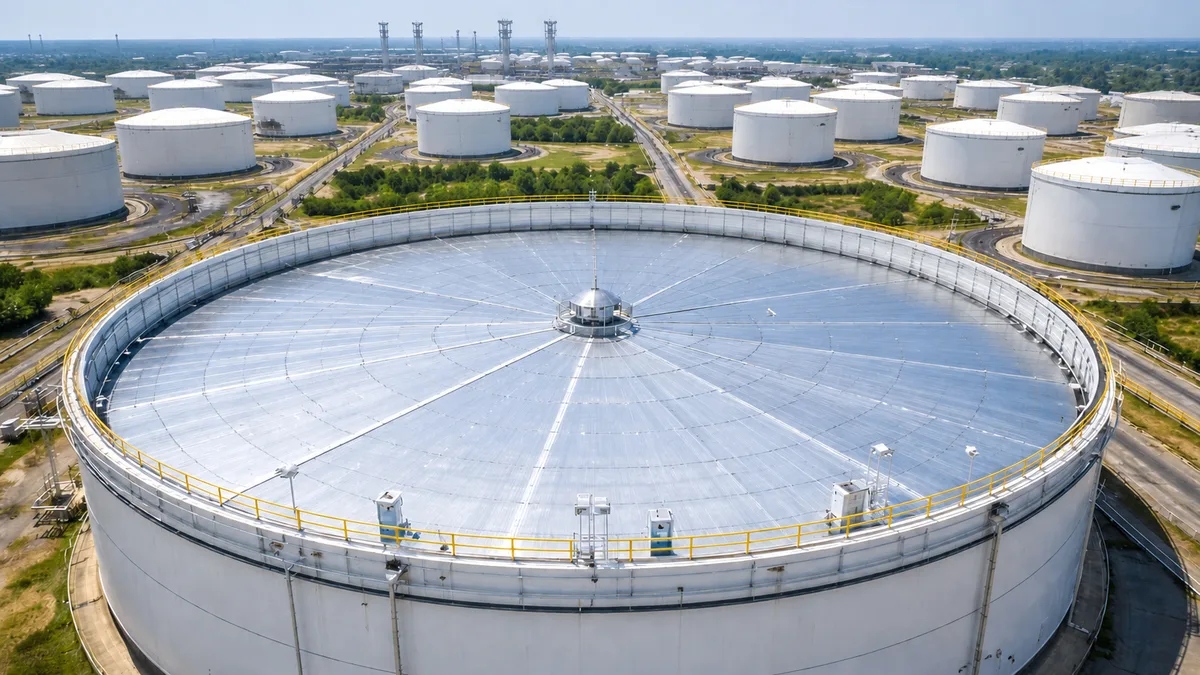
Technical checklist for external tank roof support data covering roof geometry, loads, drainage, attachments, access, inspection, documentation, and RFQ coordination.
Roof-support review needs the selected roof geometry, loads, drainage, access, attachments, inspection approach, and project responsibility matrix in one data set.
Roof Support Data Cannot Be Assumed From Diameter Alone
External roof support and attachment details are influenced by the actual tank and roof arrangement, not simply by nominal tank diameter. The data package should identify roof type and geometry, shell and roof interface, design and operating levels, stored media, pressure or vacuum cases where relevant, internal or external appurtenances, drainage path, access loads, platforms, handrails, instruments, pipe supports, weather exposure, and the design actions adopted by the responsible project engineer. This checklist helps buyers organize those inputs before a supplier is asked to compare scope.
It is not a substitute for structural design, site verification, or any adopted project standard. The applicable design basis, loads, inspection method, and acceptance route must be selected by competent parties for the actual facility and jurisdiction. For roof-family selection context, see the storage tank roofs page. This resource focuses on making the RFQ and technical review auditable rather than promising a one-size-fits-all support arrangement.
External Roof Support Review Matrix
Data group
Questions to resolve before fabrication or retrofit review
Roof definition
Roof type, geometry, span or support layout, shell interface, center or perimeter arrangement, openings, seals, drain concept, material or protection system, and required clearances.
Loads and movement
Owner-issued environmental and operational actions, maintenance access, accumulated water or debris scenarios, internal equipment, attachments, thermal movement, settlement considerations, and abnormal operating cases.
Attachments
Platforms, handrails, ladders, gauges, vents, nozzles, pipe supports, cables, lighting, mixers, lifting points, insulation, and responsibility for loads transmitted to the roof or shell.
Inspection and handover
Inspection access, field measurements, weld or bolt records where applicable, coating records, drainage checks, functional tests, documents, exclusions, and final acceptance responsibilities.
Establish the Actual Roof Configuration
Begin with a drawing or survey that identifies the tank, roof, supports, attachments, openings, drains, access routes, and interfaces. State whether the work concerns a new tank, replacement roof, retrofit, repair, or inspection-only review. A generic roof name does not define the shell-to-roof interface, support arrangement, geometry, drainage path, design levels, or appurtenances that can govern the real scope.
The submitted information should include known dimensions, elevations, roof slope or profile, openings, railings, platforms, ladders, instruments, vents, piping, cables, and equipment fixed to or supported from the roof. Record unknown conditions separately and assign who will verify them. That discipline prevents an RFQ from quietly turning assumptions about existing steelwork or attachments into supplier responsibility.
Separate Design Actions From Field Conditions
Roof supports are affected by environmental and operational actions selected for the project, including local weather and loading criteria where applicable, maintenance access, temporary works, accumulated water or debris, equipment loads, and movement at connected systems. The responsible engineer should issue the adopted actions and combinations rather than asking bidders to infer them from a country name or a generic standard reference. The site may also require consideration of differential settlement, thermal movement, corrosion, repairs, and access restrictions.
For existing tanks, condition evidence matters as much as a nominal drawing. The review package should identify accessible inspection observations, prior modifications, local corrosion or damage, drainage history, restrictions on entry, operating status, and the survey method. The external floating roof drainage and inspection checklist can help structure the drainage and inspection questions that often affect roof performance in service.
Coordinate Drainage, Access, and Attachments
Drainage needs a defined path under normal weather and during the owner-defined operating condition. Identify drains, low points, gutters where present, discharge route, isolation, inspection access, cleaning method, and responsibility for downstream pipework or civil drainage. Poor drainage can create a maintenance and loading problem even where the roof structure itself has not changed.
Platforms, railings, ladders, gauges, vents, cable trays, pipe supports, lighting, lifting points, and process equipment should be listed with their location and interface. The buyer should ask each party to identify which loads and attachments are included, which are by others, and how conflicts will be resolved. This is particularly important where roof work is combined with instrument upgrades or operational modifications.
Define Evidence for Inspection and Acceptance
The project should state the inspection and documentation needed for its particular scope: material records where required, fabrication or assembly checks, weld or bolted-joint examination where specified, dimensions, coating records, drainage verification, access checks, functional tests, preservation, and handover documents. Inspection scope must match the construction method and owner requirements; it should not be copied from a different tank family.
Before release, compare drawings, assumptions, stated loads, roof and drainage details, access equipment, attachment boundaries, installation sequence, inspection plan, records, and exclusions. Use the industrial tank RFQ data checklist to issue the roof questions alongside tank, site, quality, and document inputs. The outcome should be a defined review path, not an unsupported claim that a generic roof layout is suitable everywhere.
For retrofit work, the handover should also record any conditions that must be monitored after return to service. This can include drainage observations, access equipment checks, bolt or weld follow-up where specified, coating-touch-up records, operating restrictions during severe weather, and the inspection interval selected by the owner. Recording these decisions in the final package keeps the roof review connected to operation rather than ending at the fabrication or installation milestone.
Data to Include in the RFQ
A roof support review should identify the actual roof geometry, adopted design actions, drainage, access, attachments, field condition, inspection evidence, and responsibility boundaries before release.
Tank and roof drawings or survey data, roof type and geometry, shell interface, elevations, openings, drains, supports, materials, protection system, design and operating levels, stored media, and known restrictions.
Owner-issued environmental and operational actions, maintenance access, temporary works, accumulated water or debris cases, attachment loads, thermal movement, settlement information, and abnormal conditions to be considered.
Required drawings, field verification, inspection and tests, dimensional checks, material or coating records where specified, preservation, handover documents, final acceptance, and exclusions.