Review saline water tank roof corrosion risks: aluminum dome roofs, coastal exposure, condensation, fasteners, vents, coating interfaces, and RFQ data.
Saline water and coastal storage projects should review roof materials, condensation zones, fasteners, vents, and inspection access together.
Saline water exposure changes the roof review
Desalination, saline water, brackish water, and coastal storage projects create corrosion conditions that differ from ordinary freshwater storage. Chloride exposure, condensation, humid air, wind-blown salt, wet-dry cycles, and roof penetrations can all influence tank roof performance.
Aluminum dome roofs are often considered for saline or coastal environments because aluminum can reduce roof weight and offer useful corrosion resistance when material grade, fasteners, sealants, and interfaces are selected correctly. The roof still needs a project-specific review, especially where it connects to steel tanks, vents, hatches, platforms, or process piping.
Confirm coastal distance, wind-blown salt, humidity, UV exposure, temperature range, sand or dust, and maintenance access.
Stored water chemistry
Provide chloride level, pH, salinity, disinfection chemicals, operating temperature, and whether vapor or mist exposure is expected.
Roof material and fasteners
Review aluminum alloy, fastener material, sealant compatibility, galvanic interfaces, and contact with coated or galvanized steel.
Condensation and ventilation
Confirm vent sizing, vapor movement, insulation if required, internal condensation zones, and roof underside inspection access.
Openings and accessories
Hatches, vents, nozzles, platforms, handrails, sampling points, and overflow interfaces should be detailed before quotation.
Inspection and maintenance
Define inspection interval, cleaning method, seal replacement plan, access route, and document requirements.
Why aluminum dome roofs are often reviewed
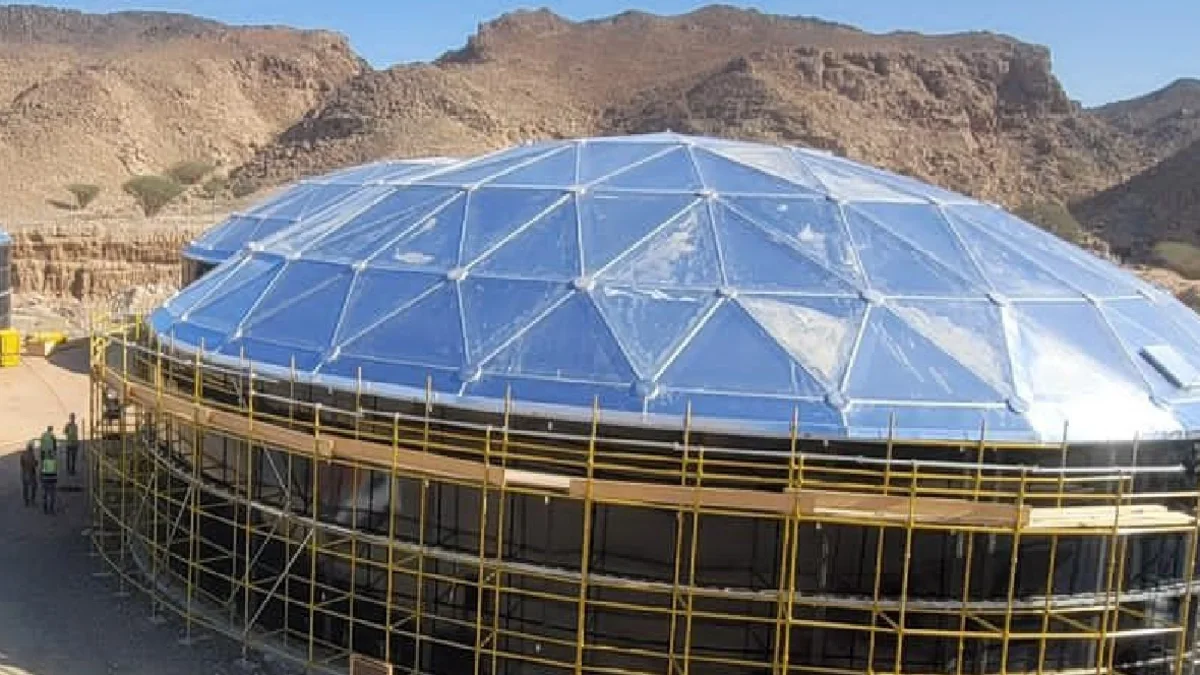
A geodesic aluminum dome can span large tanks with a lightweight self-supporting structure. In saline water projects, this can reduce roof load on the tank shell and provide a corrosion-resistant roof option when the supporting design and materials are suitable.
The buyer should still confirm details such as fastener selection, seal materials, panel joints, roof penetrations, manholes, vents, and the interface between aluminum and the tank shell. Galvanic compatibility and isolation details matter where dissimilar metals meet.
Condensation and venting are part of corrosion control
Saline water tanks can create humid internal air and condensation under the roof. If ventilation is poor or if vapor contains chlorides, corrosion risk can concentrate at fasteners, roof supports, penetrations, and upper shell zones. Roof selection should therefore include venting, inspection access, and expected water treatment chemicals.
For closed potable or process water tanks, the roof also needs to protect water quality by controlling openings, screens, hatches, and external contamination routes. For desalination projects, confirm whether the stored water is raw seawater, brine, permeate, or remineralized water because each condition affects material review.
RFQ information that improves roof recommendations
A useful roof RFQ should include tank diameter, shell material, stored water chemistry, coastal exposure, wind and seismic data, roof load requirement, access needs, venting requirement, and whether the roof is for a new tank or a retrofit.
If the project is a retrofit, provide existing tank drawings, shell condition, rim angle detail, roundness tolerance, lifting access, and any nozzle or platform conflicts. This prevents underestimating the installation and interface work.
Standards and Reference Notes
For corrosion and protective coating terminology, buyers can review official AMPP standards information through the AMPP standards catalog.
For water utility standards context, the AWWA standards overview can help buyers identify relevant documents for tank and roof review.
Next RFQ Steps
For saline water roof inquiries, provide tank diameter, water chemistry, coastal exposure, site loads, roof type preference, vent/access requirements, retrofit condition, and inspection expectations.