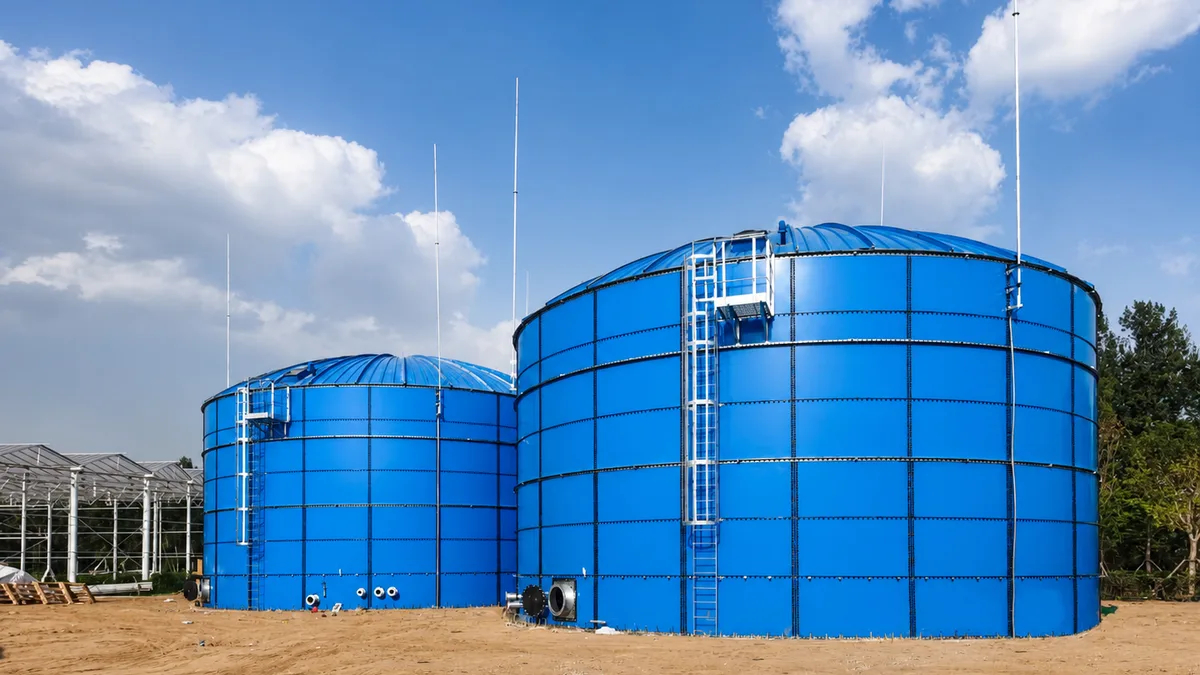
Review global installed tank projects by country, application duty, tank type, export delivery, installation boundary, and RFQ preparation data.
Global project references should show application duty, country context, tank type, delivery scope, and installation boundary.
Global references help buyers compare project risk
Global installed tank projects are useful when they help a buyer understand whether a supplier can support export packing, documentation, installation guidance, and project coordination across different site conditions. A global reference should not be only a country name; it should explain the storage duty, tank type, engineering challenge, and delivery boundary.
For an export RFQ, the buyer should clarify Incoterms, destination port, site access, local installation team, supervision requirement, documentation language, and whether the tank supplier is responsible for accessories, roof, sealant, anchor system, or commissioning support.
Global project reference checklist
Review point
Project information to capture
Country and environment
Climate, wind, seismic, coastal exposure, altitude, and local inspection expectations.
Application duty
Drinking water, wastewater, fire water, industrial liquid, fuel, biogas, agriculture, or dry-bulk storage.
Tank type
Bolted, welded, GFS, epoxy coated, stainless, galvanized, carbon steel, roof, or gas holder system.
Local crew, supplier supervisor, EPC responsibility, foundation readiness, and QA handover records.
How global references support qualification
A global project list builds trust only when the references are structured. Buyers should be able to filter by tank duty, tank type, geography, and risk. A fire-water project in a petrochemical terminal is not the same proof point as a potable-water municipal tank, even if both use steel storage systems.
A practical comparison groups references by storage duty, construction type, site environment, and delivery scope. Buyers can then open the closest detailed case and compare its engineering conditions with their own project instead of relying on country names alone.
Export delivery and installation support
International tank projects require more than fabrication. Export packing, small-parts labeling, coating protection during shipping, site storage, foundation coordination, bolt and sealant control, and installation documentation can affect the final result.
When comparing suppliers, buyers should ask for packing method, installation manual, quality records, coating certificates where applicable, inspection photos, and the responsibility split between supplier, EPC, and local contractor.
Turning a reference into an RFQ
After reviewing global references, buyers can choose the closest storage duty, compare product options, confirm the governing standards, and prepare RFQ data. Use the RFQ data checklist to replace broad assumptions with project-specific inputs.
If the buyer is not sure which reference is closest, start from the stored media and operating role. That path will usually produce a better inquiry than starting from a country name alone.
Evidence behind an international project reference
A credible international reference should be supported by more than a finished-tank photograph. Useful evidence can include approved general-arrangement drawings, packing and container-loading records, installation-stage photographs, inspection documentation, handover records, and a clear statement of the supplier scope. Commercially sensitive customer information can remain confidential while the technical duty and delivery boundary are still described accurately.
Buyers should check whether the referenced site conditions resemble their own. Coastal exposure, high ambient temperature, freezing conditions, difficult road access, limited lifting equipment, language requirements, and local labor capability can change the value of an otherwise similar reference. The best comparison therefore combines application duty with execution conditions.
Export documentation and responsibility matrix
Before award, the quotation should identify the delivery term, packing standard, destination, document language, certificate requirements, spare-parts list, installation responsibility, and the party responsible for foundation verification. A responsibility matrix is particularly useful when the supplier provides the tank package while an EPC contractor manages civil work, piping, electrical systems, and commissioning.
The final schedule should allow time for drawing approval, production, inspection, packing, international transport, customs clearance, site storage, and installation. Treating shipment date as the entire project schedule can hide the activities that most often delay an imported tank installation.
Standards and Reference Notes
International projects should confirm local design standards, owner specifications, import requirements, and site safety rules. Public references can support early screening, but final compliance must be project-specific.
Next RFQ Steps
Send country, site location, application duty, tank volume, design standard, delivery term, foundation status, installation plan, and documentation requirements.