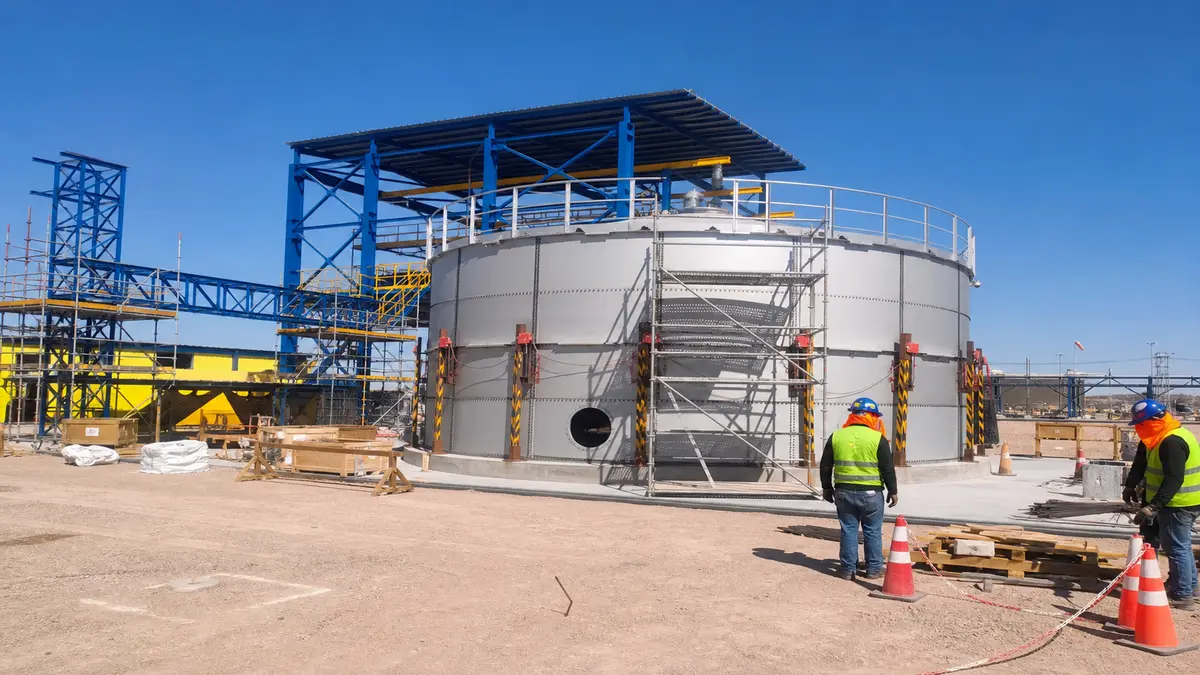
Review tank roof and cover project references for aluminum dome roofs, floating roofs, membrane covers, silo roofs, retrofit scope, corrosion, and RFQ planning.
Tank roof projects require coordination between shell geometry, roof loads, access, construction sequence, and the stored medium.
Roof projects are selected by stored medium and interface
Tank roof and cover projects include aluminum geodesic domes, fixed covers, floating roofs, membrane covers, silo roofs, odor-control covers, and retrofit roof packages. Each project should be classified by stored medium, tank geometry, load case, vapor or odor requirement, and installation interface.
A comparable roof reference identifies whether the duty is potable water protection, wastewater odor control, petroleum vapor reduction, grain or silo weather protection, saline-water corrosion control, or biogas membrane storage.
Roof project classification
Roof project type
What to document
Aluminum dome roof
Tank diameter, stored medium, corrosion environment, live load, wind load, access, and retrofit details.
Floating roof
Stored liquid, vapor-control objective, seal type, drainage, pontoon/deck design, and inspection access.
Membrane cover
Biogas rate, pressure range, gas holder interface, safety accessories, and odor or methane control.
Existing tank dimensions, shell condition, anchor details, outage window, and lifting access.
What makes a roof project reference useful
A useful roof project reference does not simply say aluminum dome or floating roof. It explains the stored medium, tank size, structural interface, corrosion environment, load requirements, access needs, and installation constraints.
For retrofit projects, existing tank condition and measurement quality are critical. The buyer should provide shell diameter, top angle condition, wind/seismic requirements, site access, and outage schedule.
Different roof technologies solve different duties
Aluminum dome roofs, floating roofs, and double membrane roofs solve different problems. Dome roofs focus on lightweight fixed cover performance; floating roofs focus on vapor-control contact with liquid surface; membrane roofs often serve biogas or odor-control duties.
Selection should follow stored-medium risk, tank geometry, emissions or odor objective, structural loads, corrosion environment, and inspection access. Buyers can then compare the roof system that matches the operating duty.
RFQ package for roof and cover projects
A roof RFQ should include tank diameter, stored medium, roof type, design loads, corrosion environment, access requirement, nozzles or vents, retrofit condition, installation boundary, and required documents.
A roof supplier needs confirmed tank diameter, shell geometry, top-angle or compression-ring details, support condition, design wind and seismic data, snow or live loads where applicable, internal pressure or vacuum assumptions, and the required design standard. For an existing tank, record out-of-roundness, corrosion, settlement, previous repairs, available drawings, and actual field measurements before releasing fabrication.
Retrofit work also requires an execution plan. The owner should define whether the tank remains in service, the outage window, cleaning and gas-free responsibility, temporary weather protection, lifting and crane access, scaffold or work-platform scope, and how new loads are transferred to the existing shell. Structural acceptance must be completed by the responsible engineer for the project jurisdiction.
Vapor, drainage, and inspection interfaces
Roof duty changes with the stored medium. Potable-water covers emphasize contamination control and ventilation; wastewater covers may address odor and corrosive vapor; petroleum floating roofs require seals, movement, drainage, and vapor-control review; membrane systems require gas pressure, anchoring, and safety interfaces. These functions should not be combined under one generic roof description.
The RFQ should identify vents, hatches, nozzles, roof drains, seals, ladders, walkways, platforms, lightning or bonding interfaces, level instruments, sampling access, and inspection routes. Handover records may include material certificates, fabrication checks, coating or membrane records, fastener control, field measurement reports, installation inspection, drainage or movement tests, and an agreed maintenance plan.
Material compatibility should cover the roof surface, structural members, fasteners, seals, gaskets, membranes, and any dissimilar-metal interfaces. Coastal atmosphere, chemical vapor, condensation, cleaning agents, UV exposure, and trapped water can create different corrosion conditions above the liquid line. The technical offer should state material grades, protective finishes, excluded exposures, and the inspection access needed to verify long-term condition.
Standards and Reference Notes
Roof and cover design should follow project load requirements, stored-medium risks, local structural rules, and owner specifications. Vapor-control and fire-safety requirements should be confirmed by the project engineering team.
Next RFQ Steps
Send tank diameter, stored medium, roof type, retrofit condition, design loads, corrosion environment, access requirement, installation boundary, and document scope.