
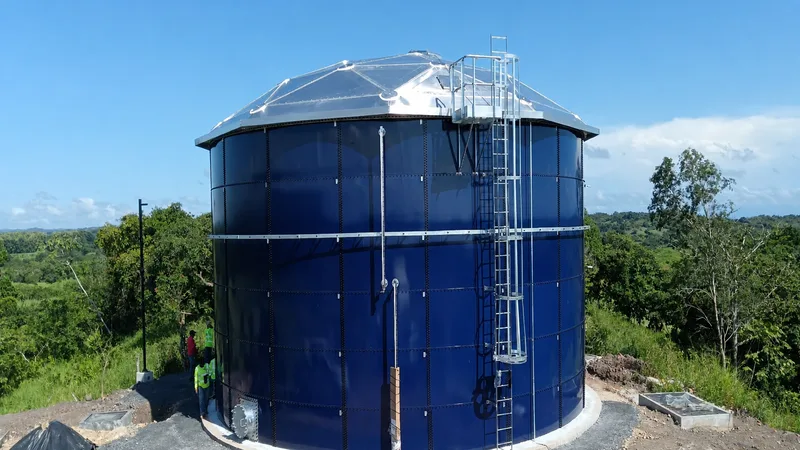
A Diesel Tank Roof Is an Operating Interface
A diesel storage tank roof influences weather exclusion, vapor space, vents, access, inspection, roof drainage, attached equipment, operating levels, cleaning, and the route for maintenance. It should not be selected solely from a product name or a photograph. The project team needs to define the actual diesel or blend, storage temperature, delivery and withdrawal sequence, expected residence time, water and sediment-management method, tank type, roof duty, required vents and hatches, site exposure, access, and the relationship with fuel transfer, filtration, instruments, containment, and operating procedures.
This article focuses on the questions a buyer should resolve before comparing roof options. The final operating and safety configuration must be reviewed against the owner specification, actual tank geometry, responsible engineering decisions, and locally applicable requirements.
Diesel Tank Roof Review Matrix
| Review topic | What to define before comparing roof options |
|---|---|
| Fuel and operation | Fuel specification, temperature, water and sediment expectations, delivery and withdrawal rates, storage period, operating levels, changeover, cleaning, and abnormal conditions. |
| Roof function | Weather exclusion, vapor-space objective, fixed, floating, or other project-selected arrangement, vents, hatches, roof drainage, attached loads, access, inspection, and maintenance. |
| Tank interfaces | Shell geometry, nozzles, gauge wells, instruments, pipework, sampling, water draw-off, overfill interface, access, fire and environmental-system boundaries, and site exposure. |
| Delivery and handover | Survey or drawing data, fabrication, installation, inspection, testing, documents, repair process, operating limits, maintenance information, and exclusions. |
Start With the Actual Fuel and Operating Sequence
Diesel storage can involve receipt from delivery vehicles or pipelines, intermittent transfer, long idle periods, water removal, filtration, sampling, circulation, emergency use, cleaning, or product change. The owner should state the fuel specification, blend or additives, temperature, expected residence time, water tolerance, sediment, normal and upset levels, delivery rates, withdrawal rates, and operating procedures. These conditions influence roof, vent, access, drainage, seal, instrument, and maintenance decisions.
The roof should be reviewed as one part of the tank system. Pumps, pipework, filtration, sampling, level measurement, high-level alarms, containment, grounding or bonding where specified, electrical controls, and emergency response may belong to other packages. A roof quotation must clearly state its interfaces rather than implying it supplies the entire fuel-storage facility.
Make Water and Moisture Management Practical
Water can enter a fuel system through delivery, condensation, tank breathing, maintenance, or poor drainage management. The RFQ should identify low-point arrangement, sampling, water draw-off, drains, roof drainage, vent protection, inspection, cleaning, and the route for recovered water or fuel. The owner should define the operating method and the responsible party for associated filtration, transfer, and disposal equipment.
The corrosion protection guide can help structure questions about corrosion exposure, coating, joints, repairs, external atmosphere, and maintenance. It is not a replacement for the project-specific compatibility review of fuel, additives, water, cleaning chemicals, and external site conditions.
Review Roof Type Against Tank Geometry and Duty
Roof selection depends on the tank geometry, stored liquid, vapor-space objective, operating range, site climate, access requirements, inspection route, attached loads, vents, nozzles, roof drainage, maintenance, and whether the tank is new or existing. An existing tank should be surveyed for actual diameter, roof and shell condition, obstructions, gauge wells, nozzles, access openings, corrosion, and available lifting or assembly routes before a retrofit configuration is released.
For roof options and terminology, see the floating roofs page. The page supports an early comparison; final configuration should follow the approved liquid duty, tank survey, calculation scope, supplier limitations, and owner requirements rather than a generalized claim about fuel storage.
Define Access, Inspection, and Change Control
A roof arrangement should leave a safe and workable route for vents, hatches, sampling, level instruments, inspection, cleaning, repairs, lifting, and any required emergency intervention. Identify ladders, platforms, fall protection, roof access, temporary works, isolation, drainage, cleaning, confined-space controls where applicable, and the ownership of work at tank openings or connected piping. Operational access cannot be added safely after all interfaces are fixed.
Changes in fuel, operating level, tank attachments, roof loads, inspection requirements, or cleaning procedure should trigger a documented review. The handover file should show the supplied configuration, approved drawings, inspection results, repairs, operating limits, maintenance information, and the boundary between roof equipment and the wider fuel, civil, electrical, control, or safety systems.
Use a Controlled RFQ to Compare Bids
A strong enquiry states fuel and operating data, tank geometry, roof function, access, vents, drainage, instruments, site exposure, survey data, installation method, inspection, documents, and exclusions. Ask each bidder to identify the roof duty they have assumed and any data needed before fabrication. This makes it easier to compare complete scopes rather than a price for unqualified roof hardware.
Use the industrial tank RFQ data checklist to issue coordinated process, mechanical, site, quality, and handover data. The result should be a roof selection that supports the actual diesel-storage operation without overstating compliance, performance, or material suitability beyond the documented project basis.
Data to Include in the RFQ
A diesel tank roof RFQ should state fuel and operating conditions first, then define tank geometry, roof function, water management, access, vents, inspection, installation, and handover responsibilities.
- Fuel specification, temperature, additives, water and sediment expectations, delivery and withdrawal sequence, residence time, operating levels, cleaning, product change, and abnormal conditions.
- Tank geometry, roof function, vents, hatches, drainage, gauge wells, nozzles, sampling, water draw-off, instruments, access, attached loads, inspection, maintenance, and survey data for existing tanks.
- Site exposure, roof loads, external atmosphere, material or coating assumptions, repair method, lifting, temporary works, installation, controls, fire and environmental-system boundaries, and responsible compatibility review.
- Inspection and test plan, drawings, calculations where included, repair and deviation records, manuals, operating limits, maintenance information, spares, commissioning boundary, final acceptance, and exclusions.