
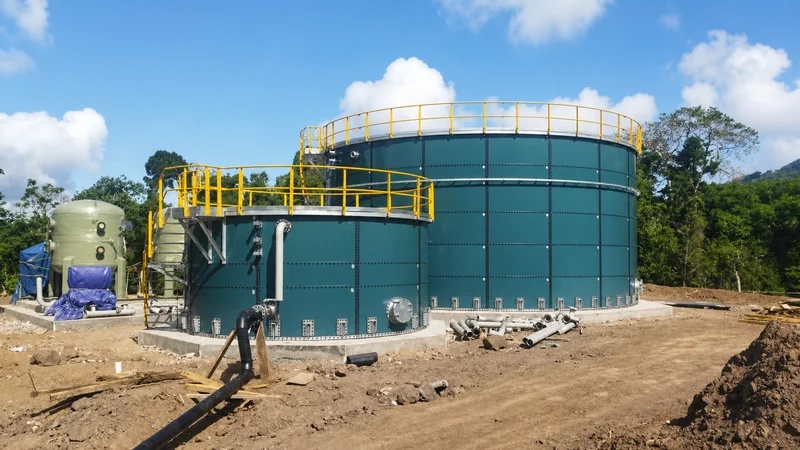
The Product Data Sheet Starts the Tank Specification
Liquid fertilizer is a broad commercial category, not one chemistry. Urea ammonium nitrate solutions, ammonium polyphosphate, micronutrient blends, suspensions, and custom NPK liquids can differ in density, salt content, pH, crystallization behavior, solids, corrosion tendency, and temperature limits. A supplier cannot responsibly confirm tank compatibility from “liquid fertilizer” and capacity alone.
The RFQ should include the current safety data sheet, technical data sheet, typical and worst-case composition, density, operating temperature, minimum ambient temperature, contamination limits, and any cleaning or flushing chemicals. If multiple products will use the tank, compatibility must be reviewed for every product and for the transition or cleaning sequence between them.
This buyer guide supports the broader chemical and alkali storage tank page. It does not replace the owner’s chemical-compatibility assessment, environmental review, or local secondary-containment rules.
Liquid Fertilizer RFQ Decision Matrix
| Decision area | Information to provide |
|---|---|
| Chemistry | Product name, SDS/TDS, composition range, pH, density, chlorides or other aggressive ions where relevant, solids, inhibitors, and contaminants. |
| Temperature and crystallization | Normal and minimum ambient temperature, filling temperature, crystallization or salting-out threshold, heating requirement, insulation, recirculation, and startup plan. |
| Operating cycle | Annual throughput, truck or process transfer rate, fill/empty frequency, heel volume, seasonal shutdown, mixing or recirculation, and cleaning method. |
| Containment and environment | Indoor/outdoor location, secondary containment, drainage, spill recovery, rainwater management, soil/water protection, and applicable local permits. |
| Tank package | Capacity, geometry, roof, vents, overflow, manways, nozzles, level/overfill instruments, pumps, recirculation, heating, access, and sampling. |
Compatibility Includes More Than the Main Chemical
Tank material and coating selection must consider the full service: liquid phase, vapor space, condensation, deposits, welds or bolted joints, gaskets, sealants, fasteners, nozzles, pumps, instruments, and cleaning chemicals. A coating that performs in continuous immersion may face a different exposure at the vapor-liquid interface or under dried salt deposits.
Factory-applied epoxy is one option for compatible duties, but approval belongs to the exact coating system and service data. Review the fusion bonded epoxy tank page together with the corrosion protection guide before requesting a warranty statement.
Density, Temperature and Crystallization Affect Hardware
Higher liquid density increases hydrostatic loading and can affect shell design, foundation reactions, mixing power, pump selection, and nozzle loads. Temperature affects viscosity, transfer rate, coating compatibility, thermal movement, and whether insulation or heating is justified. The design density and temperature range should be stated explicitly rather than inferred from a product name.
Products that crystallize or form deposits may need recirculation, agitation, heat tracing, sloped piping, drainable nozzles, flushing connections, and access for cleaning. Heating should be controlled to the product supplier’s limits; local hot spots and prolonged overheating can damage both product and protective lining.
Seasonal Storage Changes the Operating Case
Agricultural demand may create rapid filling before application season, long storage periods, repeated truck loading, and a low-volume heel after the peak. Those cycles affect turnover, settling, recirculation, inspection access, and how operators prevent off-spec product or blocked lines. The RFQ should describe annual throughput and the longest expected residence time.
Overfill protection, independent high-level alarm, vent sizing, truck connection layout, unloading supervision, spill routing, and secondary containment should be coordinated with local environmental and occupational requirements. No single country’s rule should be presented as a global standard; the buyer must identify the project jurisdiction and authority.
Inspection and Maintenance Begin at Procurement
Ask the supplier for coating or material certificates, inspection records, repair procedures, assembly records, test method, operating manual, cleaning guidance, recommended inspection intervals, and spare seals or fasteners. For bolted tanks, joint sealing, bolt control, foundation tolerance, and panel handling are part of quality, not just installation details.
A well-prepared RFQ lets suppliers compare the same scope and reduces exclusions hidden behind a low base price. When the chemistry is incomplete, request an engineering review first instead of forcing a premature material recommendation.
Compare Proposals on the Same Technical Scope
Bid comparison should separate structural design, coating or material system, roof and accessories, instruments, thermal-control equipment, freight, unloading, foundation interface, erection, supervision, testing, and documentation. Ask each supplier to state the design chemistry and temperature accepted, compatibility evidence used, repair limitations, warranty boundary, and excluded work. A quotation that repeats only the requested volume is not technically complete.
Operations should review that fill connections are accessible, vents cannot be isolated accidentally, overflow and drains route to a controlled area, level alarms are independent where required, and the tank can be cleaned and inspected. These practical checks frequently reveal scope differences that matter more than a small difference in initial purchase price.
Data to Include in the RFQ
Send enough information for a written compatibility and scope review. The final quotation should clearly list assumptions, exclusions, standards, accessories, installation boundary, and document deliverables.
- SDS/TDS, composition range, density, pH, temperature, solids, aggressive ions where relevant, crystallization data, and cleaning chemicals.
- Gross and usable volume, annual throughput, fill and withdrawal rates, residence time, heel, mixing/recirculation, heating, insulation, and seasonal shutdown.
- Preferred tank material or coating, required compatibility statement, roof and vent philosophy, corrosion allowance if applicable, and expected design life basis.
- Nozzles, truck/process connections, overflow, drains, sampling, level and independent overfill protection, pumps, access, platforms, and fall protection.
- Project location, wind/seismic and ambient range, foundation and secondary containment, drainage/spill recovery, installation responsibility, and permits.
- Inspection and test plan, material/coating records, installation records, commissioning, operating manuals, maintenance plan, and spare parts.