
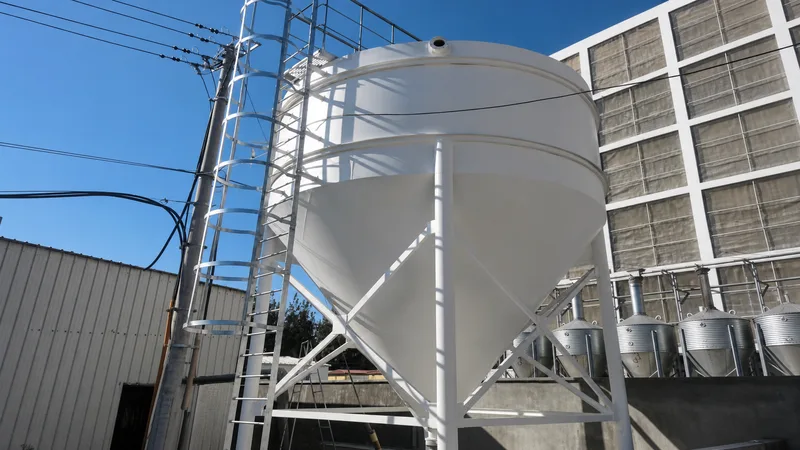
Irrigation storage should match the farm water balance
Agricultural water storage is driven by seasonal demand, crop water requirements, pump capacity, water source reliability, evaporation risk, sediment, and site access. A tank that is correctly sized for one farm can be unsuitable for another if the storage cycle and pumping strategy are different.
Bolted steel and coated tanks are often reviewed for agricultural projects because they can be transported to remote sites and assembled with practical site equipment. Buyers should connect the tank RFQ with the broader agriculture and irrigation application requirements.
This article expands the original buyer guide with more technical RFQ details for farms, plantations, livestock water systems, irrigation districts, and rural water projects.
Irrigation Water Tank RFQ Data
| RFQ Item | Why It Matters |
|---|---|
| Water source | Well water, surface water, treated effluent, rainwater, or canal water can affect sediment, algae, corrosion, and filtration. |
| Daily and seasonal demand | Peak irrigation demand, pump schedule, drought reserve, and refill rate determine practical storage volume. |
| Pump and piping interface | Inlet/outlet nozzle sizes, suction arrangement, overflow, drain, level control, and pump protection should be coordinated. |
| Water quality risks | Sediment, biological growth, salinity, fertilizers, chemicals, and temperature can affect coating and cleaning strategy. |
| Site access and foundation | Remote roads, crane access, soil condition, wind load, seismic data, and local installation resources influence tank selection. |
Sizing should follow demand and refill logic
A tank should be sized from irrigation demand and refill assumptions, not from a round number. The buyer should provide peak water use, pump flow, irrigation schedule, refill window, drought reserve, and whether the tank must support emergency or livestock water.
If the tank connects to drip irrigation, pivots, sprinklers, or fertigation equipment, the RFQ should also define filtration, pressure, chemical compatibility, and pump control requirements.
Water quality and maintenance
Surface water may contain sediment, algae, and organic matter. Treated effluent may require different corrosion and odor review. Saline or brackish water can increase corrosion risk. These conditions should be stated before the supplier recommends coating or material options.
Maintenance access matters in rural areas. Manways, drains, ladders, roof hatches, safe access, and spare parts should be planned before shipment, especially where service crews are far from the site.
Choosing between open and covered storage
Open-top storage may be acceptable for some raw irrigation water duties, while covered tanks can reduce contamination, algae, evaporation, debris entry, and wildlife access. The choice depends on water source, climate, owner practice, and local requirements.
If a roof is required, the buyer should define whether it is a fixed steel roof, aluminum dome roof, membrane cover, or another system. Vents, overflow, access hatches, and inspection route should be listed in the RFQ.
Irrigation storage should match the farm water balance: Codes and Evidence
For broader water resource context, USDA NRCS provides conservation and water resources information at USDA NRCS water resources. Local irrigation design should still follow regional agronomic and water authority guidance.
Procurement Review for irrigation water storage
Before placing an order, the buyer should ask the supplier to confirm the engineering assumptions, included accessories, excluded items, inspection records, packing method, installation boundary, and document submission schedule for irrigation water storage. This prevents a low headline price from hiding missing nozzles, platforms, coating work, supervision, or approval documents.
The commercial comparison should separate the tank shell, roof or cover, internal and external protection, appurtenances, freight, installation support, spare parts, and commissioning documents. If two quotations do not use the same scope, they should not be compared as if they describe the same tank package.
Buyers should also ask how design changes are controlled after approval drawings are released. A late nozzle change, platform revision, coating change, or site-load update can affect fabrication, packing, delivery, and installation. A professional supplier should explain how revisions are reviewed, priced, documented, and reflected in the final drawing package.
The final order file should keep approved drawings, inspection records, packing lists, installation notes, and any agreed deviations together, so the site team can verify the delivered tank against the purchased scope.
For long-life storage assets, the order should also identify the recommended inspection interval, spare parts, repair materials, and contact route for technical support after commissioning.
This review should be completed before production release, when design corrections are still practical and inexpensive.
RFQ Preparation
Send water source, daily and seasonal demand, pump flow, storage reserve, water quality, roof preference, nozzles, site loads, and installation boundary for irrigation tank pricing.